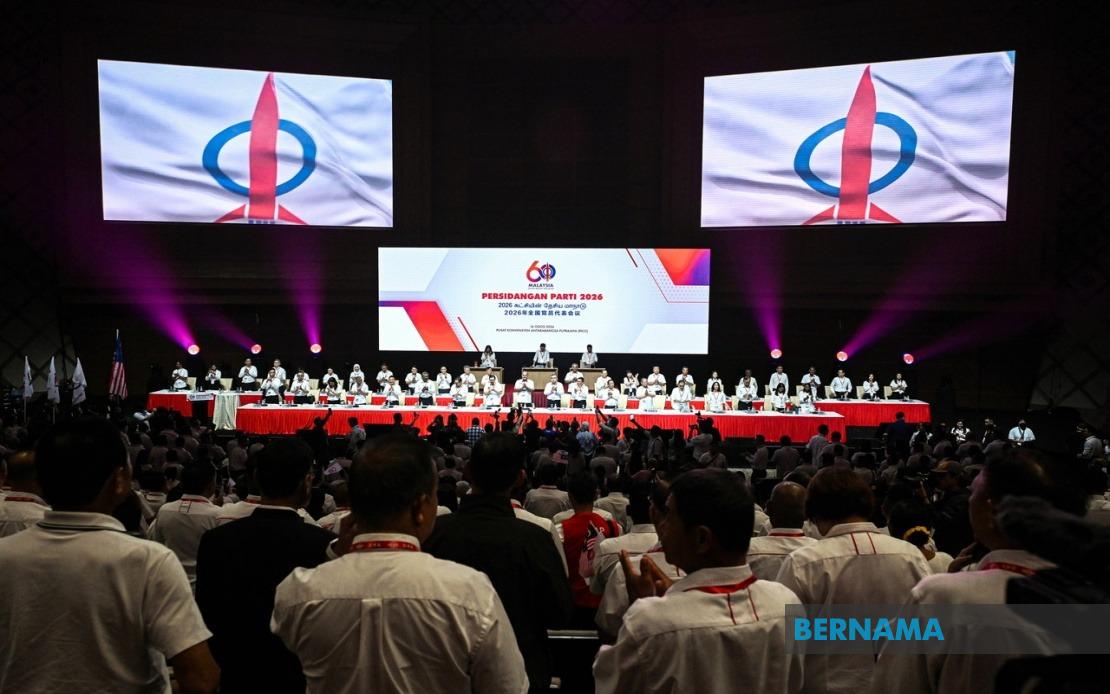
The Democratic Action Party's grassroots representatives have delivered a clear mandate for the party leadership to maintain its participation in the federal Unity Government, with 14 state delegates speaking in favour during heated debate at the DAP 2026 National Conference in Putrajaya on August 16. The decision to remain at the ministerial table, these delegates argued, represents the most pragmatic path forward for fulfilling commitments made to voters while steering the nation away from the uncertainties of an early general election.
The conference gathered 4,264 delegates representing 1,704 eligible branches to deliberate on what has become one of the party's most consequential questions since 2023: whether DAP should continue partnering with Prime Minister Anwar Ibrahim's administration through the end of the 16th parliamentary term, or withdraw to rebuild from opposition benches. The debate session preceding a secret ballot vote reflected genuine tensions within the party between idealistic demands for independence and pragmatic recognition that governance offers leverage for reform that opposition status cannot provide.
Delegates framed their support around several interconnected arguments that reveal the calculus facing DAP as a Chinese-majority party operating within Malaysia's delicate multi-ethnic political architecture. Perak representative Jason Ng Thien Yong acknowledged the party's recent electoral setbacks in state contests yet contended that retreating from federal government would constitute a strategic error of the highest order. He emphasised that remaining within the Unity Government, despite its acknowledged imperfections, creates space for implementing institutional improvements that opposition parties cannot realistically pursue. This argument reflects a fundamental tension in Malaysian politics: the gap between maintaining principled distance and wielding actual policy influence.
Long-serving party veteran Leong Ngah Ngah from Pahang elevated the discussion beyond tactical considerations by appealing to delegates to recognise the tangible achievements accomplished during the three-year tenure of the current federal administration. In his framing, maturity and political realism demand acknowledging that the Unity Government, led by Anwar, has delivered measurable successes in reform implementation whilst sustaining the institutional stability necessary for Malaysia's economic and social development. This perspective carries particular weight coming from an elder statesman, as it signals that party leadership across generational lines supports continued engagement.
The concerns about early elections emerged repeatedly during the debate, with delegates noting that DAP's withdrawal would destabilise the current coalition arithmetic and potentially trigger a snap poll before the party could consolidate its position or meaningfully demonstrate competence in pressing portfolios. This fear of electoral uncertainty represents a core strategic consideration, particularly given that DAP's recent performance in state-level contests has been disappointing, making a hastily-called general election a potentially catastrophic scenario for the party's parliamentary representation.
Selangor delegate Muhammad Shakir Amerr Mohideen introduced a confidence dimension to the discussion, arguing that DAP possesses the organisational capacity and policy expertise to reverse recent electoral losses through demonstrable good governance. His position reflects belief that voter defection in certain constituencies stems not from ideological rejection but from perceptions of poor administration or service delivery—problems that can be remedied through sustained governmental performance and visible policy wins. This diagnosis suggests the party views its future viability as inseparable from continued access to executive power and ministerial platforms.
The territorial dimension of DAP's participation emerged sharply through Sabah delegate Yap Wui Lip's intervention regarding Malaysia Agreement 1963 rights. His point underscores that for East Malaysian constituencies and communities, DAP's presence within the federal cabinet represents the most reliable mechanism for advancing long-standing grievances concerning constitutional protections and resource distribution that opposition parties have consistently failed to translate into legislative outcomes. This illustrates how DAP's coalition positioning connects directly to the interests of specific communities who perceive the party's ministerial presence as essential advocacy.
Melaka representative Jason Tze-Xi Nathan articulated a communications challenge facing opposition advocates within the party, noting that withdrawing from government creates an explanatory burden with voters who may struggle to understand why the party would voluntarily relinquish influence over policies affecting their daily lives. This concern speaks to the presentational difficulties inherent in opposition politics—the challenge of explaining why principled retreat serves constituents better than engaged participation. In Malaysian electoral culture, where tangible service delivery and policy responsiveness powerfully influence voter behaviour, this argument carries considerable persuasive force.
Secretary-General Anthony Loke's closing remarks attempted to preempt a common criticism—that endorsing continued coalition participation constitutes a blank cheque for ministerial drift or diminished accountability. He clarified that DAP's conditional support hinges on demonstrable commitment to reform programmes and genuine efforts to recover electoral confidence in constituencies where the party has faltered. This formulation preserves DAP's capacity to withdraw if the government stalls on promised institutional changes, whilst committing the party to a negotiated presence rather than either unconditional support or wholesale exit.
The geographic representation of supporting delegates—spanning Peninsular Malaysia and East Malaysia, from Perlis to Sabah—suggests the pro-government position enjoys substantial cross-regional endorsement rather than representing narrow factional dominance. This breadth potentially moderates concerns that one regional faction had orchestrated the conference debate, lending legitimacy to the eventual ballot outcome.
The timing of this debate carries significance beyond immediate coalition arithmetic. Occurring just as DAP enters its 60th anniversary, the conference represents a moment of strategic recalibration for a party navigating the inherent contradictions of ethnic-based political representation within a multi-communal democracy. By 2026, when parliamentary boundaries and electoral mathematics next become fluid, DAP's position within the United Front will substantially condition its relevance to Malaysian politics for the subsequent decade. The delegates' overwhelming articulation of support for continued participation signals acceptance that independence from coalition discipline, however principled, may exact costs the party cannot afford to pay.
The secret ballot vote anticipated later would formally register this grassroots sentiment, but the debate itself had already clarified that DAP's state-level representatives, presumed closest to community sentiment, perceived continued governmental participation as both strategically prudent and responsive to constituents' preference for visible executive influence over oppositional purity. This calculation—prioritising actual policy influence over ideological consistency—suggests that Malaysian coalition politics, despite its instability, commands pragmatic loyalty from parties recognising that power, however conditional and contested, remains the ultimate currency in advancing communal interests.

