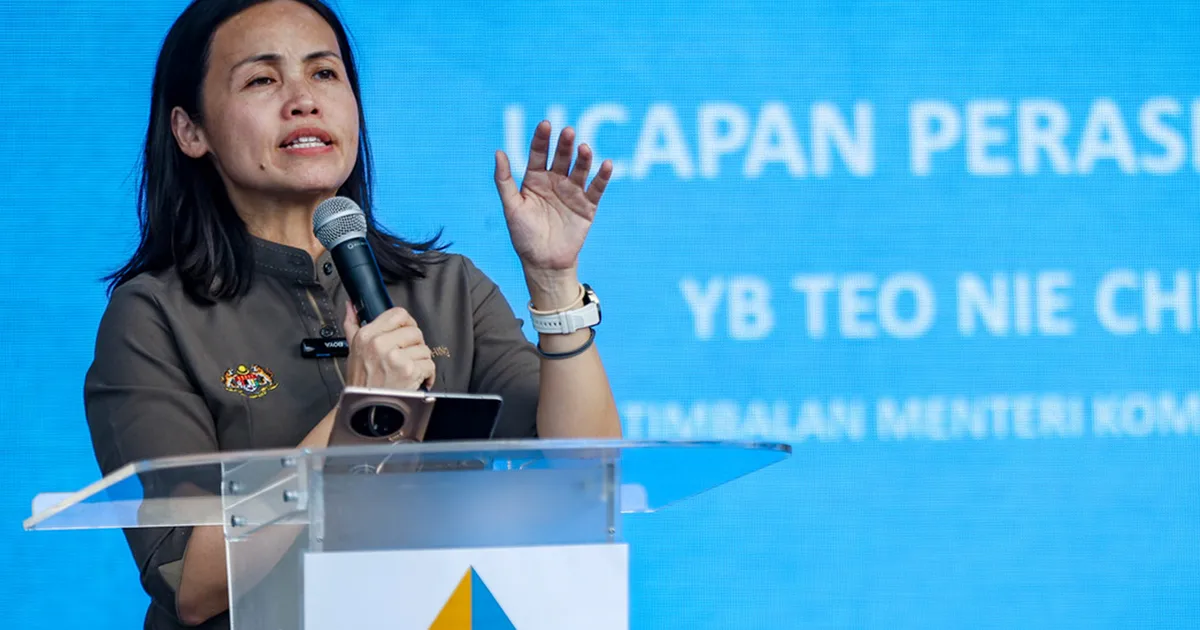
Democratic Action Party leader and Deputy Minister Teo has come forward with claims that she is the subject of a deliberate and coordinated online campaign utilising newly created social media profiles to circulate unsubstantiated allegations connecting her to organised crime activities. The assertions, which Teo regards as wholly false, represent an escalation in online attacks targeting political figures ahead of what observers view as a critical period in Malaysian politics.
The deputy minister's allegation highlights a troubling pattern of weaponised disinformation that has become increasingly sophisticated across Southeast Asian political landscapes. Rather than organic criticism or political debate, Teo's experience points to what specialists term inauthentic behaviour—the deliberate creation of fake accounts with the specific intent of amplifying false narratives. Such coordinated campaigns operate outside traditional democratic discourse, deliberately obscuring their origins to evade accountability.
Social media platforms have become battlegrounds for political influence in Malaysia, particularly during sensitive periods. The creation of accounts specifically designed to attack an individual represents a departure from conventional political opposition and ventures into territory marked by systematic character assassination. For Malaysian voters already grappling with distinguishing credible information from fabrication online, such campaigns complicate the political environment and undermine informed decision-making.
The gang-related allegations constitute a particularly serious form of attack, as they aim to delegitimise Teo not through policy critique or political disagreement, but through association with criminal activity. This tactic operates on the assumption that such accusations, once circulated widely enough, may gain credibility through repetition alone, regardless of factual basis. The political damage such allegations can inflict—to reputation, to public trust, and to electoral prospects—remains substantial even when thoroughly debunked.
Teo's decision to publicly identify and challenge the campaign serves multiple purposes within Malaysian political discourse. First, it brings transparency to what might otherwise remain hidden tactics of opposition. Second, it alerts the public and media to the existence of coordinated disinformation efforts, potentially inoculating audiences against accepting such allegations uncritically. Third, her statement functions as a formal record should these claims escalate or become subject to legal action or investigations by relevant authorities.
The incident raises broader questions about digital platform governance in Malaysia. While social media companies maintain policies against coordinated inauthentic behaviour, enforcement remains inconsistent, and detection often lags behind coordinated campaigns. For political figures and ordinary Malaysians alike, the burden frequently falls on individuals to identify and counter false information rather than platforms proactively preventing its spread. This reactive approach leaves a window during which disinformation circulates unchallenged, potentially influencing public opinion before corrections gain traction.
Context matters significantly when understanding such attacks within Malaysian politics. The DAP operates within a complex multiethnic and multireligious democratic framework where political competition sometimes assumes heightened emotional dimensions. While legitimate political debate remains essential, campaigns leveraging false criminal allegations cross into territory that undermines the democratic process itself. Opposition to policies, leadership styles, or political platforms represents healthy democratic contestation; baseless accusations of gang connections represent something fundamentally different and more corrosive.
Teo's position as deputy minister adds another dimension to the controversy. Government officials command public platforms and resources unavailable to ordinary citizens, yet they simultaneously face intensified scrutiny and, as this incident suggests, targeted online attacks. The asymmetry creates a particular vulnerability for female political leaders, who research indicates face disproportionately hostile online environments compared to male counterparts. Gender-based dimensions of online harassment often compound the challenges politicians confront in responding to coordinated disinformation.
The allegation also reflects the evolving nature of political conflict in the digital age. Traditional forms of political opposition—parliamentary debate, media criticism, campaign messaging—operate within established frameworks and norms. Coordinated fake accounts circumvent these structures entirely, operating in shadows and deliberately obscuring source and motivation. For Malaysian citizens and policymakers, this development presents a challenge: how to protect democratic discourse and individual reputations while preserving the internet's essential role as a space for free expression and legitimate political communication.
Moving forward, Teo's public response may encourage other targeted individuals to similarly identify and challenge coordinated campaigns. Such transparency, when coupled with media scrutiny and public awareness, can reduce the effectiveness of disinformation tactics by decreasing the ignorance factor that such campaigns depend upon. Platform accountability, clearer labelling of automated or coordinated accounts, and enhanced digital literacy among Malaysian media consumers all represent potential mechanisms for addressing this growing challenge to democratic integrity.
The incident ultimately underscores a reality now central to Malaysian politics: the online environment has become contested terrain where political opponents employ sophisticated digital tactics extending far beyond traditional campaigning. As Malaysia's political landscape continues evolving, questions about how society addresses coordinated disinformation, protects public figures from defamatory campaigns, and maintains genuine democratic debate in digital spaces will only grow more urgent.

