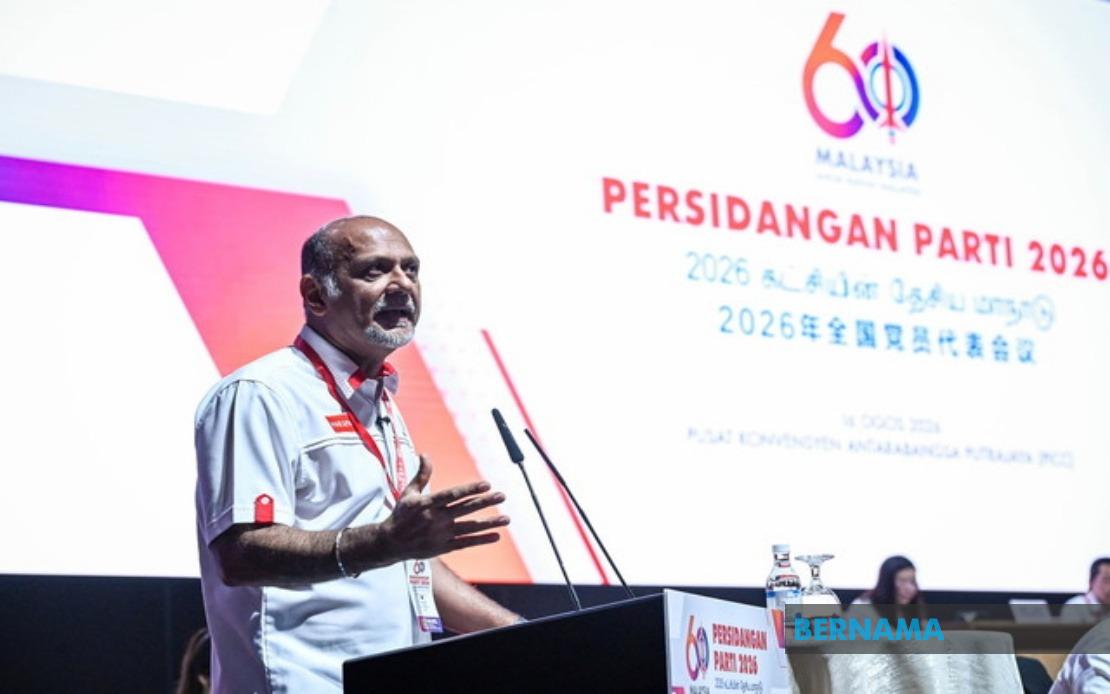
The Democratic Action Party faces a critical juncture as it reassesses its role within Malaysia's Unity Government coalition following disappointing state election outcomes. Speaking at the DAP Party Conference 2026 in Putrajaya on August 16, national chairman Gobind Singh Deo acknowledged the electoral setback and signalled the need for the party to recalibrate its political trajectory in light of shifting voter sentiment. The candid admission reflects growing internal recognition that DAP's three-and-a-half-year stint as a junior partner in the multi-party administration requires honest evaluation of both achievements and failures before the party charts its next moves.
Gobind emphasised that the party must use the election results as a springboard for broader strategic reassessment rather than defensive posturing. With three and a half years of direct participation in government now complete, DAP has accumulated sufficient experience to evaluate which policies succeeded and which fell short of expectations. This timing allows party leadership to conduct a thorough review before deciding on its long-term alignment with the Unity Government. The acknowledgment that "the people's choice" must be respected signals a degree of humility often absent from Malaysian political discourse, though critics may view such language as diplomatic cover for disappointing performance at the ballot box.
Crucially, Gobind outlined a shift in DAP's operational philosophy within the coalition framework. Rather than pursuing its entire manifesto unilaterally, the party should prioritise reforms capable of securing buy-in from all coalition partners. This pragmatic recalibration recognises a fundamental reality of multi-party governance: ambitious agendas often fracture coalitions unless complementary interests align. By focusing on achievable consensus-based reforms, DAP can demonstrate tangible progress on key issues while maintaining the political stability necessary to govern effectively. This approach also sidesteps the trap of scapegoating coalition partners when manifesto pledges prove unattainable.
On the institutional reform agenda, Gobind proposed an accelerated timeline for parliamentary action. He called for convening a special sitting of Parliament to debate and enact amendments to several cornerstone legislation, including the Security Offences (Special Measures) Act 2012 (SOSMA) and the Peaceful Assembly Act 2012. These two laws represent longstanding points of contention for civil liberties advocates and opposition figures, who argue they grant excessive discretionary powers to the executive. Beyond these security measures, Gobind identified additional reform priorities: separating the powers of the Attorney General and Public Prosecutor, and constitutionally limiting prime ministerial tenure to two terms.
These institutional reforms carry profound implications for Malaysian governance architecture. The separation of prosecutorial and legal officer functions addresses a persistent concern about concentrated executive power, potentially insulating prosecutors from political influence in high-profile cases. Term limits on prime ministerial tenure would reshape succession dynamics and presidential-style power accumulation at the federal level. However, securing coalition consensus on such transformative changes remains uncertain, particularly when smaller partners fear losing influence through term-limited leadership. Gobind's framing of these reforms as essential to "prevent the abuse of power" and ensure "transparent governance" reflects DAP's core ideological positioning, yet implementation requires navigating the competing interests of PKR, Amanah, and other government coalition members.
Economic policy represents another significant dimension of DAP's reassessment. Gobind acknowledged that government must deepen its understanding of economic pressures confronting ordinary Malaysians and translate that understanding into concrete relief measures. Cost-of-living concerns—encompassing food prices, utility bills, housing affordability, and wage stagnation—consistently dominate voter grievances across income groups and demographics. DAP's electoral setback likely reflects insufficient perceived progress on these bread-and-butter issues, suggesting the party may have invested disproportionate political capital in institutional reforms while material conditions deteriorated for significant segments of the electorate.
Simultaneously, Gobind stressed that maintaining political stability remains essential for attracting foreign direct investment and generating employment opportunities. This position reflects the conventional wisdom that investor confidence depends partly on predictable governance and low political volatility. However, the tension between pursuing transformative reforms and preserving investor-friendly stability is real: some foreign investors prefer the status quo, and radical institutional changes may spook markets in the short term. Balancing these competing imperatives tests DAP's strategic sophistication and willingness to make difficult tradeoffs between ideological commitments and pragmatic economic management.
The conference itself assumes heightened significance given the motion Anthony Loke plans to table regarding DAP's continued participation in the government coalition. With 4,264 delegates from 1,704 eligible branches participating in secret-ballot voting, this represents a genuine democratic exercise within the party structure. The decision to hold the vote at all suggests party leadership recognises genuine internal divisions about whether remaining in government serves DAP's long-term interests. An exit from the Unity Government would destabilise the coalition and potentially force new elections, carrying substantial risks and opportunities for DAP depending on electoral mathematics and opposition configuration.
The timing coincides with DAP's 60th anniversary, a milestone affording opportunity for reflection on the party's historical mission and contemporary relevance. Founded as a primarily Chinese-based opposition force, DAP has evolved into a multiethnic entity with substantial urban support and increasing rural penetration. The transition from perpetual opposition to coalition government partner represents a fundamental identity shift that some rank-and-file members embrace enthusiastically while others question whether DAP has compromised its reform credentials in exchange for ministerial portfolios and access to state power.
For regional observers, DAP's predicament illuminates broader tensions within Southeast Asian coalition politics. Smaller parties consistently face the dilemma of whether participating in government allows them to implement policy preferences, or whether such participation dilutes their identity and makes them responsible for unpopular policies they cannot control. DAP's current reassessment will influence not only Malaysian politics but also signal to regional partners and investors regarding the stability and viability of plural governance arrangements in a diverse, multi-party democracy.
Gobind's language throughout his speech emphasised acceptance of electoral verdicts while maintaining the party's reformist orientation. This rhetorical positioning allows DAP to acknowledge voter dissatisfaction without abandoning the ideological commitments that define the party's political project. The challenge facing DAP's conference delegates is reconciling continued coalition participation with the organisational changes and policy implementations necessary to restore voter confidence. How the party navigates this intersection will determine not only its own trajectory but also the future composition and durability of Malaysia's governing coalition structure.

