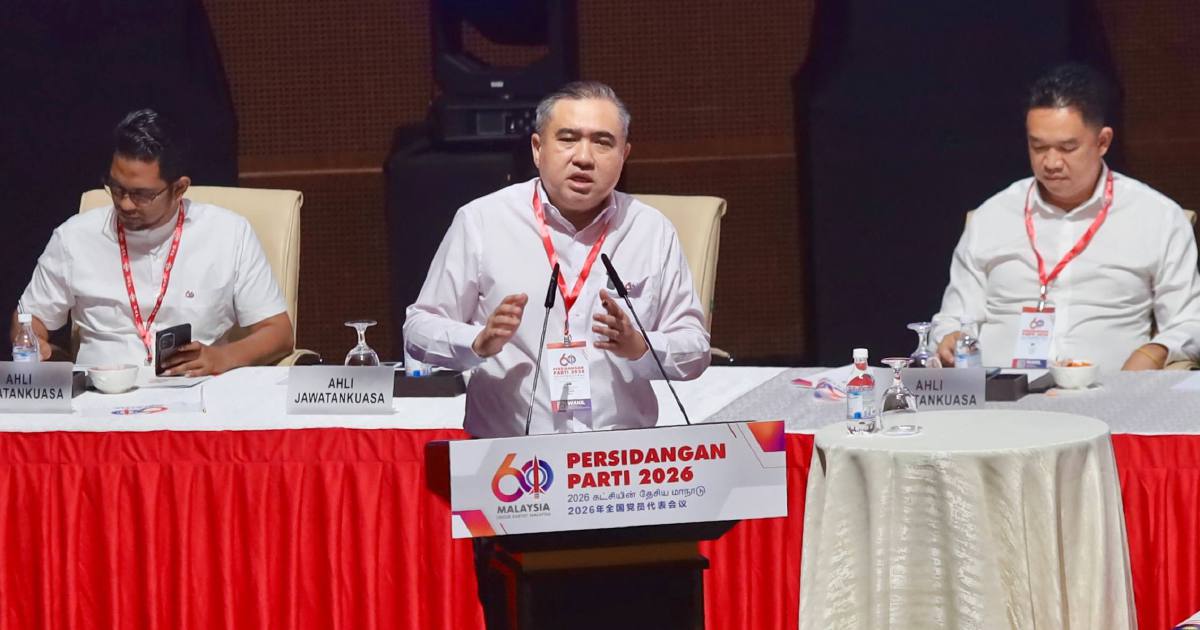
The Democratic Action Party has announced its backing for Prime Minister Datuk Seri Anwar Ibrahim's initiative to abolish the Universities and University Colleges Act, marking a significant alignment between the ruling coalition parties on a contentious higher education governance issue. Speaking in Putrajaya, DAP representatives confirmed the party's readiness to support the legislative process required to dismantle the controversial legislation, viewing the move as overdue recognition of university autonomy concerns that have festered for decades.
The AUKU, formally enacted in 1971, has long drawn criticism from academics, student activists, and civil society organisations who argue it unduly restricts freedom of expression and assembly within Malaysian campuses. The law has been deployed to suppress student political engagement, curtail academic discourse on sensitive topics, and limit the scope of campus-based advocacy. Proposals to reform or abolish the act have circulated through successive administrations, but concrete action remained elusive until Anwar's recent announcement signalled a potential turning point for higher education policy in the country.
DAP's endorsement carries strategic weight within Malaysia's current political configuration. As a component party within the Pakatan Harapan coalition and a significant voice in Parliament, the party's support strengthens Anwar's hand in advancing the legislative proposal. The party framed its backing not merely as rubber-stamping but as a principled position aligned with its broader platform emphasising civil liberties and institutional reform. However, DAP simultaneously used the moment to express frustration with what it characterised as inconsistent government momentum on other reform initiatives.
The party's conditional support comes with an implicit criticism that the administration, despite pledging transformative change, has moved unevenly across its reform agenda. Several policy commitments made during the 2022 electoral campaign and subsequent coalition negotiations remain in limbo or have faced implementation delays. DAP specifically highlighted the government's need to accelerate delivery on outstanding undertakings, suggesting that selective progress on high-profile issues like AUKU abolition cannot mask broader stagnation elsewhere within the reform portfolio.
This dynamic reflects the inherent tensions within Malaysia's multiparty coalition government, where component parties must negotiate shared objectives whilst maintaining distinct political identities. DAP's public support for AUKU abolition serves multiple purposes: it demonstrates coalition unity on a youth-resonant issue, positions the party as a consistent defender of civil liberties, and simultaneously signals watchdog capacity over government performance. The dual messaging—enthusiastic support coupled with accountability demands—allows DAP to claim credit for progress whilst maintaining distance from potential implementation failures.
The AUKU abolition itself carries implications extending beyond symbolic reform. Universities constitute vital institutions for Malaysia's economic competitiveness, research capacity, and talent development. Restrictive governance frameworks that discourage campus debate and intellectual exploration arguably undermine these strategic objectives. By removing statutory constraints on academic and student expression, the reform could theoretically foster more dynamic intellectual environments, enhance Malaysia's appeal to international academics and researchers, and align domestic practices with peer institutions in regional economies like Singapore and South Korea.
Yet substantial implementation questions remain unresolved. Replacing the AUKU requires establishing alternative regulatory frameworks governing university administration, student conduct, and institutional autonomy. The design of successor legislation will prove as consequential as abolition itself. Universities require governance structures providing stability, financial accountability, and safeguards against institutional capture or volatility. The precise balance between liberalisation and institutional protection remains contested among stakeholders including university management, academic senates, and student representatives.
Moreover, DAP's broader reform demands warrant examination. Malaysian civil society has long maintained extensive wish-lists encompassing constitutional amendments, electoral system overhauls, local government democratisation, and institutional independence enhancements across multiple sectors. The government's capacity to simultaneously prosecute numerous complex reforms whilst maintaining administrative continuity and coalition coherence remains constrained. Prioritisation inevitably occurs, creating winners and losers among reform constituencies. DAP's insistence on accelerated progress across the board reflects both principled commitment to change and political pressure from its support base expecting tangible transformation.
The trajectory of AUKU abolition will likely establish precedent for government reform capacity moving forward. If the administration successfully navigates abolition, the political momentum may cascade toward other stalled initiatives. Conversely, protracted delays or compromised implementation could reinforce perceptions of inconsistent commitment to transformative change. For Malaysian higher education specifically, the coming months will prove pivotal in clarifying whether AUKU reform represents genuine paradigm shift toward liberalised campus governance or represents symbolic gesture masking continued structural restrictions under modified statutory frameworks.
The convergence of DAP support with Anwar's initiative signals genuine possibility of legislative progress on a longstanding grievance. However, the party's simultaneous insistence on broader reform acceleration underscores that Malaysian society views university autonomy not in isolation but as component of comprehensive governance modernisation. The government's capacity to satisfy these interconnected expectations will substantially determine the coalition's political sustainability and reform credibility throughout its tenure.

