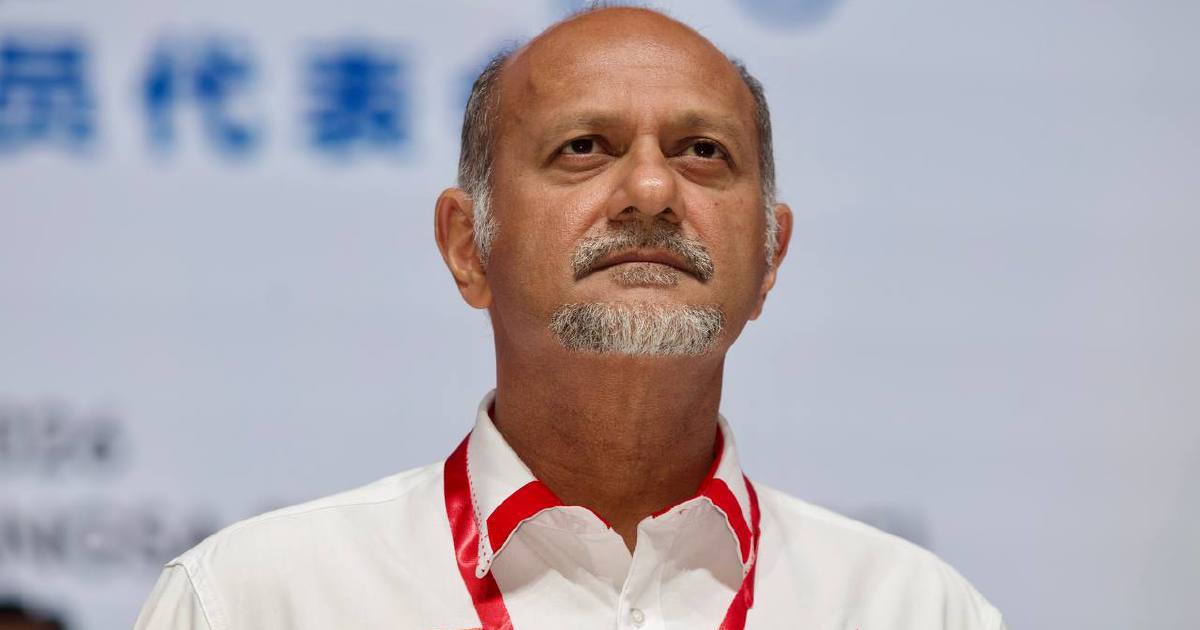
The Democratic Action Party has intensified pressure on the Pakatan Harapan-led government to pursue more aggressive structural transformations across both economic and institutional spheres. DAP national chairman Gobind Singh Deo delivered the call during remarks in Putrajaya, signalling the coalition partner's growing impatience with the pace of change since the unity government took office in late 2022.
The timing of this public intervention carries considerable weight within Malaysia's coalition politics. With roughly three and a half years of the unity government's tenure completed, DAP appears to be staking out its position ahead of crucial mid-term evaluations and potential policy shifts. The party's emphasis on reform reflects broader anxiety within the coalition about whether sufficient progress has been made on transformative initiatives that would justify the political capital spent navigating complex inter-party compromises.
Institutional reform remains a cornerstone of DAP's political ideology, rooted in the party's long-standing advocacy for governance transparency, democratic strengthening, and bureaucratic efficiency. By publicly calling on Prime Minister Anwar Ibrahim to elevate these priorities, Gobind Singh Deo is articulating grievances that likely resonate within DAP's base, which has consistently pushed for measures tackling corruption, streamlining government agencies, and enhancing institutional accountability.
The emphasis on economic reform carries particular urgency given Malaysia's current macroeconomic backdrop. The nation faces persistent challenges including moderate wage growth, pressures on the ringgit, and fierce regional competition for foreign direct investment. DAP's push suggests the party views deeper structural economic changes—possibly encompassing trade liberalisation, skills development infrastructure, or productivity-enhancing investments—as essential to elevating Malaysia's medium-term growth trajectory.
Within the unity government framework, DAP occupies a peculiar position. As a predominantly urban, Chinese-Malaysian-supported party in a coalition dominated numerically by Malay-majority UMNO, DAP must constantly calibrate its public demands. Vocally championing reform allows the party to maintain distinct political identity while risking alienation of more cautious coalition partners. This latest call suggests DAP's calculation that pushing reform narratives remains strategically vital for retaining its core constituency.
The friction between reform ambitions and coalition governance constraints has defined much of the unity government's tenure. Institutional reforms touch sensitive matters including appointment procedures, transparency mechanisms, and power distribution—territories where different coalition members hold conflicting interests. DAP's public pressure may signal that behind-closed-door negotiations on these matters have stalled, prompting the party to shift towards public advocacy.
Economic reforms present comparatively fewer ideological flashpoints, yet implementation remains politically fraught. Measures strengthening labour protections, tax compliance, or regulatory enforcement inevitably create winners and losers, generating pushback from affected constituencies and interests. DAP's urgency suggests the party views these reforms as increasingly time-sensitive, with narrow windows for implementation before electoral politics accelerate.
For Malaysian business and investor communities, DAP's reform pressure carries mixed implications. While institutional strengthening and economic modernisation could enhance Malaysia's investment climate and governance standards, the political uncertainty surrounding these initiatives introduces unpredictability. Regional competitors watching Malaysia's reform trajectory remain keen to capitalise on any hesitation or perceived inability to execute transformative change.
Gobind Singh Deo's intervention also reflects generational thinking within DAP about the window for structural change. The party leadership appears conscious that failing to deliver substantive reforms during the unity government period could undermine both its coalition leverage and its post-electoral political credibility. This concern likely intensifies awareness that Malaysia's next general election will occur within several years, reshaping political coalitions and priorities.
The call for intensified reform momentum simultaneously reflects tensions inherent in Malaysia's coalitional democracy. Delivering meaningful change requires consensus across parties with divergent constituencies, ideologies, and interests. Yet the urgency of reform—particularly as global competitive pressures mount—demands pace and decisiveness incompatible with consensus-building across diverse coalition partners.
Moving forward, observers should monitor whether Prime Minister Anwar Ibrahim responds with specific reform commitments or whether the coalition maintains its gradualist approach. DAP's public pressure represents a warning signal that at least one significant coalition partner judges current reform velocity as inadequate. How the government addresses this pressure will illuminate both the coalition's functionality and Malaysia's medium-term economic and governance trajectories.
The broader context underscores why DAP's intervention matters beyond routine coalition politics. Malaysia's regional standing depends partly on its capacity to strengthen institutions and modernise economic structures faster than regional peers. When coalition partners publicly debate reform adequacy, international audiences interpret such signals as potential indicators of governmental capacity and reform commitment—perceptions that ripple across investment decisions and geopolitical assessments.

