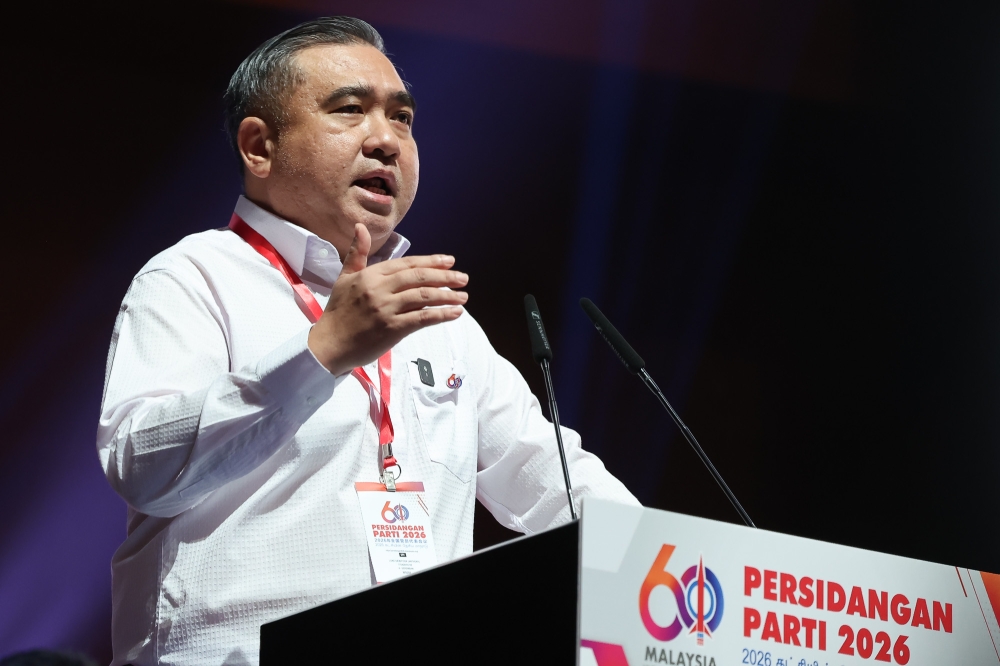
The Democratic Action Party has committed to providing comprehensive support for Prime Minister Datuk Seri Anwar Ibrahim's proposal to abolish the Universities and University Colleges Act (AUKU), marking strong alignment between the ruling coalition partners on what has become a flagship reform initiative. The backing came as DAP leaders reiterated their party's historical commitment to expanding academic freedoms and removing restrictions on university communities, echoing longstanding calls from student activists and civil society organisations that have campaigned for AUKU's repeal for decades.
However, the conditional nature of DAP's endorsement suggests that while the party supports the AUKU abolition as a concrete step forward, its leadership sees this as merely one component of a more ambitious reform programme that should extend into other areas of governance and institutional practice. Transport Minister Anthony Loke, speaking on behalf of the party, indicated that reforms must venture beyond the current legislative proposal to address related issues affecting universities and academic independence more comprehensively. This position reflects broader concerns within DAP's base regarding the scope and depth of institutional change, particularly given the party's traditional emphasis on democratic reforms and civil liberties.
The AUKU, enacted in 1971, has long been criticised for imposing restrictions on university-based political activities and limiting freedom of expression within academic institutions. These provisions have been invoked to restrict student gatherings, regulate campus political discourse, and constrain the ability of academics and students to engage in public debate on matters beyond narrow professional boundaries. For decades, opposition parties, civil society groups, and international observers have flagged the legislation as an anomaly in democratic societies, particularly given Malaysia's aspirations to develop world-class universities and attract international talent.
Anwar's administration has signalled its intention to move forward with AUKU's removal as part of a broader agenda focused on institutional reform and the expansion of democratic space. This represents a significant policy shift from previous administrations and aligns with commitments made during the 2022 election campaign that brought the current coalition to power. The move carries symbolic weight in signalling the government's direction on fundamental freedoms, even as Malaysia continues to grapple with competing pressures regarding national security, social harmony, and institutional stability.
DAP's enthusiastic endorsement carries particular significance given the party's longstanding advocacy for civil liberties and its representation of constituencies where civil society concerns carry particular resonance. The party's unconditional support for AUKU abolition demonstrates coherence with its electoral messaging and historical positioning on democratic freedoms. Yet the party's simultaneous emphasis on broader reforms suggests that DAP sees the AUKU measure as insufficient on its own to meaningfully transform Malaysia's institutional landscape or address the multiple layers of restriction affecting academic freedom and public discourse.
Loke's statement regarding the necessity for reform to extend beyond AUKU abolition appears aimed at positioning DAP as the guardian of transformative change within the coalition, distinguishing its approach from more gradualist or conservative voices within government. This positioning may also reflect calculations about maintaining support among younger urban voters and civil society constituencies that view institutional reform as central to Malaysia's democratic development. By emphasising that more comprehensive action is needed, DAP signals that it intends to remain active in pushing government policy beyond its current trajectory.
The broader context for these discussions includes ongoing debates within Malaysia regarding the balance between security imperatives and civil liberties, between social stability and freedom of expression, and between institutional inertia and democratic reform. Universities occupy a particular place in these debates, historically serving as incubators of intellectual discourse and political consciousness while also being viewed by security establishments as spaces requiring careful management. The AUKU represents one manifestation of this tension, and its removal would signal a deliberate choice to tilt this balance toward greater openness.
For Malaysian higher education institutions, AUKU abolition could enable greater intellectual dynamism and enhanced capacity to compete internationally for students and faculty. The legislation has been cited by some educators as an impediment to recruiting top academic talent and establishing Malaysia as a regional knowledge hub. Removing formal restrictions, however, would not automatically resolve all challenges facing universities, which increasingly compete in global rankings based on research output, faculty quality, and the intangible reputation factors that flourish in genuinely open intellectual environments.
The sequencing and implementation of AUKU abolition will require careful legislative work. Removing the act will necessitate clarity regarding what legal frameworks, if any, will replace certain provisions, how universities will establish new operational guidelines in the absence of statutory restrictions, and how security and academic integrity concerns will be addressed through alternative mechanisms. DAP's insistence on broader reform may reflect practical concerns about ensuring that the legislative transition occurs smoothly and that the removal of AUKU does not create institutional vacuums that undermine either academic governance or public confidence in university operations.
Looking forward, the DAP position suggests that coalition partners will need to navigate debates regarding what additional reforms should accompany AUKU abolition. Media freedom, public assembly regulations, and security legislation represent adjacent areas where similar tensions between openness and control persist. How the government handles the transition from AUKU will likely establish precedents for its approach to these related issues, making the party's emphasis on comprehensive reform potentially consequential for Malaysia's broader democratic trajectory.

