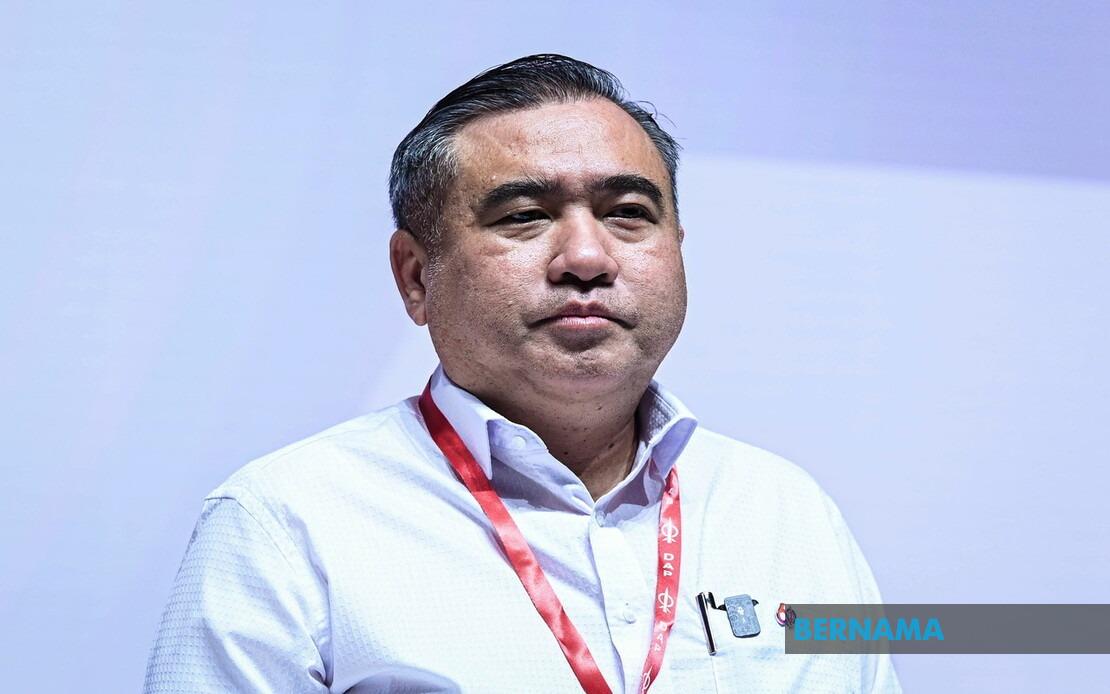
The Democratic Action Party has pledged to escalate grassroots concerns about government decisiveness through formal Cabinet proceedings, following its annual conference decision to stay committed to the ruling Unity Government coalition. DAP secretary-general Anthony Loke made the announcement in Putrajaya after the party concluded its 2026 conference, where members engaged in substantive debate over the party's continued role in government.
At the Putrajaya International Convention Centre, delegates were given an open forum to air grievances and offer candid assessments of both party performance and government effectiveness. The exercise produced mixed sentiment among the party base, with a substantial faction voicing frustration over what they viewed as insufficient governmental assertiveness and decisiveness in implementing policy. Despite these reservations, the overwhelming majority chose to maintain DAP's coalition participation rather than withdraw from the administration.
The conference motion to remain in the Unity Government secured backing from 88 percent of delegates who cast votes, translating to 1,857 in favour and 242 opposed, with seven spoilt ballots among 2,106 papers distributed. Loke characterised the outcome as a clear mandate while simultaneously acknowledging that the dissenting minority deserved respect within democratic norms. He explicitly ruled out any disciplinary action against conference attendees who had campaigned against continued participation, framing the debate itself as evidence of the party's commitment to internal pluralism.
Loke explained that the critical feedback generated during deliberations would be systematically compiled and forwarded to federal leadership through DAP's ministerial representatives in cabinet. This mechanism represents a formal channel for translating party sentiment into government policy discussions, allowing the party to press its constituent priorities without threatening coalition stability. The approach signals DAP's intention to function as an internal pressure point within government rather than opposition from the outside.
The party secretary-general further clarified that the governance reforms being discussed—including structural changes and anti-corruption initiatives—should not be dismissed as exclusively DAP's agenda, as political opponents have characterised them. Rather, Loke positioned these measures as commitments jointly endorsed by the Pakatan Harapan coalition and the broader Unity Government framework. Such reforms, including the separation of Attorney-General and Public Prosecutor roles and limiting Prime Ministers to two consecutive terms, emerged from electoral manifestos that predated the conference.
This distinction carries significant weight in Malaysian coalition politics, where individual parties frequently face accusations of pursuing narrow factional interests at the expense of collective government objectives. By emphasising the cross-party consensus underlying these proposals, Loke attempted to reframe DAP's advocacy not as unilateral pressure but as implementation of previously negotiated agreements. This rhetorical positioning becomes crucial when smaller coalition partners seek to exert influence without destabilising the broader governmental arrangement.
The conference debate itself reflected broader tensions within Malaysia's current political settlement. The Unity Government, which encompasses both the Pakatan Harapan coalition and Barisan Nasional, represents an unprecedented arrangement that requires continuous negotiation among historically antagonistic forces. DAP's internal discussion about government effectiveness touches on these underlying strains, as coalition partners navigate competing priorities and accountability to different voter bases. The party's 12 percent dissenting vote, while numerically modest, likely reflects concerns held by portions of DAP's support base about whether meaningful reform can occur within such a constrained political structure.
For Malaysian observers, the conference outcome demonstrates how coalition politics functions when constituent parties retain internal democratic processes. Rather than suppressing dissent or allowing it to rupture the government, DAP has channelled criticism into formal institutional pathways. This approach may offer a model for how coalition partners can maintain internal cohesion while still engaging substantive policy debates. However, whether the cabinet will genuinely integrate delegate feedback into governmental decision-making remains an open question that will test the sustainability of Malaysia's unity arrangement.
The explicit guarantee that no delegates would face consequences for their conference votes underscores DAP's effort to distinguish itself through democratic practice. This contrasts sharply with patterns in other Malaysian parties where internal dissent has sometimes triggered sanctions. By protecting minority opinion rights, DAP signals commitment to principle even when facing uncomfortable expressions of party member dissatisfaction. Such distinctions matter in Malaysian politics, where perceptions of internal democracy influence how parties attract and retain educated urban constituencies.
Looking forward, the success of DAP's cabinet channel strategy depends partly on institutional receptiveness and partly on the party's capacity to translate grassroots sentiment into compelling policy arguments. If cabinet colleagues dismiss delegate feedback as internal party management without policy consequence, DAP faces credibility challenges when reporting back to members about effective representation. Conversely, if the party can point to concrete policy outcomes influenced by conference decisions, the democratic cycle becomes meaningful rather than ceremonial. This dynamic will shape not only DAP's trajectory but also broader perceptions about whether Malaysia's unity government can accommodate internal coalition diversity while maintaining governmental effectiveness.

