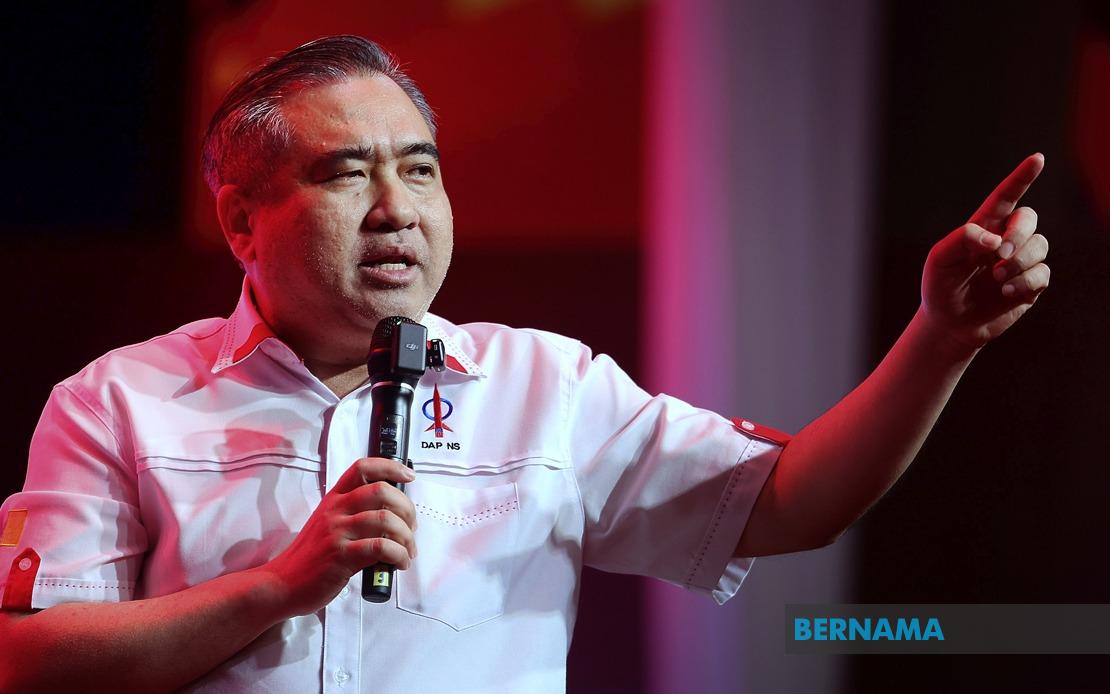
In a show of political restraint ahead of the 16th Negeri Sembilan state election, DAP secretary-general Anthony Loke has pledged to maintain a campaign centred on policy substance rather than personal criticism of political opponents. Speaking after a Pakatan Harapan dinner event in Seremban on July 19, the Transport Minister emphasised that voters deserve to hear what parties intend to deliver rather than witness mudslinging between candidates.
Loke's commitment reflects a broader push by the governing coalition to maintain unity and discipline during the electoral period. Prime Minister Datuk Seri Anwar Ibrahim has already signalled expectations that those holding government positions should resist the temptation to attack the Federal Government or their Cabinet colleagues while campaigning for state-level contests. This approach contrasts with traditional electoral warfare, where personal criticism and character attacks often dominate public discourse, particularly in competitive multi-party environments.
The DAP leader's decision carries practical implications for the contest, particularly given his own Cabinet rank and the overlapping responsibilities shared across coalition partners. He notes that he meets regularly with fellow Cabinet ministers in weekly government sessions, reinforcing the view that electoral campaigns need not rupture working relationships forged through collective governance. This reflects the pragmatic challenge facing unity governments: balancing electoral competition with the need to function as a cohesive executive.
Loke has extended this restraint by deliberately avoiding campaigning in the Rantau state constituency, where Foreign Minister and Barisan Nasional deputy chairman Datuk Seri Mohamad Hasan is contesting. By staying out of that race, Loke seeks to preserve harmony within the broader Unity Government framework that incorporates both Pakatan Harapan and BN components. This calculated withdrawal demonstrates how coalition politics can constrain conventional campaign strategies, even when parties theoretically oppose one another at the state level.
Instead of spreading his efforts widely, Loke has concentrated his personal campaign energy on the Chennah seat, which he himself is contesting, alongside selective support for other DAP candidates across the state. He has also assisted Menteri Besar Datuk Seri Aminuddin Harun in campaigning for the Linggi constituency, prioritising alliance cohesion over maximum electoral reach. This focused approach suggests a strategic calculation that disciplined, targeted campaigns may prove more effective than blanket messaging.
Addressing concerns that his ministerial responsibilities have caused him to neglect Chennah, Loke argues that his Cabinet position actually benefits the constituency through improved resource allocation and targeted government programmes. He points to allocations channelled toward Kampung MADANI projects as tangible evidence of his capacity to leverage ministerial influence for local benefit. This framing attempts to recast a potential liability—his demanding federal role—into a competitive advantage, suggesting voters should reward rather than punish leaders with access to higher-level decision-making.
The Transport Minister emphasises that despite his demanding schedule, Chennah remains well-served through a dedicated full-time team managing constituency affairs and resident support services. This institutional approach acknowledges the reality that modern Cabinet members cannot be constantly present in their constituencies, necessitating robust administrative structures and empowered local representatives to maintain constituent engagement. Whether voters accept this explanation may partly determine campaign success in Chennah.
Loke's emphasis on policy over personalities also positions Pakatan Harapan and its coalition partners as advocates for substantive governance during a period when Malaysian politics has sometimes been characterised by personality-driven narratives and factional disputes. By inviting comparison on programmatic grounds—what parties offer, how they intend to implement initiatives, which constituencies benefit from resource allocation—the coalition appeals to voters fatigued by endless character debates and hungry for concrete development promises.
The electoral calendar provides limited time for these messaging strategies to take hold. Early voting is scheduled for July 28, with polling day set for August 1, compressing the campaign window into a two-week period. Within this tight timeframe, campaigns must establish clear differentiators and persuade undecided voters. Loke's policy-focused approach requires consistent messaging discipline and clear articulation of DAP and coalition priorities, as there is minimal time to recover from missteps or pivot campaign themes.
For Malaysian political observers, Loke's stance reflects evolving expectations within the Unity Government regarding how coalition members should conduct themselves during competitive electoral contests. The implicit acceptance that BN and Pakatan Harapan components will oppose one another at state level while maintaining federal partnership creates novel constraints on traditional campaigning. This dynamic has particular salience for Negeri Sembilan, where state politics directly intersect with federal coalition dynamics.
The Negeri Sembilan contest thus becomes a test case for whether policy-driven, discipline-focused campaigning can succeed in contemporary Malaysian politics or whether grassroots expectations for more aggressive, personality-centred contests ultimately prove determinative. Voters' response to Loke's approach—whether they reward his stated commitment to restraint or view it as insufficient differentiation from competitors—may offer insights into broader shifts within Malaysian electoral behaviour and coalition dynamics.

