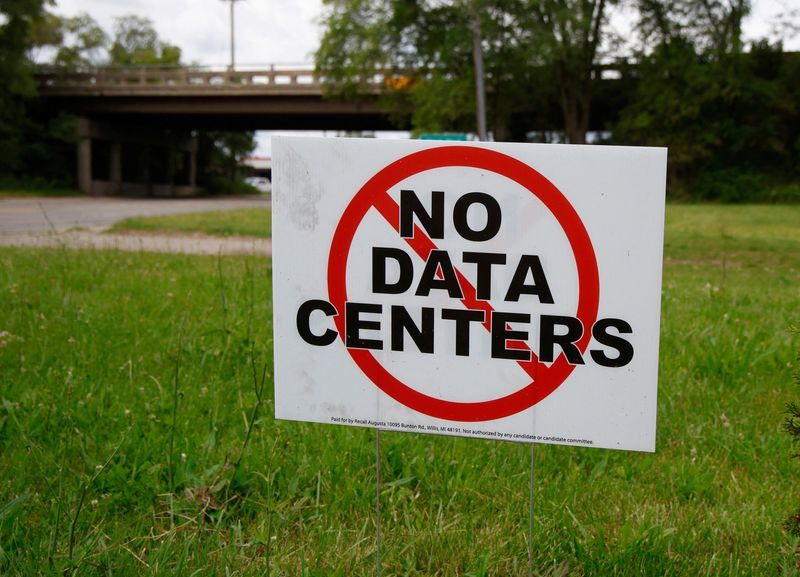
The backlash against artificial intelligence infrastructure is intensifying across the United States, with organisers planning a nationwide day of action involving protests in more than 125 locations on Saturday. This marks the first fully coordinated national movement against the accelerating deployment of data centers that tech giants such as Meta, Alphabet, Amazon, Microsoft and xAI are establishing at an unprecedented pace. The momentum reflects deepening public anxiety about how these massive facilities are reshaping American communities without adequate oversight or public consultation.
HumansFirst, the grassroots coalition spearheading the effort, draws its leadership and inspiration from established activist networks. The group's co-founder Amy Kremer previously led Tea Party organising during the 2009 movement, and she sees contemporary data center opposition as carrying similar populist energy. However, Kremer emphasises that opposition to data centers transcends traditional partisan boundaries. Unlike most contentious issues that cleave neatly along ideological lines, concerns about AI infrastructure facilities enjoy remarkable cross-political resonance. Evidence of this consensus appears in polling data released in June through a Reuters/Ipsos survey, which found that only one third of Americans support the current pace of data center construction. More strikingly, just 14 percent of survey respondents would tolerate a data center being built in their own community to support AI projects by major technology corporations.
The geographic distribution of Saturday's protests reveals which regions face the most immediate pressure from development. Texas, a dominant hub for data center investment and a Republican-leaning state, is set to host 16 separate demonstrations. Georgia, a crucial swing state in national elections, has mobilised 11 protests, while Democratic California, Republican Florida, and the pivotal Commonwealth of Pennsylvania each registered seven sites. This spread demonstrates how the issue transcends regional characteristics and state political alignment, touching communities across the ideological map.
Local resistance has long simmered beneath the surface of national politics. Municipalities and counties have emerged as frontline resisters to data center projects, with many developments proceeding under conditions that limit public transparency. Developers have secured approvals in numerous instances while binding local officials to non-disclosure agreements, effectively silencing community voices even as constituents raise objections. State and federal lawmakers are now racing to respond to constituent demands, recognising that data center expansion has become a potent electoral issue that could influence mid-term elections and the 2028 presidential contest.
The concerns driving this movement rest on three interconnected anxieties about the physical and environmental footprint of AI infrastructure. Citizens worry about dramatically elevated electricity demands placed on regional power grids, potentially resulting in higher energy bills for households and businesses. Water consumption represents another flashpoint, particularly acute in arid and semi-arid regions where supply is already constrained. In California's Imperial County, a proposed facility could extract 260 million gallons annually from the Colorado River, a scenario that strikes many residents as profoundly wasteful. Pollution and related environmental health impacts constitute the third pillar of concern, as communities fear degradation of air and water quality from large-scale industrial operations.
The Data Center Coalition, representing industry interests and functioning as the sector's primary lobbying organisation, has not formally responded to the planned protests but has previously indicated through statements to Reuters that the industry remains committed to responsible neighbourhood practices. This assertion rings hollow to many activists, particularly given the history of developments proceeding with minimal community engagement or regulatory review. Industry representatives counter that data center water consumption, while substantial in absolute terms, does not represent an outsized proportion relative to usage in agriculture, manufacturing, and other industrial sectors. This technical argument, however, fails to address the concentrated nature of data center demand on specific watersheds and the cumulative effect across multiple facilities.
The activist coalition has deliberately avoided endorsing categorical prohibitions on data center development despite noting that some Democratic-controlled jurisdictions, notably New York State, have implemented moratoriums on new approvals. Instead, HumansFirst and allied organisations have articulated a framework emphasising transparency, environmental stewardship, and accountability. Their platform demands that development processes become genuinely open to community scrutiny, that precious natural resources receive protection, that projects deliver tangible community benefits including well-compensated union employment, and that legal mechanisms exist to enforce developer compliance with pledges made during approval processes.
Demographic profiles of protest organisers underscore the cross-cutting nature of opposition. Eva Cardona, a 31-year-old first-time activist in Texas, describes herself as a political outsider motivated specifically by concerns about unregulated AI expansion and its environmental consequences. Ivan DelSol, a 54-year-old identified as ideologically progressive, is coordinating efforts in Imperial County centred on freshwater depletion. Their participation alongside conservatives and libertarians demonstrates how the data center issue operates outside conventional partisan frameworks.
For Malaysian and Southeast Asian observers, the American backlash carries significant implications. Many regional governments have actively courted data center investment as a strategy for attracting technology sector jobs and foreign capital. Singapore, with its advanced infrastructure and stable governance, has become a major AI infrastructure hub, whilst countries like Vietnam and Indonesia increasingly feature in site selection criteria for technology companies seeking to expand capacity. The American experience suggests that public opposition to these facilities can mobilise rapidly once communities perceive concrete threats to energy availability, water supplies, and environmental quality. Regional policymakers should anticipate similar dynamics, particularly in nations where water scarcity already constrains agricultural productivity or where electricity grids operate near capacity thresholds.

