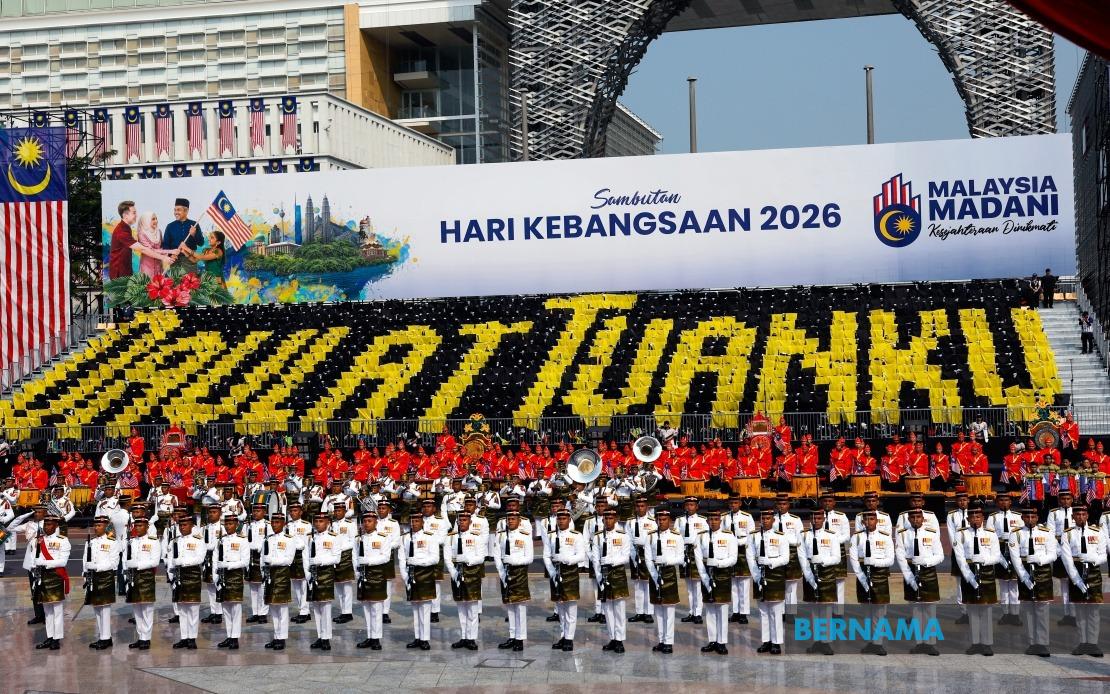
The administrative capital of Putrajaya will host a monumental celebration of Malaysia's 69th National Day tomorrow, bringing together thousands of participants in a carefully orchestrated display of national pride, cultural heritage, and patriotic sentiment. Under the unifying theme "Malaysia MADANI: Kesejahteraan Dinikmati" (Shared Prosperity), the festivities at Dataran Putrajaya will commence at 8:00 am and feature an extensive array of performances, military displays, and cultural showcases designed to reinvigorate citizens' connection to the nation's values and achievements.
The grandeur of the occasion is underscored by the attendance of His Majesty Sultan Ibrahim, King of Malaysia, alongside Her Majesty Raja Zarith Sofiah, Queen of Malaysia. Prime Minister Datuk Seri Anwar Ibrahim and Cabinet members will also grace the event, lending considerable political weight to the proceedings. This high-level participation signals the government's commitment to marking the milestone with appropriate ceremony and demonstrates the ceremonial importance placed on national cohesion at this juncture of Malaysia's development.
The logistical scale of tomorrow's celebration is staggering. Organisers have mobilised 10,819 parade participants organised across 76 contingents, complemented by 22 marching bands and 11 floats. The military and security dimension encompasses 328 land, naval, and air assets, whilst 112 working animals and 22 electric vehicles will participate in the procession. This comprehensive mobilisation reflects the deliberate integration of Malaysia's diverse institutional sectors—from defence and civil services to private enterprise and cultural organisations—into a unified national expression.
The opening performance, titled "Gema Inovasi MADANI", represents a conceptual bridge between Malaysia's traditional cultural foundations and contemporary aspirations. Orchestrated by the National Department for Culture and Arts under the Ministry of Tourism, Arts and Culture, this segment will deploy 150 musical instruments and 700 kompang (frame drums) played by performers representing Malaysia's major ethnic communities. The deliberate emphasis on percussion instruments symbolic of different ethnic groups underscores the government's narrative of harmony and shared identity as central to the MADANI concept of inclusive prosperity.
The parade structure itself has been designed to communicate distinct dimensions of national life and capability. The statehood component features military and national resilience institutions, including contingents from the National Resilience Leadership Academy and the National Defence University of Malaysia (UPNM), alongside National Service Training Programme participants. This segmentation emphasises institutional strength and defence preparedness. Simultaneously, the sports well-being section will showcase athletes and medalists who competed at the Glasgow 2026 Commonwealth Games, positioning Malaysian athletic achievement as representative of broader national excellence.
The inclusion of private sector entities—spanning companies like Munchy's Malaysia, ZUS Coffee, MR. D.I.Y Group (M) Berhad, and Carsome Sdn Bhd—alongside public service agencies reflects a contemporary vision of national celebration that integrates commercial participation. This approach recognises the private sector's role in economic prosperity and social contribution, aligning with the MADANI framework's emphasis on distributed well-being beyond government initiatives alone. The participation of service providers from security, road transport, civil defence, and firefighting services underscores the interdependence between public administration and citizen safety.
Tourism and cultural promotion feature prominently in tomorrow's display, with floats representing the Visit Malaysia Year 2026-2027 campaign showcasing state-specific tourism assets, endemic flora and fauna, and traditional attire from Malaysia's diverse communities. Strategic participation by Malaysia Airlines, AirAsia, Batik Air, and Air Borneo further emphasises Malaysia's regional connectivity and aviation prominence. The inclusion of Les' Copaque's animated characters Upin and Ipin appeals deliberately to younger audiences, suggesting organisers view National Day as an occasion for intergenerational transmission of patriotic values.
A particularly striking element involves a human graphics performance coordinated by 1,500 students from 36 schools across Selangor. These participants will create synchronised visual formations with music-driven choreography, transforming human bodies into dynamic graphic expressions of national themes. This pedagogical dimension—involving schools directly—embeds the National Day experience into formal education, potentially strengthening emotional attachment to national symbols among participants who may carry these memories throughout their lives.
The climactic moment will feature Royal Malaysian Air Force fighter jets performing an aerial display above Dataran Putrajaya, providing visceral demonstration of Malaysia's defence capabilities. This segment functions symbolically to reinforce national sovereignty and military strength before assembled crowds. The celebration will conclude at approximately 10:00 am with the theme song "Aku Berjanji" (I Promise), composed and performed by renowned vocalist Faizal Tahir, whose participation adds contemporary popular cultural resonance to traditional ceremonial structures.
Practical considerations reflect Malaysia's current environmental challenges. Communications Minister Datuk Seri Fahmi Fadzil, who chairs the main organising committee, has advised attendees to wear N95 face masks to mitigate effects of regional haze, with organisers distributing masks to over 10,000 participants. This pragmatic response to air quality challenges demonstrates the integration of public health considerations into large-scale national gatherings, particularly important given climate and transboundary pollution concerns affecting Southeast Asia.
The Ministry of Home Affairs has implemented comprehensive traffic management for the event, with full closure of Putrajaya's Core Island from 5:00 am on August 30 extending until 6:00 pm on August 31. Five major bridges—Seri Wawasan, Seri Saujana, Seri Gemilang, Putra, and Seri Ehsan—will be inaccessible, alongside multiple surrounding routes. These arrangements necessitate significant public cooperation and represent the substantial disruption required to host events of this magnitude, underscoring the resources invested in marking national occasions.
For Malaysian audiences and regional observers, tomorrow's celebration articulates the government's contemporary vision of national identity under the MADANI framework. The deliberate integration of military capability, cultural heritage, private sector participation, and youth engagement suggests an attempt to project unified national purpose across institutional and generational divides. The emphasis on ethnic representation through percussion instruments, diverse state tourism promotion, and inclusive participation patterns reflects ongoing negotiation of Malaysia's plural identity within frameworks of shared national purpose.

