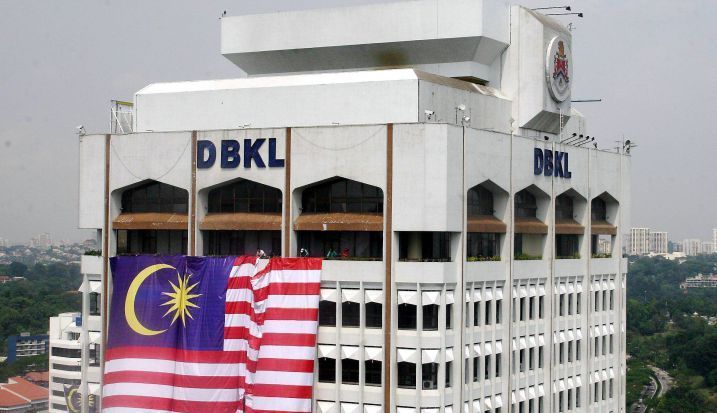
Kuala Lumpur City Hall (DBKL) has escalated its long-running dispute with the Taman Desa Phase 1 Residents Association (TDP1RA) by serving formal enforcement notices requiring the removal of facial-recognition scanners and boom gates from public roads within a fortnight. The action, taken on August 27, represents DBKL's first concrete step toward forcing compliance after months of warnings and negotiations that have failed to resolve the controversy surrounding the neighbourhood's access-control system.
Enforcement officers from DBKL affixed red notice papers to the facial-recognition devices positioned at Guard Posts 1 and 4, accompanied by yellow enforcement tape cordoning off the equipment. The notices explicitly reference Section 70 of the Street, Drainage and Building Act 1974, establishing clear legal grounds for the authority's action. According to a DBKL spokesperson, this measured two-week window was determined following consultation with the city's legal department, balancing administrative process with the need to restore public access rights. The spokesperson stated that if the association fails to comply voluntarily, DBKL will proceed with forcible removal of the structures.
This enforcement action culminates a protracted dispute that began when DBKL first discovered in March that the association had installed a comprehensive closed-circuit television and facial-recognition surveillance system without municipal authorisation. The March 5 letter from City Hall marked the initial official objection, but subsequent communications failed to achieve compliance. Following an inspection on August 17, DBKL determined that despite being granted an additional 30-day grace period, TDP1RA had not brought its operations into conformity with City Hall requirements. An August 18 letter then escalated the demand, explicitly ordering the complete reopening of Guard Posts 2, 5 and 6 to vehicle traffic and mandating the removal of all unapproved structures that obstruct public thoroughfares.
The escalation reflects mounting community opposition to the access restrictions. On August 24, more than 40 residents, predominantly aged 50 and above, staged a protest at Gate 5 on Jalan Desa Ria, highlighting the practical consequences of the barriers. The gate remains permanently sealed to vehicles and locked to pedestrians until 6 in the morning, forcing early risers to navigate a lengthy detour along a congested main road to access the neighbourhood's public park. This arrangement has generated widespread inconvenience and safety concerns among residents who use the amenities during dawn hours.
Beyond inconvenience, critics of the system raise substantive objections about its fundamental design. Multiple residents have characterised the facial-recognition technology as invasive and privacy-compromising, arguments that resonate with growing public sensitivity around surveillance systems in Malaysian residential areas. Equally concerning, residents worry that the physical barriers could obstruct or delay emergency vehicles responding to medical or fire incidents within the neighbourhood, a legitimate safety consideration that has not been adequately addressed by TDP1RA.
The residents association has defended its position by claiming to have followed proper procedures and secured overwhelming community support for the scheme. TDP1RA president Frank Yeh stated that the association obtained backing from 81% of residents, suggesting the initiative reflects majority preference within the neighbourhood. However, this claim appears inconsistent with the significant minority opposition evident in both the August 24 protest and broader community concerns about public access rights and surveillance overreach.
The dispute highlights the tension between gated-community aspirations and municipal authority over public thoroughfares. While residents associations in Malaysia's urban areas frequently seek to enhance security and control neighbourhood environments, local councils retain both legal responsibility and authority over public roads and access infrastructure. DBKL's position reflects this established principle: roads designated as public cannot be unilaterally restricted by residents, regardless of association consensus or resident approval percentages.
The facial-recognition technology at the centre of this conflict represents an emerging flashpoint in Malaysian urban governance. Unlike traditional security measures such as guardhouses and manned gates, automated recognition systems raise data protection and privacy implications that extend beyond mere access control. The absence of DBKL pre-approval for such surveillance infrastructure suggests the association proceeded without adequate consideration of these broader implications or municipal oversight requirements.
For other residential associations considering enhanced security measures, the Taman Desa case provides clear guidance: unilateral installation of access control devices or surveillance systems on public roads will face regulatory rejection regardless of resident support levels. Associations must obtain formal municipal approval before implementing such infrastructure, and DBKL's enforcement action signals the city council's determination to enforce this requirement.
The two-week deadline now becomes a critical juncture. If TDP1RA removes the barriers voluntarily, the association avoids the public relations embarrassment and operational disruption of DBKL-ordered demolition. Alternatively, if the association pursues legal challenge or seeks to maintain the system, DBKL appears prepared to undertake removal itself, converting a governance disagreement into a direct confrontation over municipal authority. This outcome would establish a significant precedent for how Kuala Lumpur handles future disputes between residents associations and city planning requirements.
The resolution of this case will likely influence how other Malaysian residential communities approach security infrastructure proposals. As urbanisation intensifies and residents increasingly seek gated arrangements, local authorities face mounting pressure to balance security desires against public access rights. DBKL's firm stance suggests that Malaysian municipal councils intend to maintain legal clarity on this boundary, ensuring that private resident preferences do not override public right-of-way principles.

