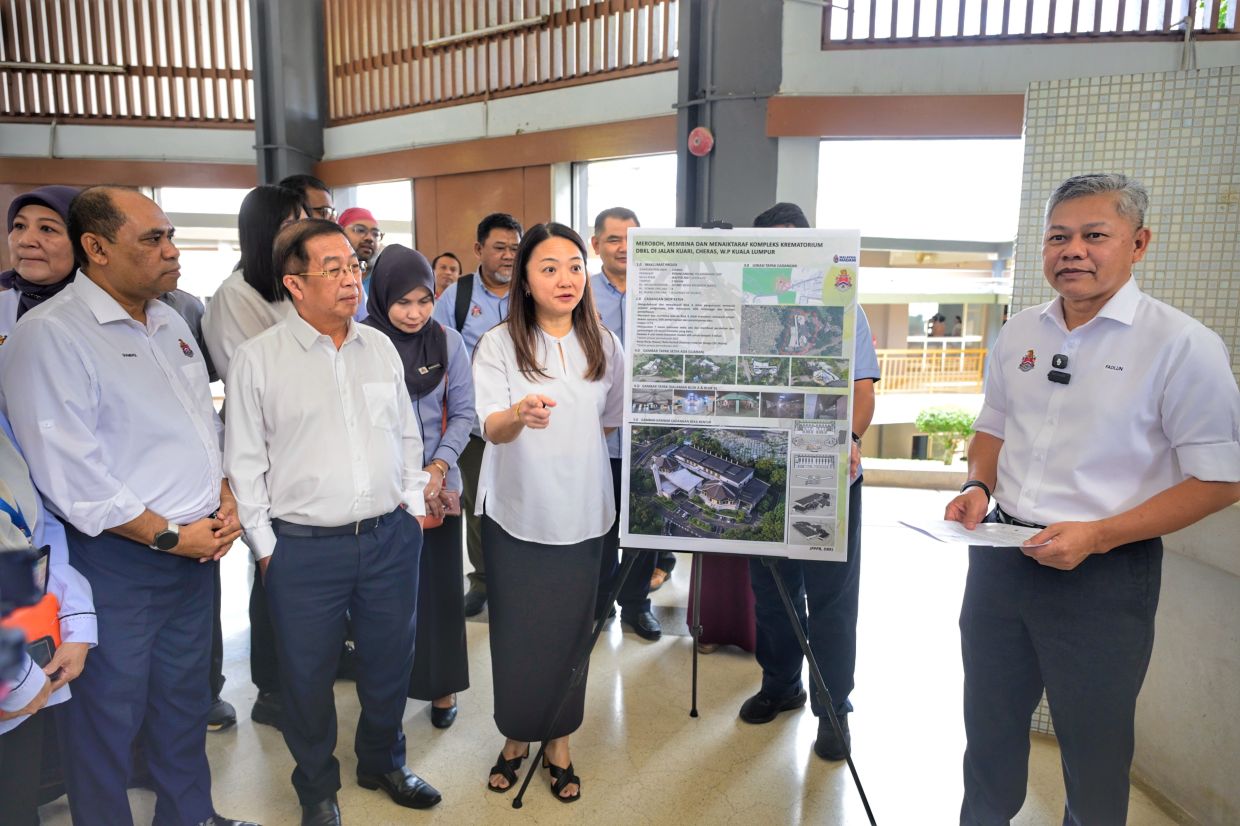
Kuala Lumpur City Hall plans a major infrastructure overhaul at its only municipal crematorium facility in Cheras, committing RM45 million to expand capacity and modernise operations at the ageing complex on Jalan Kuari. The enhancement initiative reflects the city council's recognition that existing infrastructure has become strained by demographic shifts and evolving service demands across Malaysia's capital, where diverse religious and cultural practices require dedicated amenities.
Mayor Datuk Seri Fadlun Mak Ujud announced the project during an inspection of the facility, confirming commencement in February 2026 with an anticipated completion window of two years. The expansion will introduce three additional cremation units alongside the current seven operational units, effectively increasing the facility's processing capacity. This calculated expansion acknowledges the crematorium's critical role within Kuala Lumpur's public infrastructure ecosystem, particularly for communities whose religious practices centre on cremation as the preferred method of final disposition.
The Cheras crematorium, which commenced operations in 1977, represents nearly five decades of continuous service to Kuala Lumpur's residents. Current utilisation figures reveal the facility's significance: the complex accommodates more than 5,800 cremations annually, underscoring how vital this single municipal resource has become to the city's non-Muslim population. As urban centres experience population growth and demographic diversification, such facilities face mounting pressure to balance service quality with operational capacity, a challenge that DBKL now directly confronts through this substantial investment.
Crucially, the upgrading programme has been structured to minimise disruption to grieving families and service continuity. Four of the ten cremation units will remain fully operational throughout the renovation and construction phases, ensuring that residents can access cremation services without significant delays or facility closures. This operational approach demonstrates careful planning to maintain essential services while simultaneously modernising infrastructure—a delicate balance often overlooked in municipal development projects but essential when dealing with sensitive end-of-life services.
The project received formal approval through the 13th Malaysia Plan, the government's mid-term development framework that allocates resources across priority sectors and infrastructure needs. This inclusion within the national development blueprint signals official recognition of the crematorium upgrade as a legitimate national infrastructure priority, reflecting broader acknowledgment that public amenities must adapt to demographic realities and community requirements across Malaysia's diverse population.
Cheras Member of Parliament Tan Kok Wai attended the facility inspection alongside DBKL leadership and urged acceleration of the upgrading initiative. Tan emphasised that the facility's age—now surpassing 50 years—combined with Kuala Lumpur's expanding population creates an urgent case for modernisation. His advocacy reflects parliamentary-level attention to municipal services, demonstrating how local infrastructure deficiencies can elevate to political discourse when public need becomes evident.
Minister in the Prime Minister's Department (Federal Territories) Hannah Yeoh participated in the announcement, signalling federal government engagement with metropolitan infrastructure challenges. Her presence underscored inter-governmental coordination between federal and municipal authorities in addressing the Federal Territory's service requirements, particularly as Kuala Lumpur continues expanding as a major urban centre attracting continued population influx.
Beyond the crematorium project, Yeoh revealed parallel initiatives addressing complementary infrastructure gaps within the capital's funeral and burial provisions. Federal authorities are collaborating with the Selangor government to identify and develop suitable sites in Semenyih specifically designated for Muslim cemetery facilities. This coordination reflects recognition that Kuala Lumpur faces acute spatial constraints limiting burial ground availability for Muslim populations, necessitating regional solutions that extend beyond the federal territory's administrative boundaries.
The synchronized approach to upgrading both cremation and burial infrastructure reveals sophisticated policy thinking about end-of-life services across Malaysia's religiously plural society. Rather than viewing these investments as separate initiatives, authorities evidently recognise them as complementary components within a comprehensive framework ensuring diverse communities receive appropriate facilities reflecting their cultural and religious requirements. This integrated perspective contrasts with more fragmented approaches to municipal amenities.
For Malaysian regions experiencing similar demographic pressures, the Cheras crematorium expansion model offers instructive lessons about proactive infrastructure planning. As Southeast Asian cities grapple with rapid urbanisation, housing expansion, and demographic change, adequate provision for essential services—including end-of-life facilities—often receives inadequate attention until crisis points emerge. Kuala Lumpur's RM45 million commitment represents acknowledgment that such planning should precede rather than follow service breakdowns.
The upgrade also carries implications for private funeral service providers operating within Kuala Lumpur, as expanded public sector capacity may influence competitive dynamics and pricing within the cremation services market. Enhanced municipal provision could moderate service costs for residents while establishing benchmarks for professional standards and operational practices. Beyond immediate KL implications, other major Malaysian cities monitoring infrastructure gaps may consider whether comparable investments in funeral and burial amenities require urgent attention.
Implementation success will largely depend on effective project management and adherence to the February 2026 commencement timeline and two-year completion schedule. Kuala Lumpur residents, particularly families from non-Muslim communities frequently utilising cremation services, will closely observe whether the upgrade delivers promised capacity improvements and maintains service quality throughout the renovation process. This project ultimately represents DBKL's commitment to equitable service provision across the city's diverse population, ensuring essential end-of-life infrastructure meets contemporary needs.

