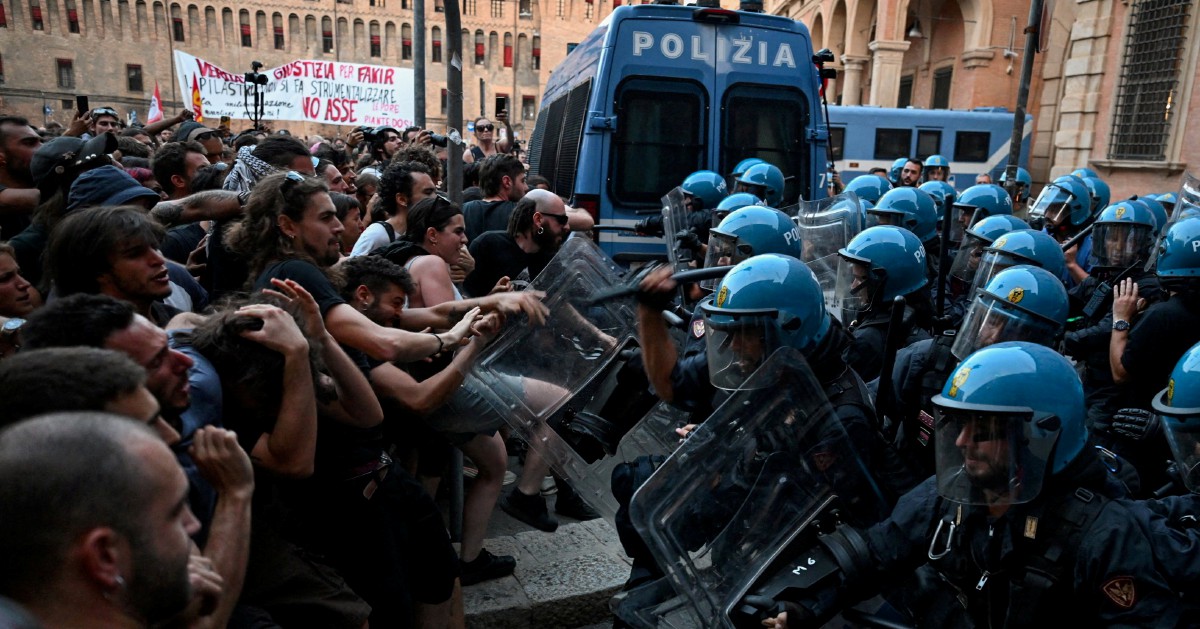
A Moroccan national's death while being arrested by Italian police has triggered a diplomatic incident and street demonstrations, prompting calls from both countries' governments for answers about what occurred. The incident has become the latest flashpoint in a region where police conduct during arrests of migrant communities remains a contentious issue, raising fresh questions about accountability and training standards within law enforcement agencies across the Mediterranean.
Morocco's government has formally requested comprehensive clarification regarding the circumstances surrounding the death, signalling that the matter will not be quickly dismissed despite Italy's institutional responses. The diplomatic pressure reflects broader sensitivities across North Africa and the Middle East concerning how nationals are treated during law enforcement operations in European countries, particularly when vulnerable populations or migrants are involved.
Italian Prime Minister Giorgia Meloni issued a statement on Tuesday underscoring the importance of pursuing the investigation to its conclusion and establishing clear facts about what transpired. Her commitment to transparency and thoroughness represents an attempt to contain potential diplomatic fallout, though it also acknowledges the gravity of public concern surrounding the incident. Meloni's framing emphasises adherence to the rule of law rather than defensive posturing, a signal that the government recognises the reputational stakes involved.
The arrest itself sparked demonstrations, suggesting that local communities and activist groups view the death as symptomatic of broader systemic issues rather than an isolated occurrence. Street protests typically indicate public anger that transcends the specific incident, often reflecting accumulated grievances about policing practices, discrimination, or inadequate oversight mechanisms. In Italian cities with significant migrant populations, such incidents invariably trigger debates about how law enforcement engages with non-citizens and marginalised groups.
For Malaysia and Southeast Asia, this episode serves as a reminder of the vulnerability faced by nationals working or residing abroad, particularly in Europe where migration pressures and integration challenges have intensified political tensions. Malaysian workers in Italy and across the EU, whilst not facing the same demographic pressures as North African communities, remain subject to the same legal systems and police authority structures. The case underscores the importance of consular vigilance and bilateral cooperation on citizen protection.
Italy's domestic political landscape adds complexity to how this incident will be handled. The Meloni government, which came to office partly on a platform emphasising border security and immigration concerns, must balance its stated commitment to law and order with accountability for state actions. Any perception of a cover-up or inadequate investigation would undermine claims of institutional impartiality and could escalate tensions with Morocco, a significant regional power in North Africa with whom Italy maintains substantial trade and diplomatic relations.
The investigation will likely focus on whether arrest procedures were followed correctly, whether appropriate medical assistance was provided, and whether the individual's vulnerability or health conditions were recognised by officers. Italian prosecutors will need to determine whether any actions constituted excessive force or negligence, questions that carry both criminal and civil liability implications. The thoroughness of this process will significantly influence public perception in both countries.
Morocco's diplomatic approach—seeking clarification rather than immediately condemning Italy—suggests a measured response designed to secure answers without triggering a broader diplomatic rupture. However, sustained public anger in Morocco or perceived inadequacy of the investigation could force the government's hand toward stronger positions. The Moroccan government faces domestic pressure to demonstrate that it is protecting its citizens' interests, particularly given that such incidents reflect on national honour and governmental competence in international affairs.
Regional observers will closely monitor how Italian authorities handle the investigation, as the outcome could set precedents for how similar incidents are addressed. The involvement of international scrutiny and media attention means that shortcuts or minimal accountability would be particularly visible and damaging to Italy's international standing. For EU countries managing complex migration dynamics, how they investigate such deaths becomes part of their credibility on human rights matters.
The incident also highlights the human costs of migration and law enforcement encounters at borders and within societies experiencing demographic change. Both Italy and Morocco share interests in stable migration management and orderly border administration, making cooperation on such investigations mutually beneficial. Transparent processes that establish facts and assign responsibility proportionally serve both countries' long-term interests in maintaining functional bilateral relations.
For international observers tracking police accountability in Europe, this case will contribute to broader conversations about training standards, oversight mechanisms, and the rights of individuals during arrest procedures. The outcome—whether it leads to convictions, reforms, compensation, or merely bureaucratic reviews—will inform future assessments of institutional capacity to police itself fairly. Italy's demonstrated commitment to pursuing truth, as Meloni stated, will ultimately be judged by actions rather than rhetoric.

