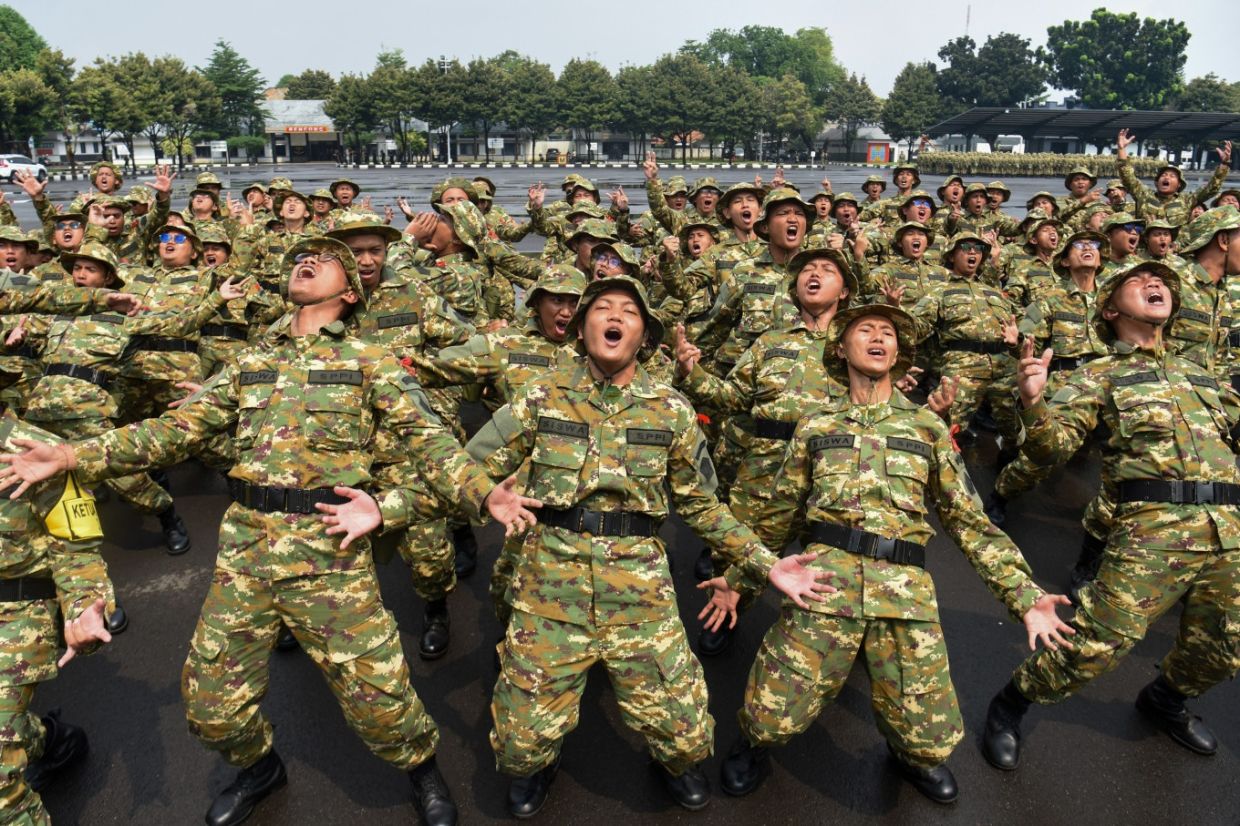
President Prabowo Subianto's ambitious programme to establish rural cooperatives and fishing villages has encountered a serious crisis following the deaths of four participants in mandatory military-style training. The fatalities, occurring within days of the 30-day basic military course beginning, have prompted urgent calls from lawmakers, civil society organisations and government officials to fundamentally reassess or halt the initiative entirely. The training, administered through the Defence Ministry's reserve component, has drawn more than 35,000 participants who are being prepared to manage the extensive network of cooperative units the government plans to establish across the archipelago by 2029.
The deaths paint a troubling picture of the training's physical toll. Anisa Muyassaroh succumbed to heat stroke while participating in activities held in Balikpapan, East Kalimantan. In South Sumatra, Yonanda Muhammad Taufiq collapsed from cardiac arrest following introductory exercises at a training facility in Baturaja. A third participant, Novia Rahmadhani Sihotang, died in Jakarta after developing serious health complications linked to tuberculosis. Most recently, Muhammad Rifqi Renaldi Gunawan experienced severe respiratory distress while training at an Air Force facility in the capital and died early Friday morning at a hospital despite receiving intensive medical intervention. The timing and circumstances of these incidents underscore serious deficiencies in health screening, medical supervision and emergency response protocols.
Defence Ministry spokesperson Brigadier General Rico Ricardo Sirait acknowledged the gravity of the situation on Friday, announcing a comprehensive programme review focusing on enhanced health screening procedures, better early detection of medical conditions, improved participant monitoring and strengthened emergency protocols. Yet this response, while acknowledgment of problems, came only after the fourth death and appears reactive rather than demonstrating the proactive oversight expected for a programme involving tens of thousands of civilians in potentially dangerous physical activities. The ministry's willingness to review procedures suggests internal recognition that current safeguards are inadequate, raising questions about why such protections were not implemented before the training commenced.
Human rights advocates have taken a harder line than government officials, demanding immediate cessation of the military training component altogether. Amnesty International Indonesia's executive director Usman Hamid characterised the initiative as fundamentally flawed, calling it "a fatal mistake that must be stopped immediately." The organisation argues that military-style training is entirely inappropriate for individuals being prepared to manage cooperatives, which traditionally operate according to democratic principles emphasising collective decision-making and member participation rather than hierarchical military structures. Hamid has called for an independent investigation to examine whether training deficiencies directly contributed to the deaths and whether the programme reflects a troubling pattern of militarising civilian governance under the Prabowo administration.
This critique extends beyond immediate safety concerns to encompass deeper anxieties about the direction of Indonesian governance. Usman explicitly linked the military training requirement to Indonesia's authoritarian past, particularly the New Order period when the military exercised pervasive influence over civilian institutions and society. For critics, the programme represents a concerning regression toward that model, where military discipline and hierarchy supplant civilian-centred approaches to institutional management. Cooperatives, by their philosophical nature, depend on voluntary membership, transparent governance and member-driven decision-making—principles fundamentally at odds with military command structures and obedience protocols.
Parliamentary scrutiny has also intensified, with members of the House of Representatives Commission I, which oversees defence matters, closely monitoring the programme. Dave Laksono, Commission I deputy chair from Golkar Party, acknowledged the need for systematic evaluation while stopping short of recommending immediate suspension. Laksono proposed refining training methods and emergency response mechanisms to better protect participants, suggesting that discipline, leadership and nationalism—the stated objectives of the military component—could potentially be achieved through less physically demanding approaches. His measured response reflects political sensitivities within parliament regarding a signature presidential initiative, yet also signals backbench concern about the programme's implementation.
Commission member Imas Aan Ubudiyah from the National Awakening Party stressed that more rigorous health screening must become integral to training procedures. She advocates for comprehensive risk mitigation standards, enhanced medical supervision and careful assessment of individual physical capabilities before participation. These recommendations suggest that the current approach involves insufficient pre-screening of participants, meaning individuals with underlying health vulnerabilities—whether known or undiagnosed—may be engaging in strenuous activities without appropriate medical assessment. Such fundamental gaps in protocol appear especially troubling given that cooperative managers represent a diverse demographic with varying age profiles and health statuses.
The government's official response, articulated by Presidential Chief of Staff Dudung Abdurachman, has emphasised a lack of evidence for negligence while acknowledging the deaths remain under investigation. Abdurachman contended that the training itself is not particularly strenuous, attributing the fatalities to possible underlying health conditions or other unidentified factors. This characterisation appears at odds with the pattern of heat stroke and cardiac complications occurring during training activities, suggesting either that physical exertion is more demanding than officials acknowledge or that participants lack adequate medical preparation and monitoring. Abdurachman's assertion that future sessions must prioritise safety acknowledges implicit deficiencies in current protocols without clearly specifying what changes will be implemented.
The programme's broader context underscores the stakes involved. The government aims to establish 80,000 cooperative units and 5,000 fishing villages by 2029, representing an enormous institutional undertaking. The cooperative managers recruited through this training will form the backbone of governance for these entities. The failure to ensure their safe passage through basic training raises serious questions about the government's readiness to manage such a vast expansion of cooperative infrastructure. If the screening, training and support systems prove inadequate at the foundational stage, concerns about programme implementation and sustainability at scale become inevitable.
For Malaysia and the wider Southeast Asian region, this episode carries relevant lessons about the risks of militarising civilian governance structures and the importance of rigorous safeguards when implementing mass training programmes. As various governments across the region pursue cooperative and community development initiatives, the Indonesian experience demonstrates that imported military training methodologies may conflict with democratic principles and pose tangible risks to participants. The deaths have exposed significant gaps between aspirational programme design and operational implementation capacity, a pattern that development initiatives across Southeast Asia frequently encounter when ambition outpaces institutional preparedness.
The path forward for Indonesia's cooperative initiative remains uncertain. The government faces pressure to demonstrate that the programme can operate safely while maintaining its disciplinary objectives, or alternatively to accept that civilian management training requires fundamentally different approaches. Whether the comprehensive reviews announced by Defence Ministry officials will prove substantial or merely performative remains to be seen. Meanwhile, the families of the four deceased participants await answers about how these deaths occurred and whether systemic failures contributed to tragedies that should have been preventable through adequate health screening and medical oversight. The international development community will likely watch closely to see whether Indonesia can credibly reform the programme or whether fundamental restructuring becomes necessary.
Sustaining public confidence in the cooperative initiative depends critically on restoring safety credibility. The government's initial response, though acknowledging problems, has not fully convinced critics that adequate safeguards will be implemented. Independent oversight, transparent investigation outcomes, and demonstrable changes in training protocols will be essential to reassure both participants and the broader public that the programme can achieve its ambitious objectives without imposing unacceptable human costs. The coming weeks will prove decisive in determining whether the military training component continues, evolves substantially, or is abandoned in favour of civilian-centred management education approaches.

