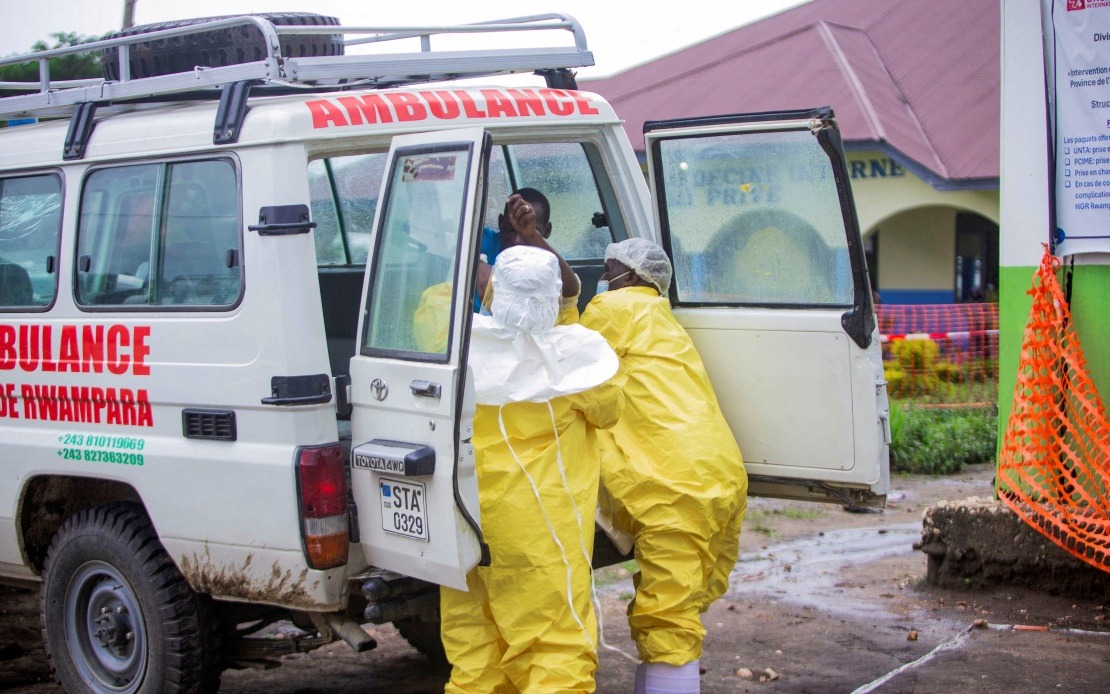
The Democratic Republic of the Congo continues to grapple with a deepening Ebola crisis as health authorities confirmed the virus has now penetrated five provinces with the cumulative caseload approaching 1,900 infections. According to data released by the DRC's health ministry on Sunday and covering reports through Friday, the nation has documented 1,873 confirmed cases alongside 672 fatalities, underscoring the severity of an outbreak that emerged just two months earlier in May.
The geographic expansion of the outbreak represents a troubling development for disease control efforts, with new provincial areas joining previously affected regions. The five provinces now recording cases include Ituri, North Kivu, South Kivu, Haut-Uele and Tshopo. Notably, Haut-Uele and Tshopo appeared in the official national situation report for the first time during this reporting period, signalling that containment efforts have not yet succeeded in limiting the virus's territorial reach across the vast central African nation.
Epidemiological investigations undertaken by DRC health authorities and their international partners have established direct connections between newly discovered cases in the two freshly affected provinces and the primary outbreak epicentre located in Ituri province. These links trace through documented contact chains and population movements between regions, suggesting that rather than representing entirely independent viral introductions, the expansion reflects the virus's continued transmission through human networks across provincial boundaries.
The strain on healthcare infrastructure across the DRC has reached critical levels, with 763 patients currently isolated within treatment facilities or receiving active hospital-based care. More alarmingly, bed occupancy rates at designated Ebola treatment centres have climbed to 95.1 percent, indicating that healthcare systems are operating near maximum operational capacity with minimal surge capability. This saturation presents profound risks, as even modest increases in case numbers could overwhelm treatment availability and force difficult decisions regarding patient management.
Within the broader caseload, authorities have documented 306 individuals who have recovered from Ebola infection, representing a modest recovery rate that highlights the disease's lethality. The case fatality rate reflected in current figures stands considerably high, with nearly 36 percent of confirmed cases resulting in death—a proportion consistent with historical patterns for Ebola outbreaks but nonetheless reflecting the limited treatment options available even with supportive care. Additionally, health workers continue investigating 299 suspected cases that have not yet been laboratory-confirmed, with 91 deaths recorded among these suspected cases pending verification.
The causative agent behind this outbreak has been identified as Bundibugyo ebolavirus, one of several known Ebola species. The formal declaration of the outbreak occurred on May 15, meaning by mid-July the epidemic had persisted for approximately two months with accelerating case discovery rather than declining incidence rates. This trajectory contrasts with some historical outbreaks and underscores challenges in achieving rapid outbreak control despite international support and heightened surveillance measures.
For Southeast Asian nations including Malaysia, the DRC Ebola outbreak carries both direct and indirect implications. The direct concern centres on potential international travel and commerce links that could theoretically introduce the virus beyond Africa, though Ebola's transmission mechanics—requiring direct contact with bodily fluids—render casual international traveller transmission unlikely. However, the indirect implications merit closer attention, particularly regarding global health security architecture and regional preparedness planning. The DRC outbreak demonstrates how even well-resourced international disease control systems can struggle against viral spread in settings marked by geographic vastness, limited infrastructure, and ongoing security challenges that impede systematic response implementation.
Regional health authorities across Southeast Asia have likely implemented enhanced screening protocols at points of entry and maintained heightened vigilance regarding potential imported cases, though current risk assessments generally characterise the regional threat as limited. Nevertheless, the outbreak underscores the importance of sustained investment in surveillance systems, laboratory capacity, and rapid response capabilities that enable early detection and containment of emerging infectious disease threats before they achieve wide geographic distribution.
The Democratic Republic of Congo's experience with Ebola containment across five provinces simultaneously illuminates the complexity of managing viral outbreaks in sub-Saharan African contexts. Supply chain vulnerabilities, security constraints affecting fieldwork, population mobility patterns, and limited treatment facility availability collectively constrain response effectiveness even when international expertise and resources are mobilised. These systemic challenges cannot be rapidly remedied and will likely continue shaping outbreak trajectory for several additional months, with case numbers potentially continuing their upward trend despite sustained control efforts.

