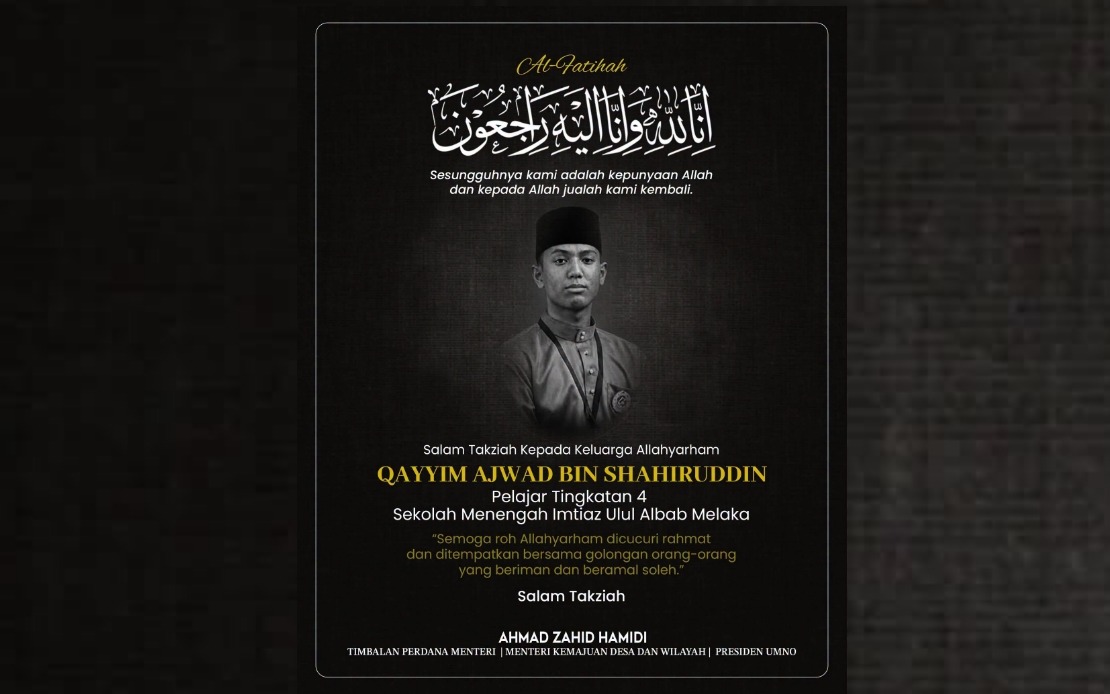
Deputy Prime Minister Datuk Seri Dr Ahmad Zahid Hamidi has conveyed his sympathies to the family of Qayyim Ajwad Shahiruddin, a student at Sekolah Menengah Imtiaz Ulul Albab in Melaka, following the teenager's death today from complications related to injuries sustained in a motor vehicle collision. The tragic incident underscores the ongoing concerns about road safety among school transportation in Malaysia, particularly when students are travelling for extracurricular activities away from the main campus.
The student passed away after nearly three weeks of receiving medical treatment for injuries acquired during the July 8 accident, which took place on Solok Duku in Melaka while the school group was returning from a table tennis championship held at Sekolah Jenis Kebangsaan Cina Cheng. The collision involved the school vehicle and a lorry, affecting multiple occupants including the accompanying teacher and three other students in addition to Qayyim Ajwad.
In a social media statement, Ahmad Zahid articulated the profound emotional toll such losses inflict on educational institutions and their communities. He characterised the students of SM Imtiaz Ulul Albab as extensions of his own family, suggesting a personal connection and responsibility that extends beyond his formal political duties. This sentiment reflects broader concerns among Malaysian leadership about the welfare of young people under their stewardship, particularly in circumstances involving preventable tragedies.
The deputy prime minister simultaneously directed prayers toward the recovery of the remaining accident victims who continue to receive medical care in hospitals. His acknowledgment of their ongoing struggles demonstrates an attempt to maintain focus on the full scope of the incident rather than treating it as a single fatality. Road accidents involving school groups often result in multiple casualties at varying degrees of severity, and survivors may face long-term physical and psychological recovery periods.
Ahmad Zahid invoked Islamic prayer traditions, requesting that believers recite al-Fatihah for the deceased student while beseeching divine mercy and forgiveness. This religious framework for public expression of grief resonates deeply within Malaysian Muslim communities and represents a culturally appropriate response mechanism for senior government officials navigating tragedy. The invocation of spiritual comfort alongside secular condolences reflects Malaysia's multifaith context and the importance of religious observance in public life.
The July 8 collision represents one of several road incidents involving school transportation that have raised questions about vehicle safety standards, driver training, and route planning protocols. The fact that the accident occurred while students were participating in an officially organised extracurricular activity places institutional responsibility considerations into sharp focus. Schools coordinating off-campus events must carefully evaluate transportation logistics, driver qualifications, and emergency response procedures to minimise risk exposure.
Melaka's roads, particularly secondary routes like Solok Duku, have been subject to varying levels of traffic management and infrastructure investment. The collision between a car and commercial lorry suggests potential complications involving vehicle visibility, speed management, or route familiarity during daylight hours. Understanding the specific causative factors remains important for developing preventive measures that could protect future student groups undertaking similar journeys.
The death marks a sobering reminder of the fragility of young lives and the irreversible consequences that traffic accidents can impose. For SM Imtiaz Ulul Albab, this represents not merely a statistical casualty but the loss of a member of their school community. The psychological impact on surviving students, the teacher involved, and the broader school population will likely extend well beyond the initial grief response, potentially affecting student participation in future extracurricular activities.
From a policy perspective, this incident invites scrutiny of school transportation guidelines, insurance coverage specifications, and emergency medical protocols established for student activities conducted away from school premises. Malaysian education authorities and school administrators may face mounting pressure to implement additional safeguards, though balancing protective measures against restrictions on student development opportunities remains an ongoing challenge for institutional leadership.
The incident also highlights the intersection between traffic safety advocacy and educational administration in Malaysia. While road accidents represent a significant public health concern nationwide, those involving young people and organised school groups carry heightened emotional weight and political implications. Ahmad Zahid's public mourning reflects not only personal empathy but also recognition of the political dimensions inherent in youth deaths resulting from preventable circumstances.
Moving forward, the school community's recovery process will involve not only addressing immediate grief but also implementing systemic improvements to prevent recurrence. This may encompass revised transportation protocols, enhanced driver training requirements, improved communication with parents regarding off-campus activities, and more rigorous vehicle maintenance standards. The challenge lies in maintaining commitment to these improvements beyond the initial period of heightened awareness that typically follows high-profile incidents.

