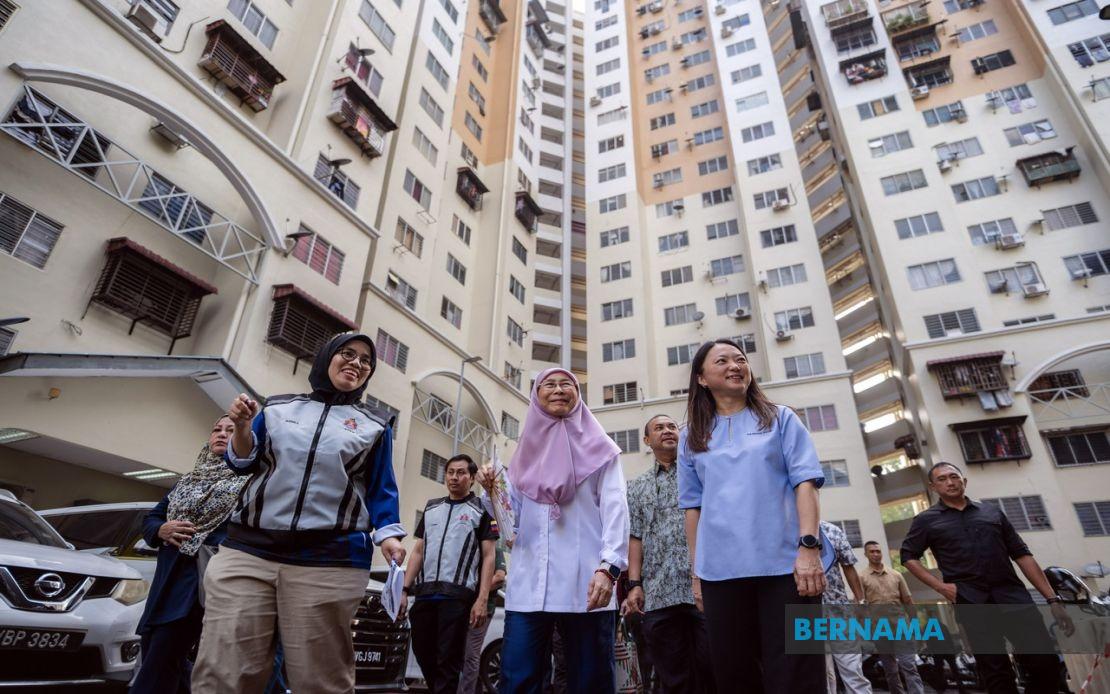
The Desa Tun Razak People's Housing Project has become one of the success stories in Kuala Lumpur's ambitious overhaul of aging public housing facilities, with its RM9.6 million upgrade now complete. The completion marks a significant milestone in the federal government's coordinated push to restore and enhance living conditions across the city's network of 61 PPRs, with 22 projects now finished and the remainder expected to follow by year-end. The comprehensive intervention reflects a deliberate shift away from reactive maintenance towards systematic, properly funded renovation of housing blocks that serve more than 8,000 residents at Desa Tun Razak alone.
Minister in the Prime Minister's Department (Federal Territories) Hannah Yeoh framed the investment as a philosophical change in how government approaches public housing stewardship. Rather than addressing problems piecemeal as they emerge, the RM300 million allocation approved this year establishes dedicated maintenance funding that federal lawmakers in Kuala Lumpur have collectively endorsed. The difference is substantial: buildings without adequate reserve funds for upkeep inevitably deteriorate, creating safety hazards and eroding resident confidence in government provision. Yeoh's emphasis on avoiding ad hoc maintenance reflects lessons learned from previous decades when deferred repairs compounded problems and created expensive crises.
The Desa Tun Razak PPR, operational since 1998, required attention to multiple aging infrastructure systems accumulated over two decades of continuous habitation. The RM9.6 million expenditure was distributed strategically across critical systems: RM7 million went to comprehensive repainting that refreshed common areas and building facades, while RM1.68 million targeted fire prevention systems and electrical wiring upgrades. An additional RM1 million addressed road resurfacing within the development. Kuala Lumpur Mayor Datuk Fadhlun Mak Ujud noted that upgrades also encompassed the fire riser system and drainage infrastructure, indicating that the work extended beyond cosmetic renewal to address foundational utility networks.
Fire safety received heightened attention following several incidents at PPRs during the previous year. This reflected a sobering reality: high-density residential blocks with aging electrical infrastructure and limited emergency access carry elevated risk. By systematically upgrading fire detection, suppression, and riser systems, authorities addressed a vulnerability that affects resident safety directly. The decision to prioritize such safety systems alongside electrical work demonstrates recognition that infrastructure investment must balance resident comfort with protection from genuine hazards. For developments housing thousands of residents, including families with elderly persons and young children, fire safety represents non-negotiable infrastructure.
The broader RM300 million program reflects understanding that public housing serves a critical role in Malaysian urban policy. PPRs accommodate citizens who might otherwise struggle to afford housing in expensive metropolitan markets, yet these facilities require maintenance budgets comparable to private developments. By dedicating substantial funding to systematic upgrading across all 61 Kuala Lumpur PPRs, the federal government signals commitment to preserving the value and safety of public housing stock. For residents, the visible improvements—fresh paint, modern fire systems, repaired roads—demonstrate that authorities have not abandoned these communities to decline.
Datuk Seri Dr Wan Azizah Wan Ismail, representing Bandar Tun Razak in Parliament, used the occasion to emphasize resident responsibility for maintaining upgraded facilities. Her intervention suggests an implicit social contract: government invests in upgrading, residents must steward these improvements. This reciprocal expectation acknowledges that infrastructure deteriorates through both inadequate maintenance funding and resident neglect. Cultural attitudes toward communal property significantly influence whether renovated facilities remain in good condition. Fostering respect for public property requires sustained community engagement beyond the completion celebration.
The parking shortage mentioned by Kuala Lumpur City Hall represents an ongoing challenge at high-density residential developments. DBKL's proposed solution—identifying temporary parking areas on vacant land—addresses an immediate congestion issue while searching for permanent solutions. Vehicle ownership in Malaysian urban areas continues rising, frequently outpacing parking provision in older residential schemes. This gap between vehicle ownership and parking infrastructure increasingly characterizes public housing, affecting resident quality of life and neighborhood traffic patterns. Temporary solutions offer breathing room while planners develop more comprehensive approaches.
The completion rate—22 of 61 PPRs finished—indicates progress but also illustrates the magnitude of the broader upgrade challenge. Completing the remaining 39 projects within the 2024 calendar year represents ambitious scheduling that depends on sustained contractor performance and absence of complications. For residents awaiting upgrades, timely completion matters greatly; aging facilities accumulate problems that worsen quality of life and increase long-term renovation costs. The government's commitment to completing all projects this year testifies to political priority, yet execution often encounters unforeseen delays.
This upgrading initiative carries implications beyond Kuala Lumpur's borders. Other Malaysian cities operate PPR schemes requiring similar maintenance intervention. The federal capital's systematic approach offers a model that other local authorities might examine and adapt. Regional coordination of public housing maintenance could prove more efficient than fragmented municipal efforts. Additionally, the transparent allocation of funds and public reporting on project completion helps establish accountability standards that residents elsewhere might expect from their municipal governments.
The investment also reflects broader demographic and urban policy considerations. Malaysia's working-class population requires affordable housing options in major cities. PPRs serve this essential function, yet only if maintained adequately. Allowing public housing to decay would force residents into higher-cost private rental markets or informal settlements, compounding urban inequality. By investing in PPR upgrading, authorities sustain affordable housing supply while maintaining urban social cohesion. This preventive investment costs substantially less than addressing homelessness or urban slum formation.
For residents of Desa Tun Razak and other PPRs awaiting upgrades, the completion of 22 projects demonstrates visible momentum. Modernized electrical systems, improved fire protection, and restored infrastructure enhance daily safety and comfort. The visible renewal also strengthens resident pride in their communities. These psychological and practical benefits extend beyond the physical improvements, as residents perceive that government has invested in their neighborhoods' future. Such recognition matters profoundly in maintaining social stability and confidence in public institutions across Malaysian urban areas.

