The moment Suwanna Saeteaw saw her sister's mobile phone displayed on a television news broadcast, her worst fears began to crystallise. The 38-year-old had been clinging to hope that Jarawee Sermsiri, aged 25, had somehow escaped the inferno that consumed the Rong Beer Na Lat Phrao bar and restaurant in Bangkok shortly before midnight on July 12. But when a rescue worker answered the phone she had dialled, the grim reality of the situation became unavoidable. The deadly blaze has now emerged as Thailand's deadliest fire in nearly two decades, surpassed only by the 2009 Santika nightclub tragedy during New Year celebrations that killed 67 people and injured over 200.
Across Bangkok, families have spent the past 24 hours navigating a labyrinth of hospitals and forensic centres, scrutinising survivor lists while harbouring the deepest dread that their loved ones may be among the as-yet-unidentified victims. The identification process itself presents an agonising obstacle to closure—authorities have begun collecting DNA samples, but officials have indicated that confirmatory results could take approximately three days. For relatives gripped by uncertainty, that timeline feels impossibly extended. Suwanna articulated her torment to The Straits Times on the evening of July 13: although devastated by what had transpired, she remained determined to pursue every conceivable avenue to locate her sister before those results arrived, holding onto a fragile hope that Jarawee might be receiving treatment at one of the capital's hospitals.
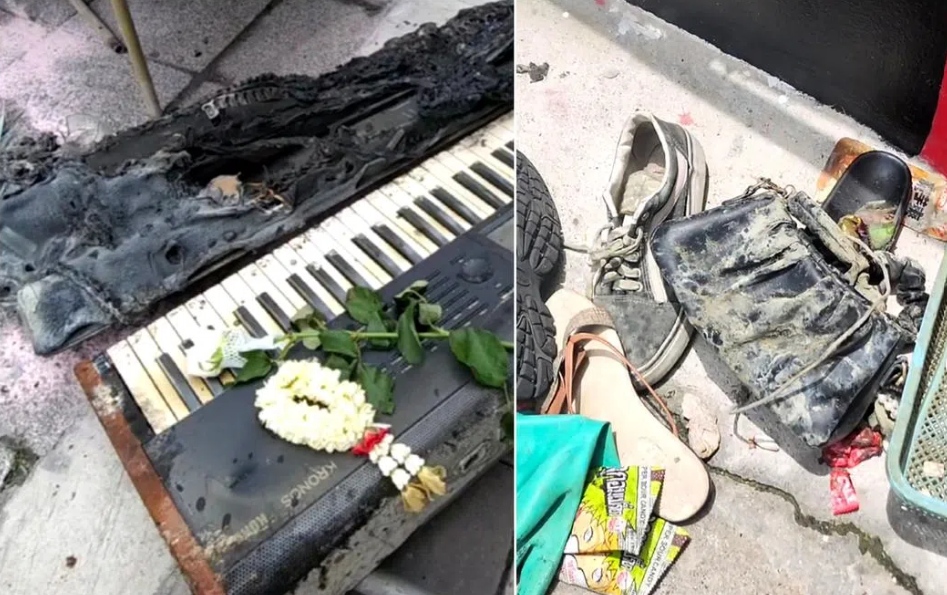
The scene outside the charred venue painted a haunting picture of the chaos that unfolded. Abandoned footwear and personal belongings remained scattered across the ground where patrons had fled in panic as flames and thick black smoke enveloped the structure. On July 13, investigative teams meticulously sifted through the wreckage, attempting to piece together what had triggered the catastrophe and what factors had made it so difficult for occupants to evacuate. The questions dominating official inquiries centred on whether emergency exits had been blocked, whether flammable ceiling materials had accelerated the spread of fire, and critically, why so many people had been unable to reach safety. Bangkok Governor Chadchart Sittipunt explained to reporters at the scene that ceiling materials and potential obstruction of emergency exits would be priority areas for investigation, noting that fire appeared to have spread with remarkable rapidity, potentially reaching the ceiling structure. "Smoke was likely the main cause of death," he stated, suggesting that toxic inhalation rather than burns may have been the primary killer.
The venue itself presented a deceptively ordinary profile—a single-storey concrete building operating as a licensed restaurant that had successfully passed official inspection as recently as April. However, the critical question of occupancy at the moment of the fire remains contested. While waiters estimated approximately 300 customers were present when the blaze erupted, the establishment typically accommodates between 600 and 700 patrons on a standard evening. This discrepancy raises troubling implications about capacity limitations and overcrowding as contributing factors. National Police Chief Kitrat Panphet revealed a disturbing pattern in victim location: most of those who perished were discovered in the toilet areas, suggesting that when panic set in, patrons gravitated toward the most familiar enclosed spaces rather than exits, compounded by the absence of adequate lighting to guide evacuation routes.
As investigators delved deeper into structural and operational deficiencies, a specific failure emerged with alarming clarity. Police discovered that one of the exit doors had been obstructed by a shelf, creating a bottleneck through which only a single person could pass at any given moment. This arrangement, far from being an isolated oversight, emblematic of broader safety negligence. The building itself, dating back 50 years, housed electrical systems that now require scrutiny, while decorative elements—potentially including combustible polyurethane foam—may have accelerated the fire's progression and the accumulation of toxic smoke. The bar's owner, currently hospitalised in intensive care, remained unavailable for questioning, though investigators had indicated their intention to interview him once his condition permitted.
Amorn Pimanmas, president of the Thailand Structural Engineers Association, conducted his own examination of the devastated premises on July 13 and articulated a troubling perspective on systemic failure. The bar's low ceiling combined with combustible polyurethane foam decorations had likely enabled toxic smoke to accumulate with lethal speed, trapping occupants before escape became feasible. Yet his most damning observation targeted not the absence of legislation but rather the chronic failure of enforcement: "It's not like we don't have the law. It's the problem of how the law can be strictly enforced." This assessment cuts to the heart of Thailand's fire safety paradox—the regulatory framework exists, yet compliance mechanisms remain ineffectual across venues where profit margins typically supersede safety investments.
Chaiyo Piwisol, a 30-year-old restaurant worker who had visited the establishment on three previous occasions, provided perspective from the ordinary customer's viewpoint. His consistent impression had been one of cramped, overcrowded conditions with narrow doorways that had always provoked unease. The proliferation of decorations, lighting fixtures, and suspended objects throughout the ceiling space had struck him as excessive and potentially hazardous. "I think there should have been stronger safety measures," he reflected, articulating what many casual patrons likely felt but had never formally communicated to authorities. His observations underscore a critical gap in safety culture—that such obvious deficiencies, readily apparent to visitors, had persisted without triggering regulatory intervention or mandatory remediation.
The tragedy has reignited intense scrutiny of Thailand's fire safety protocols and the mechanisms through which they are enforced, particularly within the entertainment and hospitality sectors where such incidents have recurred with depressing regularity. Prime Minister Anutin Charnvirakul, who visited the scene on July 13, referenced "blind spots" lacking visible fire escape routes, signalling that the structural layout itself may have been fundamentally incompatible with safe evacuation under emergency conditions. While calling for public patience pending complete investigation findings, he delivered a stern warning: "There will be no leniency if any laws have been broken." Such statements, however well-intentioned, must now be tested through genuine accountability mechanisms rather than empty rhetoric. Thailand's history of venue fires suggests that without concrete enforcement improvements and substantial penalties, compliance will remain inconsistent and motivated primarily by legal liability rather than genuine commitment to patron safety.
For survivors, the emotional reckoning extends beyond physical injury. Panathaporn Thongyord, aged 19, managed to escape the flames but lost a close friend she had known since childhood. "My friend told me, 'Just get out. Don't come back to help me'," she recalled, her voice heavy with the weight of survival guilt and profound loss. That final act of selflessness—directing her friend toward safety while staying behind—crystallises the randomness of tragedy and the impossible choices people face in catastrophic moments. She framed her ongoing anguish in terms of justice, demanding answers about why the rear exit door could not be opened, transforming personal grief into a call for accountability and systemic reform that extends far beyond this single venue.
The investigation ongoing in Bangkok carries implications that resonate throughout Southeast Asia's hospitality and entertainment sectors. If enforcement failures are substantiated and regulatory gaps confirmed, the findings will expose structural vulnerabilities affecting countless similar establishments across the region. Malaysia, with its own busy entertainment and dining culture, must scrutinise whether comparable safety oversights exist within its venues. The tragic deaths in Bangkok represent not merely a Thai problem but a regional vulnerability in how governments balance economic development with fundamental public safety obligations. The grieving families and survivors now demanding accountability represent a pressure point that may finally catalyse the enforcement improvements that legislation alone has failed to secure.

