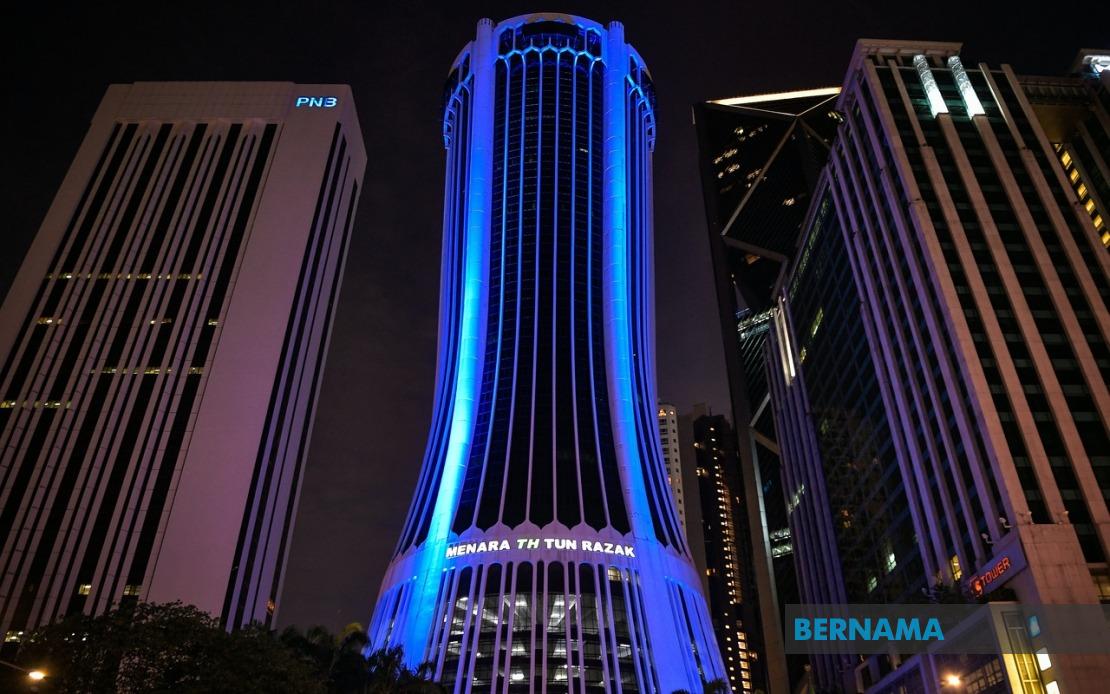
The release of the Royal Commission of Inquiry report examining Tabung Haji's management and operational practices has not shaken the steadfast confidence of Malaysian depositors in the institution's core mission. For the Muslim majority in Malaysia, Tabung Haji remains far more than a conventional savings and investment vehicle. The institution occupies a unique and deeply revered position in the financial landscape, serving as a religious and spiritual custodian entrusted with enabling one of Islam's Five Pillars—the performance of the haj pilgrimage. This distinctive standing shields it from the conventional scrutiny that would typically follow governance controversies, as depositors distinguish between operational issues and the sacred duty of fulfilling their hajj obligations.
The personal testimonies of individual depositors illuminate this resilient trust. Atiqah Shah Hadi, a 40-year-old tailor who has maintained a Tabung Haji account since childhood when her father established it, exemplifies the multi-generational commitment that characterises the depositor base. She has verified her projected turn to perform the pilgrimage through Tabung Haji in 2033, and rather than wavering, she remains committed to consistent savings contributions to ensure sufficient funds accumulate by that date. Her approach reflects a widespread understanding among depositors that Tabung Haji operates on an extended timeline governed by haj waiting lists rather than conventional banking cycles, making short-term management controversies seem less consequential to the longer-term spiritual goal.
Similarly, Muhammad Haikal Abdul Halim, a 35-year-old civil servant, has deliberately insulated his depositor commitment from the institutional turbulence surrounding Tabung Haji. Despite his awareness of the governance issues flagged in the RCI report, he has not entertained withdrawal of his existing savings. More tellingly, he is expanding his relationship with the institution by arranging monthly salary deductions to accelerate his accumulation, motivated by his anticipated haj opportunity in 2032. His forward-looking strategy extends beyond his own pilgrimage; he intends to open accounts for his three young children, signalling intergenerational perpetuation of confidence in Tabung Haji as the designated vehicle for haj preparation.
Academic experts emphasise that preserving this depositor confidence requires Tabung Haji to address two interconnected imperatives. Dr Saizal Pinjaman, director of the Centre for Economic Development and Policy at Universiti Malaysia Sabah, identifies the safeguarding of depositor savings and the fortification of long-term financial and business resilience as fundamental to maintaining trust. He argues that Tabung Haji must ground its profit declarations in transparently audited financial accounts that comprehensively incorporate all losses, investment impairments, and asset deterioration—particularly critical given volatile economic conditions that periodically test financial institutions. The second pillar concerns capital adequacy; Tabung Haji must maintain reserves robust enough to absorb market fluctuations and economic shocks without compromising its ability to service depositor obligations when pilgrimage opportunities materialise.
Dr Pinjaman further contends that distributions to depositors should only occur when Tabung Haji has genuinely affordable surpluses remaining after all obligations are met. This approach differs markedly from maximising short-term shareholder returns, reflecting the institution's quasi-fiduciary relationship with depositors who prioritise ultimate haj access over dividend optimisation. He additionally advocates that Tabung Haji should consistently and transparently communicate the actual costs it incurs in facilitating haj assistance, enabling depositors to understand the true value extraction occurring within their accounts and building confidence that management decisions align with pilgrimage rather than profit maximisation.
Commentary from media and information warfare analysts provides another dimension to understanding depositor resilience. Dr Noor Nirwandy Mat Noordin, a senior lecturer at the Centre for Media and Information Warfare Studies at Universiti Teknologi MARA in Shah Alam, emphasises that Tabung Haji has successfully rehabilitated its institutional standing following earlier crises, emerging as a globally recognised exemplar in haj pilgrimage management. This rehabilitation appears to have created reservoir of goodwill among depositors who witnessed the institution recover and strengthen, reinforcing perceptions of institutional competence despite periodic governance controversies. His assessment suggests that Tabung Haji's international standing and recovery trajectory provide psychological reassurance to depositors that systemic risks to their savings are manageable and that the institution possesses organisational capacity to navigate governance challenges.
The distinction between institutional governance failures and trustee capacity represents the psychological crux underlying persistent depositor confidence. Malaysian Muslims appear to compartmentalise operational and management deficiencies as solvable administrative problems separate from Tabung Haji's core competency in accumulating and eventually deploying haj pilgrimage funds. This cognitive separation would likely prove impossible for a conventional bank, where governance scandals directly undermine depositor confidence in financial security. However, Tabung Haji's quasi-religious mandate creates a framework wherein depositors tolerate governance imperfections as long as the institution retains the perceived capacity and commitment to ultimately facilitate pilgrimage when opportunities arise.
The extended waiting lists that govern haj participation—extending into the 2030s for newly enrolling or younger depositors—reinforce this temporal insulation. Depositors understand that they are making multi-decade commitments with uncertain materialisation dates, creating psychological distance from short-term institutional controversies. A management scandal in 2024 affecting pilgrimage opportunities materialising in 2032 or 2033 appears sufficiently remote that depositors prioritise the certainty of designated savings accumulation over the uncertainty of alternative institutions or withdrawal strategies. This temporal horizon fundamentally reshapes risk calculus compared to conventional financial products with near-term redemption expectations.
For Malaysian policymakers and Tabung Haji's leadership, this enduring depositor confidence represents both an asset and a responsibility. The institution possesses substantial institutional goodwill that can weather governance controversies that would devastate conventional financial institutions. However, this reservoir of trust is not infinite; sustained or escalating governance failures could eventually erode even the resilience anchored in religious obligation. The imperative therefore lies in leveraging current depositor confidence to undertake the comprehensive institutional reforms and governance improvements necessary to eliminate the conditions that periodically generate RCI investigations and public concern, rather than assuming that the religious framework perpetually shields the institution from accountability.
The pathway forward requires Tabung Haji to operate with heightened transparency and rigorous financial discipline, ensuring that governance practices match the sacred trust deposited in its stewardship. The institution should recognise that depositor forbearance reflects not absence of concern but rather prioritisation of ultimate pilgrimage access over financial optimisation. By demonstrating that governance reforms translate into genuine improvements in depositor protection, financial resilience, and transparent cost management, Tabung Haji can transform current reservoirs of goodwill into durable institutional legitimacy that survives future controversies and genuinely serves the religious and spiritual aspirations of Malaysian Muslims.

