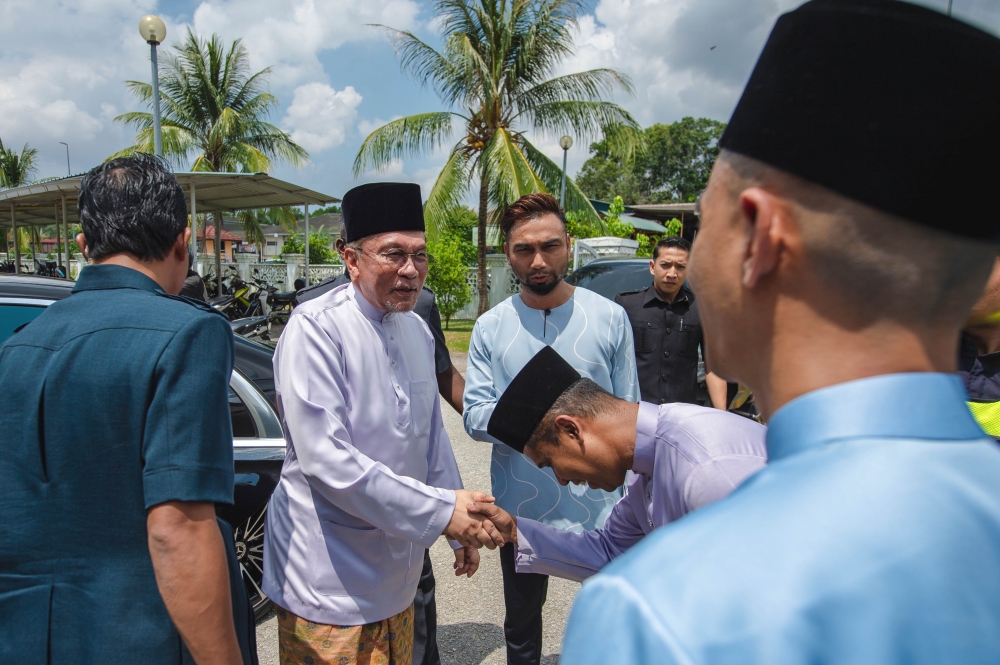
Prime Minister Datuk Seri Anwar Ibrahim has struck a cautious tone on Malaysia's economic outlook, emphasizing government awareness of widespread difficulty among ordinary Malaysians and small business operators even as the country's second-quarter gross domestic product growth outperformed analyst predictions. Speaking in Kuala Lumpur on July 17, the Finance Minister underscored the tension between headline economic indicators and the lived reality of many households and entrepreneurs struggling to keep pace with rising costs and competitive pressures.
The Malaysian economy's performance in the April-to-June quarter exceeded market consensus, suggesting the nation's growth trajectory remains resilient despite global headwinds and regional uncertainties. Yet Anwar's framing represents a deliberate pivot away from celebrating statistics alone, recognizing instead that macroeconomic expansion often masks uneven distribution of benefits across different income segments and business categories. This messaging reflects a political imperative to demonstrate empathy with constituents whose personal circumstances may not reflect the optimism conveyed by aggregate growth figures.
Microenterprises, which form the backbone of Malaysia's informal and semi-formal economy, face particular vulnerability during periods of structural economic transition. These small operators typically lack the capital reserves, market access, and technological sophistication of larger corporations, making them especially exposed to input cost inflation, supply chain disruptions, and shifts in consumer behaviour. The government's acknowledgment of their predicament signals openness to tailored interventions and support mechanisms rather than one-size-fits-all policy approaches that may inadvertently disadvantage the most vulnerable business segments.
The broader Malaysian population—particularly wage earners in the lower and middle-income brackets—continues grappling with purchasing power pressures driven by persistent inflation in essential goods and services. While aggregate economic growth suggests expanding opportunity, the benefit distribution remains unequal, with certain sectors and regions capturing disproportionate gains. Anwar's statement implicitly recognizes that growth divorced from inclusive prosperity generates political risk and social discontent, concerns that take on heightened significance within Malaysia's multiethnic, politically competitive context.
From a regional perspective, Malaysia's economic narrative carries implications beyond its borders. Southeast Asia's second-largest economy serves as a barometer for broader regional health, and signals of internal strain among SMEs and wage earners may foreshadow similar challenges emerging in peer economies. Additionally, Malaysia's position as a manufacturing and services hub means localized difficulties can ripple through cross-border supply chains and investor confidence across the region. Anwar's candid acknowledgment therefore carries diplomatic weight, framing Malaysia as a government attentive to real-world complexities rather than detached from grassroots economic conditions.
The policy implications of this positioning remain to be clarified through concrete measures. Whether the government intends to pursue targeted assistance for micro and small enterprises, wage support mechanisms, or broader fiscal redistribution will become apparent through forthcoming budget announcements and legislative initiatives. The tension Anwar has articulated between strong headline growth and persistent hardship demands substantive responses beyond rhetorical acknowledgment, particularly given elevated public expectations following political change in recent years.
International observers and credit rating agencies closely scrutinize how governments reconcile headline growth with inclusive outcomes, as the sustainability of expansion ultimately hinges on broad-based participation and consumption. A narrative of growth accompanied by acknowledged struggle, unless paired with credible mitigation strategies, risks eroding confidence in policy coherence and leadership competence among both domestic and foreign audiences. Anwar's recent statements therefore function as both political messaging and implicit commitment to address distributional concerns.
The dichotomy between macroeconomic performance and microeconomic reality reflects long-standing structural challenges within the Malaysian economy, including skills mismatches, uneven regional development, and sectoral concentration. SMEs operating in traditional sectors particularly struggle to adapt to digital transformation and evolving consumer preferences, while wage growth in many occupational categories has lagged productivity gains and cost-of-living increases. These structural headwinds require sustained, coordinated effort across multiple policy domains—education, infrastructure, financial services access, and regulatory modernization—rather than short-term relief measures.
Moving forward, the government's balancing act will involve projecting economic confidence through continued growth management while demonstrating genuine responsiveness to hardship narratives that resonate across demographic groups and voting blocs. Malaysia's economic policy framework must increasingly address not merely the pace of expansion but its distribution, resilience, and capacity to generate dignified livelihoods for the majority. Anwar's explicit recognition of this challenge, delivered at the helm of finance ministry and prime ministerial office, signals that top-level policymakers understand the political and social stakes embedded within economic management.

