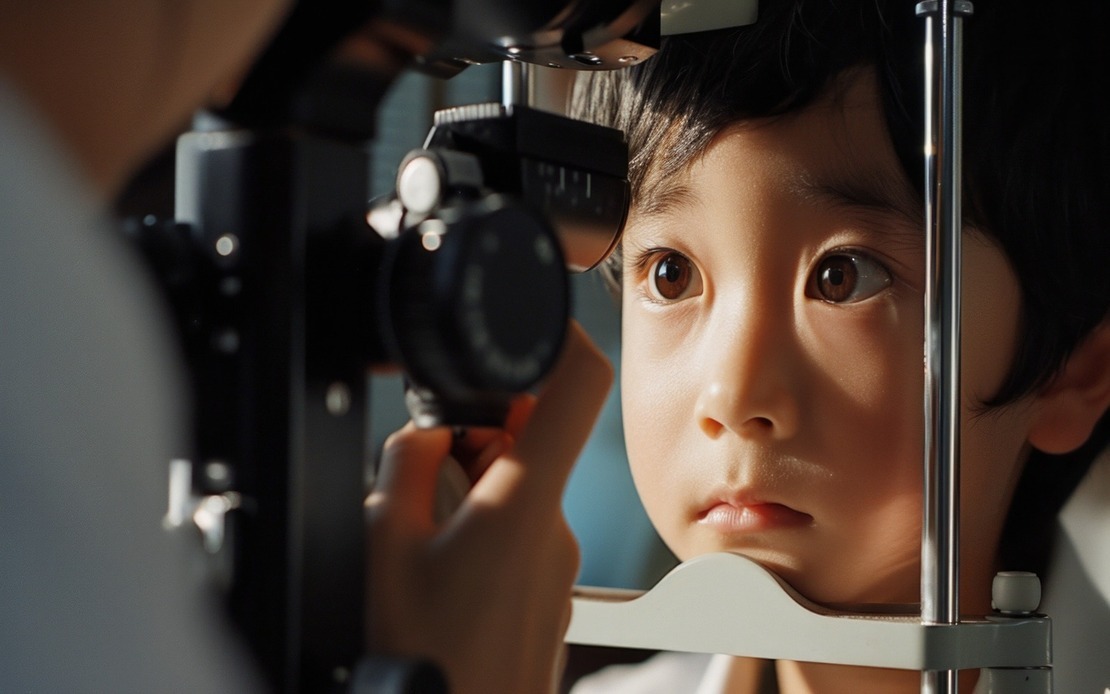
Vision problems represent a silent public health challenge across Malaysia, with specialists urging earlier intervention to prevent lifelong blindness. Dr Fazilawati A Qamarruddin, a consultant ophthalmologist and paediatric specialist at Sunway Medical Centre in Sunway City, identifies squinting and cataracts as two of the most prevalent yet frequently undiagnosed eye conditions affecting Malaysians from infancy through old age. The oversight occurs despite the availability of effective treatments, suggesting that awareness and timely screening remain significant barriers to maintaining national eye health.
Strabismus, commonly known as squinting, develops when the eye muscles fail to align properly, causing one eye to deviate from the other. This misalignment disrupts far more than simple vision mechanics. Children with untreated squinting experience compromised depth perception, which undermines spatial reasoning crucial for learning and athletic development. The psychological impact extends to social confidence, as children become self-conscious about their appearance and may withdraw from peer interactions. Dr Fazilawati notes that while squinting often originates from uncorrected refractive errors—essentially the eye's inability to focus light properly—it can signal more serious underlying pathology. Nerve damage, neurological disorders, head trauma, and even brain or orbital tumours may manifest as sudden eye misalignment, making prompt medical evaluation essential rather than optional.
The epidemiological picture illuminates why this condition deserves greater public attention. Global research suggests that between two and four percent of children develop strabismus, a figure that appears modest until translated into the Malaysian context. With millions of young people in the country, this percentage represents thousands of children struggling with a correctable condition. Yet many cases escape detection until academic performance deteriorates or social anxiety becomes apparent—milestones that signal unnecessarily delayed intervention. The insidious danger lies in how untreated squinting progresses to amblyopia, commonly termed lazy eye. When one eye consistently receives blurred or misaligned images, the brain begins favouring the stronger eye and progressively suppresses signals from the weaker one. This neural adaptation becomes entrenched over time, and even correcting the original eye misalignment cannot fully restore vision to the affected eye if amblyopia has already developed.
Dr Fazilawati recommends that Malaysian children undergo comprehensive eye screening by age three, a window that captures the critical period of visual development before amblyopia becomes irreversible. A second screening before primary school entry ensures that any emerging problems are identified before academic demands intensify. Parents should not rely on school nurses to catch these conditions; instead, they should recognise warning signs indicating immediate professional evaluation. A child who frequently tilts the head to see, squints persistently, positions themselves unusually close to screens, or complains of unexplained headaches requires ophthalmological assessment. These subtle behavioural indicators often precede any formal school identification, and early intervention through simple corrective lenses can prevent decades of visual disability.
Cataracts represent a fundamentally different but equally significant eye health challenge, predominantly affecting seniors yet increasingly appearing in younger populations with specific risk factors. The condition involves progressive clouding of the lens, the transparent structure that focuses light onto the retina. As cataracts advance, affected individuals experience increasingly blurred vision, heightened sensitivity to glare, diminished colour perception, and particular difficulty with night driving as contrast sensitivity deteriorates. Contrary to widespread assumptions that cataracts are simply an inevitable consequence of ageing after sixty, Dr Fazilawati emphasises that diabetes, smoking, and cumulative ultraviolet exposure accelerate their development. This distinction matters because it identifies modifiable risk factors; people with diabetes require rigorous blood glucose management and annual eye screening, while public health messaging should emphasise both smoking cessation and sun protection as vision-preserving measures.
The modern management of cataracts has transformed dramatically, moving beyond the invasive procedures of previous decades. Contemporary phacoemulsification employs ultrasound technology to fragment the opaque lens through a remarkably small incision, typically less than three millimetres. This minimally invasive approach contrasts sharply with historical procedures requiring larger wounds and longer healing periods. Recovery timelines have compressed substantially; many cataract operations now occur as same-day procedures with patients returning home within hours. Most people resume light activities within a week and achieve full visual restoration within two weeks. For Malaysian seniors facing cataract surgery, this means minimal disruption to daily life and rapid restoration of independence—outcomes that should encourage rather than delay the decision to proceed with treatment. Dr Fazilawati's emphasis on the feasibility and safety of modern cataract surgery aims to counter the hesitation some older adults feel about pursuing vision restoration.
Digital technology presents an emerging threat to Malaysian eye health, particularly among younger generations increasingly immersed in screen-dependent activities. Prolonged exposure to digital displays correlates with worsening myopia, the inability to focus on distant objects. While the mechanism remains incompletely understood, extended near-work activities appear to stress the eye's focusing system and may contribute to progressive refractive error. Dr Fazilawati advocates the 20-20-20 rule as a practical intervention: every twenty minutes of screen use should be interrupted by focusing on an object approximately twenty feet distant for at least twenty seconds. This simple practice relaxes the eye's focusing muscles and reduces cumulative strain. Given that Malaysian students and workers increasingly spend eight or more hours daily before screens, systematic application of this principle could substantially reduce age-related vision deterioration.
Screening recommendations must be tailored to individual risk profiles and life stages. Children require baseline assessment before school entry and follow-up as needed. Adults without known eye disease should undergo screening beginning at age forty, a threshold when presbyopia (age-related focusing difficulty) and early signs of serious conditions typically emerge. People with diabetes occupy a higher-risk category requiring annual examination because diabetic retinopathy, a condition where elevated blood glucose damages retinal blood vessels, can progress rapidly yet remains treatable when detected early. This risk stratification reflects how eye health intersects with broader metabolic and systemic disease management. In Malaysia, where diabetes prevalence continues climbing, ensuring that people with the condition receive regular eye screening represents a crucial public health priority that extends beyond ophthalmology into primary care and endocrinology.
The opportunity cost of postponed eye examinations deserves explicit emphasis in public messaging. Avoiding or delaying screening does not reduce the likelihood of developing eye disease; it merely ensures that conditions progress undetected until they cause irreversible damage. A child who might require only corrective glasses if screened at age three may face years of academic struggle and social isolation if squinting remains undiagnosed. An older adult who could achieve sharp vision through straightforward cataract surgery instead experiences diminished independence and quality of life. Someone with undetected diabetic retinopathy may suffer rapid vision loss that proper monitoring could have prevented. Dr Fazilawati's message ultimately reframes eye examinations not as optional health luxuries but as essential investments in learning capacity, professional productivity, independence, and overall wellbeing across the entire lifespan. For Malaysian health policy makers and individual families alike, prioritising vision screening represents one of the highest-yield interventions available for preventing disability and preserving quality of life.

