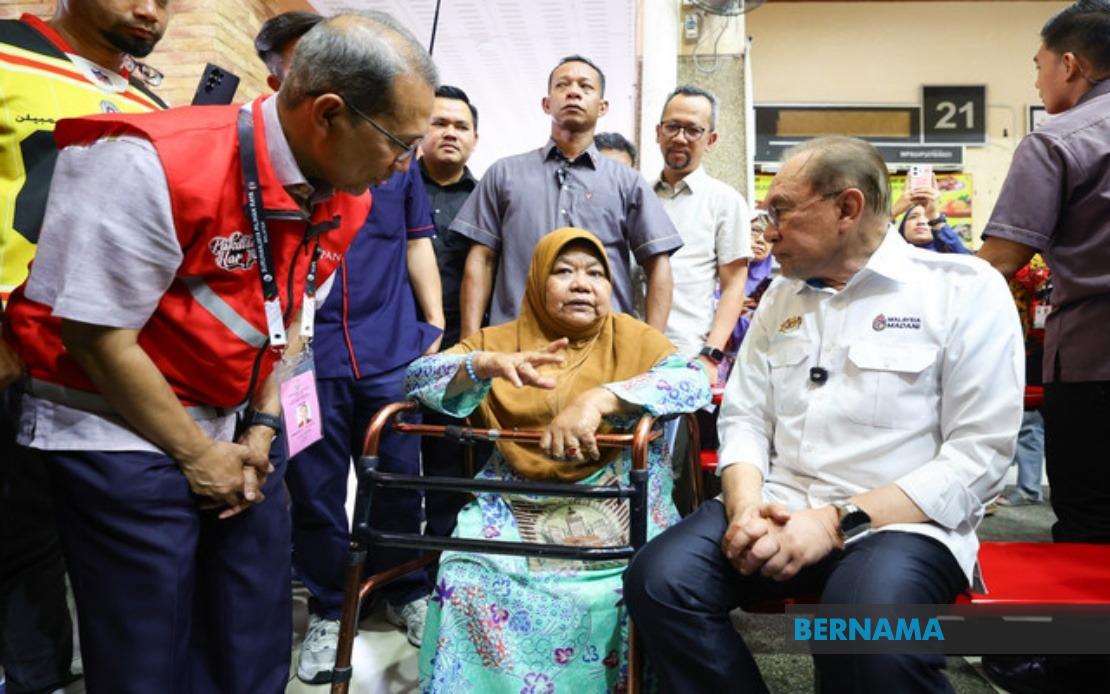
A 68-year-old resident of Kampung Gedung Lalang in Seremban braved inclement weather and navigated the limitations of her physical disability to realize a dream she had cherished for years: meeting Prime Minister Datuk Seri Anwar Ibrahim face-to-face. Jumaah Mohd Alif, who lost her left leg in an accident three and a half decades ago, rode her three-wheeled motorcycle to Benteng Ampangan on July 22 despite drizzling conditions, driven by the sudden opportunity to encounter the country's leader in person.
For individuals living with disabilities in Malaysia, such encounters carry profound symbolic weight. The determination Jumaah displayed reflects both her personal resilience and the broader aspirations of persons with disabilities (PwD) who often find their concerns relegated to peripheral status in political discourse. Her decision to undertake the journey underscores how meaningful direct engagement with political leadership can be for marginalised communities, particularly elderly citizens managing chronic physical challenges. The three-wheeled motorcycle—a common adaptation for those with lower limb disabilities—became the vehicle through which her dream materialised, highlighting the ingenuity and resourcefulness many Malaysians with disabilities employ to maintain independence and participation in civic life.
Jumaah explained to Bernama that villagers in her community had informed her of the Prime Minister's scheduled visit to the area. Learning of this opportunity only prompted her to immediately prepare and traverse the weather to reach Benteng Ampangan. Her spontaneous decision, unplanned and executed quickly, demonstrates the priority she attached to this moment. Before this encounter, her exposure to the Prime Minister had been limited to televised appearances and distant public viewings—the mediated experience that most citizens must settle for. The possibility of direct conversation and acknowledgment from the nation's highest political office represented something extraordinarily rare in her lived experience.
Prime Minister Anwar, who simultaneously serves as chairman of Pakatan Harapan (PH), was present in Negeri Sembilan on that day as part of the coalition's broader campaign strategy during the 16th state election cycle. The visit formed part of coordinated efforts to strengthen PH's electoral positioning ahead of crucial balloting. Seremban, as the state capital, represented a strategic location for high-profile political engagement. The encounter between Jumaah and Anwar, though brief in duration, acquired additional resonance given the timing within the electoral calendar and the visibility such campaign stops generate through media coverage.
When recounting the experience, Jumaah emphasised the emotional significance of finally fulfilling her lifelong aspiration. She expressed that this memory would remain cherished throughout her remaining years—a statement that captures how profoundly such direct engagement can impact individuals, particularly those whose voices are often unheard within formal political channels. For many persons with disabilities, the absence of visible attention to their concerns and experiences during campaigning reinforces a sense of exclusion from the political process. Jumaah's encounter, while perhaps incidental from a campaign perspective, represented validation of her existence and worth as a citizen deserving direct acknowledgment from national leadership.
Beyond the personal dimension, Jumaah's interaction with the Prime Minister provided her with an opportunity to advocate for her community's interests. She articulated a clear hope that the government would sustain and enhance its commitment to the welfare of its citizens, with particular emphasis on senior citizens and persons with disabilities. This appeal speaks to documented concerns within Malaysia's PwD communities regarding healthcare access, social support systems, employment opportunities, and dignity in public spaces. Elderly citizens with disabilities face compounded vulnerabilities—the physical decline associated with ageing intersects with existing mobility challenges and, frequently, economic precarity. The government's policy directions in these areas remain crucial determinants of quality of life for hundreds of thousands of Malaysians.
The Electoral Commission's scheduling of early voting for July 28 and general polling for August 1 in Negeri Sembilan created the temporal window within which Jumaah's journey became possible. State elections, while less dominant in national consciousness than general elections, determine crucial governance at the local level where service delivery, infrastructure development, and community support programmes directly affect residents' daily experiences. Persons with disabilities, in particular, benefit from state-level initiatives in public transportation accessibility, social welfare administration, and healthcare coordination. The campaign period, therefore, represented a legitimate moment for such communities to amplify their priorities and hold political figures accountable.
The accessibility dimensions of Jumaah's journey warrant consideration. That a person with disability felt compelled to navigate poor weather conditions independently to access a political leader speaks to both her agency and, potentially, gaps in how political campaigns accommodate persons with disabilities. Progressive campaign strategies increasingly recognise that accessibility—whether physical, informational, or communicative—represents both an ethical imperative and practical necessity for political engagement. Creating spaces where citizens with disabilities can participate as full stakeholders, rather than requiring extraordinary personal sacrifice, should constitute standard political practice.
Jumaah's story, while centred on one individual's determination, illuminates broader questions about political representation and accountability in Malaysia. The fact that her encounter merited news coverage suggests recognition of the newsworthiness of PwD engagement with political leadership—itself an indicator that such visibility remains uncommon enough to constitute reportable events. A more mature democratic culture would render invisible the headlines celebrating accessibility achieved through individual determination rather than systemic design. Nevertheless, Jumaah's example may inspire both policy reflection and reinforce the principle that governance must actively include, rather than passively accommodate, the nation's diverse population.
As Negeri Sembilan's state election campaign continues toward its conclusion, the experiences and priorities articulated by citizens such as Jumaah merit sustained attention from political parties and candidates. The encounter between a 68-year-old rider of a three-wheeled motorcycle and the nation's Prime Minister, glimpsed through rain and weather, represents a fleeting but significant moment of political engagement. It reminds observers that behind electoral statistics and campaign rhetoric stand real citizens with concrete needs, persistent dreams, and remarkable reserves of determination. Whether subsequent political action will translate such encounters into meaningful policy commitments for persons with disabilities remains an open question that extends well beyond Negeri Sembilan.

