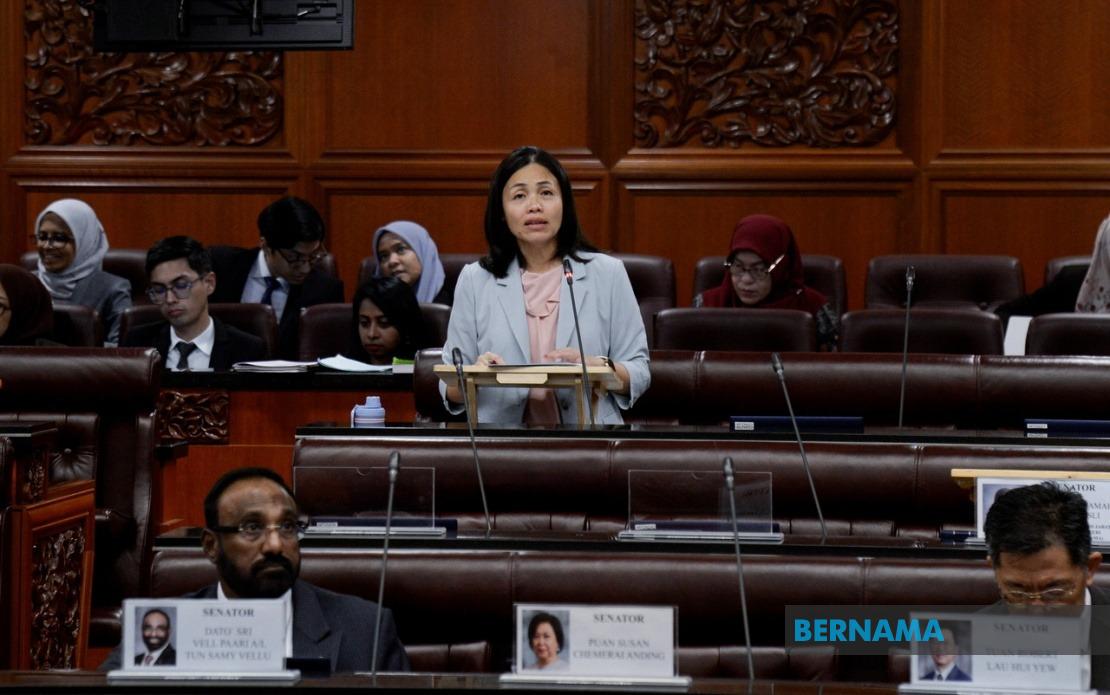
Malaysia's Dewan Negara has given its stamp of approval to the Communications and Multimedia Commission (Amendment) Bill 2026, a significant regulatory overhaul designed to fortify oversight of the nation's burgeoning digital communications sector. The upper house passed the legislation following deliberations among eleven senators, reflecting growing recognition that telecommunications and digital platforms now represent critical national infrastructure rather than mere commercial enterprises. The amendment represents a pivotal moment in Malaysia's approach to digital governance at a time when the communications landscape has become increasingly complex and strategically important to the economy and social fabric.
Deputy Minister of Communications Teo Nie Ching highlighted the tangible enforcement victories that have already emerged from the regulatory framework, pointing to aggressive action against illicit online gambling operations. The MCMC achieved a remarkable reduction of more than 222,000 gambling-related online items in just the first seven months of 2026, demonstrating the regulator's escalating capability to identify and remove prohibited content. This latest figure reflects a dramatic acceleration compared with historical performance, with operators removing content from a mere two instances in 2022 to 18,814 removals the following year, then surging to 189,484 in 2024 and reaching 289,486 by 2025. The trajectory reveals a maturing digital enforcement ecosystem where platforms have become increasingly cooperative with regulatory demands.
The enforcement operation extends beyond content removal to encompassing the closure of illegal gambling websites themselves. Between 2022 and July 31 this year, the MCMC collaborated with relevant authorities to block access to 6,982 gambling domains, severing crucial revenue streams for operators attempting to circumvent Malaysian law. While the actual prosecution and investigation of gambling activities formally falls under the remit of the Royal Malaysia Police, the MCMC provides the technical backbone through digital forensic analysis, infrastructure access restrictions, and rapid-response blocking mechanisms triggered by official law enforcement requests. This delineation of responsibilities demonstrates how modern digital regulation requires specialised agencies working in coordinated fashion rather than isolated enforcement efforts.
A cornerstone of the reform package involves fundamentally reshaping the governance structure of the MCMC to insulate it from political influence. The amendment explicitly prohibits any sitting politician from assuming the position of chairman, a restriction that extends beyond federal parliamentarians to encompassing members of state assemblies. Teo articulated the rationale behind this safeguard, emphasising that such measures ensure the regulator's leadership remains genuinely independent while simultaneously constraining ministerial discretion in appointment decisions. By narrowing the pool of eligible candidates to individuals without current legislative seats, the amendment aims to prioritise technical competence and professional credentials over political affiliation or patronage considerations. This structural reform mirrors international best practices in regulatory independence, recognising that communications infrastructure demands decisions grounded in technical expertise rather than partisan calculation.
Senator Datuk Abdul Halim Suleiman contextualised the amendment within Malaysia's broader strategic landscape, characterising the communications and multimedia domain as having transcended its historical identity as a discrete economic sector. The senator underscored that modern communications infrastructure now functions as essential national infrastructure comparable to transportation networks, power grids, or water systems, commanding elevated levels of regulatory attention and professional management. His intervention suggested that the amendment's passage represents not merely administrative tinkering but recognition of a fundamental shift in how governments must approach digital communications in an era of pervasive connectivity. The successful implementation of these enhanced powers, he cautioned, depends not merely on legislative authority but on institutional capacity, professional competence, and the MCMC's commitment to transparent and accountable operations that genuinely serve public interests.
Senator Muhammad Hasbie Muda injected a cautionary note into the legislative discussion, emphasising that regulatory reform extends beyond mere accumulation of new powers and functions. He stressed that substantive reform demands equal attention to implementation quality, requiring that each power be exercised with rigorous transparency, operational effectiveness, and genuine accountability to the Malaysian public. The senator's perspective reflects emerging global consensus that regulatory capture and institutional dysfunction can undermine even well-intentioned legislative frameworks. His comments suggest awareness that the MCMC requires not just expanded authority but enhanced institutional capacity, appropriate resource allocation, and robust oversight mechanisms to prevent abuse or bureaucratic dysfunction.
The legislative journey toward passage spanned both chambers of parliament, with the Dewan Rakyat approving the bill on July 15 before the Dewan Negara's formal endorsement this month. The final legislation comprises 17 substantive clauses addressing various aspects of MCMC's mandate and operations. Among its key provisions, the amendment revises Section 16 of Act 589 to explicitly clarify the regulator's responsibility for developing and regulating digital infrastructure standards and platform governance frameworks. This clarification proves particularly significant given the rapid emergence of new digital technologies and service models that existing regulatory frameworks may not adequately address, from artificial intelligence applications to emerging cloud infrastructure platforms to novel forms of digital service delivery.
The timing of this legislative reform reflects Malaysia's positioning within regional and global digital governance trends. Neighbouring countries and major trading partners have undertaken similar regulatory modernisation efforts to address gaps in managing social media platforms, online financial services, digital content distribution, and emerging technologies. By upgrading the MCMC's mandate and insulating it from political interference, Malaysia seeks to establish a credible, professional regulatory presence capable of attracting legitimate digital investment while protecting consumers and national interests. The reform may influence how foreign technology companies and digital service providers view Malaysia's regulatory environment, potentially affecting investment decisions and operational strategies in the local market.
For Malaysian businesses operating in the communications and digital sectors, the amendment signals important shifts in the regulatory landscape. The expanded MCMC mandate suggests increasingly rigorous standards for digital infrastructure, content moderation, data protection, and consumer safeguarding. Companies providing telecommunications services, managing digital platforms, or offering online financial services should anticipate more intensive regulatory engagement and compliance requirements. The prohibition on politician-chairpersons may also reduce perceived regulatory unpredictability rooted in political cycles, potentially creating a more stable long-term operating environment even as compliance demands intensify.
The broader implications for Malaysian society extend to digital rights, consumer protection, and the balance between innovation and regulation. Enhanced MCMC capabilities promise more effective action against harmful online content, fraud, and illegal services that victimise Malaysian users. Simultaneously, the emphasis on transparency and accountability creates checks against potential regulatory overreach or suppression of legitimate speech and activity. Civil society observers and digital rights advocates will likely monitor implementation closely to ensure the regulator fulfils its mandate while respecting fundamental freedoms and democratic norms. The amendment's passage represents a beginning rather than conclusion of Malaysia's digital governance evolution, establishing institutional frameworks that must be operationalised effectively to deliver promised benefits.

