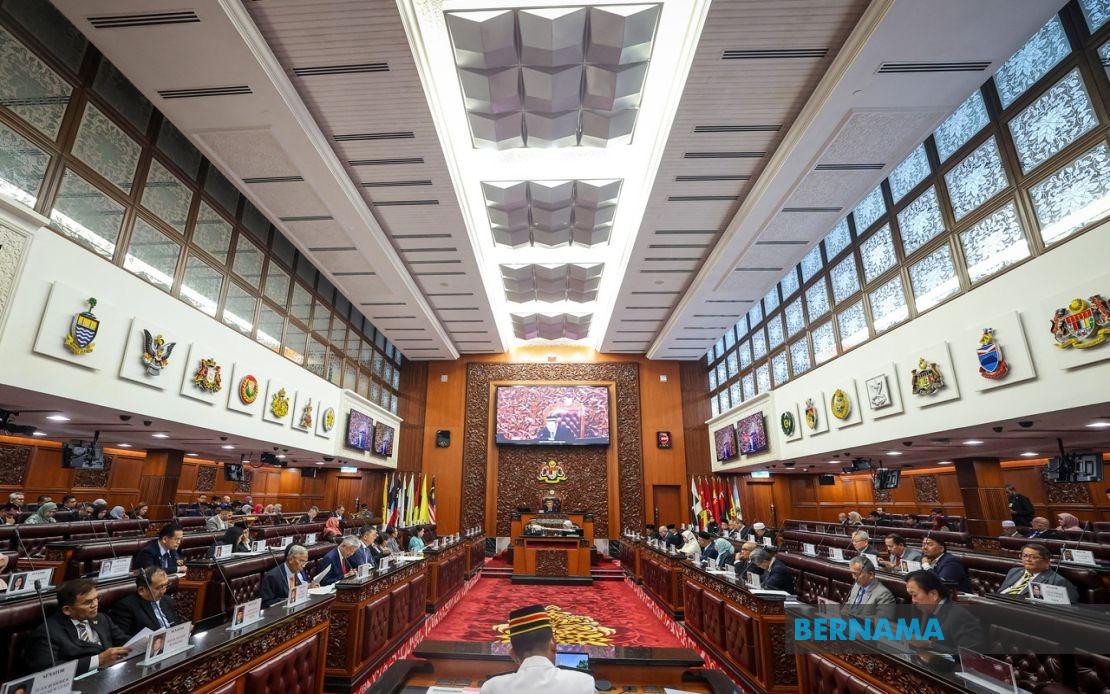
The Dewan Negara wrapped up its sitting on August 4 following a ten-day session that began on July 20, with 12 pieces of legislation cleared for enactment. The upper chamber's productivity during this period reflected the breadth of policy priorities engaging Parliament, from digital security threats to infrastructure regulation and social welfare frameworks. Speaker Datuk Awang Bemee Awang Ali Basah emphasised in his closing remarks that the deliberations demonstrated the institution's core function within Malaysia's democratic system, particularly through the diverse expertise brought by senators from varied professional and geographical backgrounds.
Beyond the legislative agenda, the session also marked a notable procedural development for Dewan Negara. Two motions addressing pressing policy concerns were debated during the adjournment debate period, operating under Standing Order 16 in what represented the first such session since 2022. This revival of the adjournment debate mechanism underscores Parliament's responsiveness to contemporary issues requiring sustained scrutiny. The first motion addressed the emerging challenge posed by cross-border e-commerce platforms, specifically Pinduoduo and Temu, whose aggressive market strategies have sparked alarm within Malaysia's small business community. These Chinese-based applications have disrupted traditional retail and micro-business operations through their loss-leader pricing and aggressive acquisition tactics, prompting lawmakers to examine protective measures for the country's micro, small and medium enterprise sector.
The second motion debated during adjournment concerned voting accessibility for Malaysia's auxiliary police force, proposing mechanisms for early voting or postal voting rights. This issue reflects broader questions about electoral participation and the practical constraints facing security personnel whose operational duties may conflict with standard polling day schedules. Such procedural debates, though non-binding, signal Parliament's willingness to examine governance challenges affecting specific constituencies and professional groups within society.
The twelve bills approved encompassed a substantial portion of the government's legislative agenda across multiple policy domains. The Cybercrimes Bill 2026 represents a significant update to Malaysia's digital security framework, addressing evolving threats in an increasingly online society. This legislation becomes particularly relevant given Malaysia's expanding fintech sector, growing e-commerce ecosystem, and rising instances of cybercriminal activity targeting both businesses and individuals. The Road Transport Amendment Bill 2026 signals regulatory refinement in an area critical to Malaysia's logistics networks and public safety standards, affecting everything from commercial vehicle operations to passenger transport governance.
The Sexual Offences against Children Amendment Bill 2026 demonstrates Parliament's commitment to strengthening protections for vulnerable populations, a priority shared across Southeast Asian nations confronting trafficking and exploitation challenges. Similarly, the Witness Protection Amendment Act 2026 enhances mechanisms ensuring the safety of individuals providing testimony in sensitive cases, reinforcing the integrity of the judicial process. These measures collectively address safeguarding concerns in an environment where organised crime, human trafficking, and exploitation networks continue to pose threats across the region.
Competition policy received legislative attention through paired bills amending the Competition Act and establishing modifications to the Competition Commission's powers. These amendments reflect Malaysia's ongoing effort to cultivate competitive market conditions while empowering regulators to address anticompetitive conduct and market concentration. Such frameworks prove essential as Malaysia diversifies its economy and seeks to attract technology investment while protecting local enterprises from predatory practices.
The National Trust Fund Bill 2026 addresses fiscal management and sovereign wealth considerations, touching on Malaysia's macroeconomic governance. The Padi and Rice Control Amendment Bill 2026 underscores continued policy focus on agricultural production and food security, sectors of enduring strategic importance despite Malaysia's developed economy status. Rice remains culturally significant and strategically sensitive, with domestic production levels carrying implications for national food independence.
Social policy was represented through the Social Work Profession Bill 2026, formalising standards and professional requirements for practitioners in a field increasingly recognised as essential to Malaysia's social infrastructure. This legislation acknowledges growing demand for trained social workers addressing family services, mental health, elderly care, and community development. The Communications and Multimedia Amendment Bill 2026 and its companion Malaysian Communications and Multimedia Commission Amendment Bill 2026 modernise regulatory frameworks governing Malaysia's digital and media landscape, critical as convergence between telecommunications, broadcasting, and online platforms accelerates.
The Statistics Bill 2026 modernises data governance frameworks, enabling more sophisticated collection and analysis of national statistics essential for evidence-based policymaking. Accurate statistical infrastructure supports development planning, economic forecasting, and social programme evaluation. In the context of Southeast Asia's data-driven development agenda and increasing international benchmarking, robust statistics frameworks contribute to Malaysia's competitiveness and governance effectiveness.
Speaker Awang Bemee's adjournment remarks contextualised the legislative output within broader democratic principles, emphasising the Dewan Negara's role as a chamber of review and reflection. His invocation of National Day and Malaysia Day celebrations connected parliamentary work to national identity, calling senators to recommit to constitutional supremacy, rule of law, and national unity. These themes resonate in a regional context where institutional stability and constitutional governance continue facing pressures from polarisation and competing visions of national development.
The diversity of perspectives emerging from a senate composed of members from various states, professions, and backgrounds enriches policy deliberation, though also reflects underlying tensions regarding representation and federalism in Malaysia's parliamentary system. The relatively brisk passage of twelve bills over ten days suggests effective legislative management, though raises questions about the depth of scrutiny applied to substantial measures affecting economic regulation, social services, and individual rights.
Looking forward, the session's productivity establishes momentum as Parliament navigates Malaysia's complex policy agenda. Issues emerging during the adjournment debates—protecting small businesses from predatory international platforms and ensuring equitable political participation—indicate that legislators remain responsive to constituent concerns beyond formal legislation. This responsiveness, combined with the substantive legislative output across multiple sectors, demonstrates Parliament's continued relevance in Malaysia's democratic governance framework.

