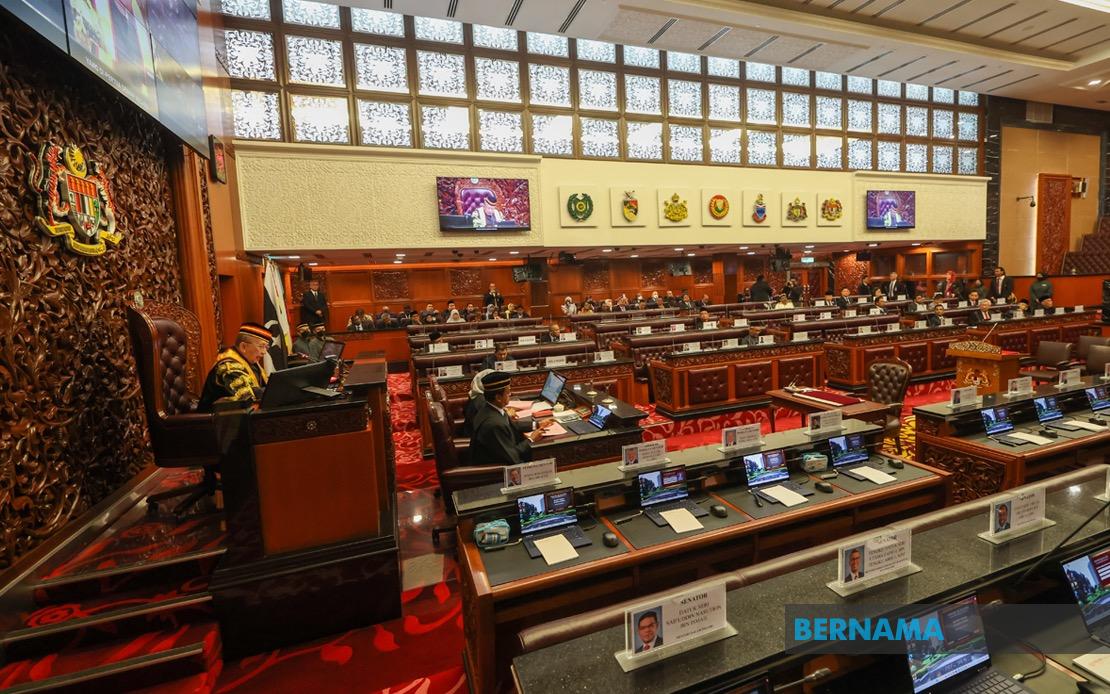
Malaysia's Dewan Negara has wrapped up a 10-day sitting that brought two significant pieces of legislation into law and reinforced government focus on economic stability and competitiveness. The Second Meeting of the Fifth Session of the 15th Parliament, which ran from July 20, concluded with passage of the National Trust Fund (KWAN) Bill 2026 and the Statistics Bill 2026, marking substantial progress on the legislative agenda that shaped parliamentary discourse throughout the session.
The National Trust Fund legislation, introduced by Deputy Finance Minister Liew Chin Tong, targets improved stewardship of public finances by establishing tighter governance standards and more transparent protocols for fund withdrawals. This measure signals an intensified push toward fiscal discipline at a time when Malaysia is working to maintain budgetary stability. Complementing this effort, the Statistics Bill 2026, tabled by Deputy Economy Minister Datuk Mohd Shahar Abdullah, modernises the legal architecture governing how national statistical data is collected, verified and disseminated—a foundational requirement for evidence-based policymaking in an increasingly complex economy.
Underlying the entire session was acute awareness of external pressures affecting Malaysia's economic outlook. On the opening day, government representatives committed to maintaining public welfare and fostering sustainable growth despite geopolitical turbulence in West Asia. The commitment extended across multiple fronts: securing reliable supplies of essential commodities, preventing unchecked price escalation, bolstering domestic industries and fortifying broader economic resilience. This multi-layered approach suggests deep official concern that regional instability could disrupt supply chains and investor confidence unless pre-emptively managed.
Pension fund performance emerged as a secondary focus, with Prime Minister Datuk Seri Anwar Ibrahim defending the Retirement Fund (Incorporated) (KWAP) against potential criticism. The fund reported net profit of RM12.9 billion, yet Anwar acknowledged that its investment in eFishery—which underperformed—had yielded instructive lessons for future capital allocation decisions. This candid framing illustrates a nuanced stance: defending the fund's overall track record while accepting that even large institutional investors must learn from setbacks, a message designed to reassure both pensioners and the investment community.
Postal and energy security featured prominently in deliberations. Pos Malaysia tabled plans to reverse mounting losses through network optimisation, expansion into digital services and careful financial stewardship. Government officials simultaneously indicated they were studying creation of a dedicated Postal Service Fund to provide sustainable long-term financing—a structural response to systemic challenges facing the traditional mail sector. Energy matters proved equally substantial, with the July 23 briefing zeroing in on the necessity for strategic petroleum reserves, weighing fiscal costs, operational logistics, governance frameworks and international precedent. This discussion occurred against the backdrop of Malaysia's newly-concluded 20-year fuel supply arrangement with Russia covering petrol, diesel, crude oil and gas, which the Economy Ministry characterised as complementary to the National Energy Transition Roadmap objectives.
Investment inflows and sectoral competitiveness provided concrete evidence of Malaysia's attractiveness to international capital. Between 2021 and 2025, Japanese firms committed RM10.5 billion across 46 electrical and electronics projects expected to generate 9,009 employment opportunities, reinforcing Malaysia's position in high-technology manufacturing. The parliament also learned that Malaysia was tracking toward inclusion among the world's 12 most competitive economies by the conclusion of the 13th Malaysia Plan, bolstered by improved standing in the 2026 World Competitiveness Ranking—a metric reflecting the success of productivity and structural reforms pursued over recent years.
Financial sector governance changes underscored commitment to institutional modernisation. Bank Negara Malaysia will introduce a revamped Performance Measurement Framework for Development Financial Institutions beginning July 1, 2027, ensuring these entities face more thorough evaluation against their development mandates, measurable impact, governance standards and operational efficiency. Such recalibration acknowledges that development finance requires more intricate assessment than profit-and-loss metrics alone, a philosophy increasingly embraced across Southeast Asian central banks.
The electric vehicle ecosystem generated discussion reflecting Malaysia's positioning within the global energy transition. The Ministry of Investment, Trade and Industry confirmed that EV sector growth would remain anchored to private sector initiative without government price controls on public charging infrastructure. As of May 31, 6,416 public chargers had been installed nationwide, demonstrating momentum despite the absence of subsidisation—a model emphasising market discipline and entrepreneurial incentive rather than state intervention.
Fiscal consolidation remained a headline achievement. The Finance Ministry reported that federal fiscal deficit contracted for the fifth consecutive year, validating the cumulative impact of economic and fiscal reforms introduced across multiple budgets. Federal debt remained comfortably beneath statutory ceilings, confirming that deficit reduction was not sacrificing critical service delivery. Notably, Liew disclosed that expenditure restraint measures during the first half of the year yielded approximately RM5 billion in spending deferrals or cancellations without materially degrading essential public service outcomes—demonstrating that efficiency gains can be realised through better administrative practice rather than across-the-board cuts.
The breadth of parliamentary focus across energy, investment, pensions, postal services, fiscal management and competitiveness positioning reveals a government attempting to address multiple economic fronts simultaneously. While passage of the two bills provides legislative scaffolding, the deeper significance lies in parliament's visible concern with macroeconomic resilience, sectoral competitiveness and institutional modernisation. For Malaysian readers and regional observers, the session indicates that despite external headwinds, policymakers remain committed to structural reforms and disciplined public finance management that should buttress long-term prosperity.

