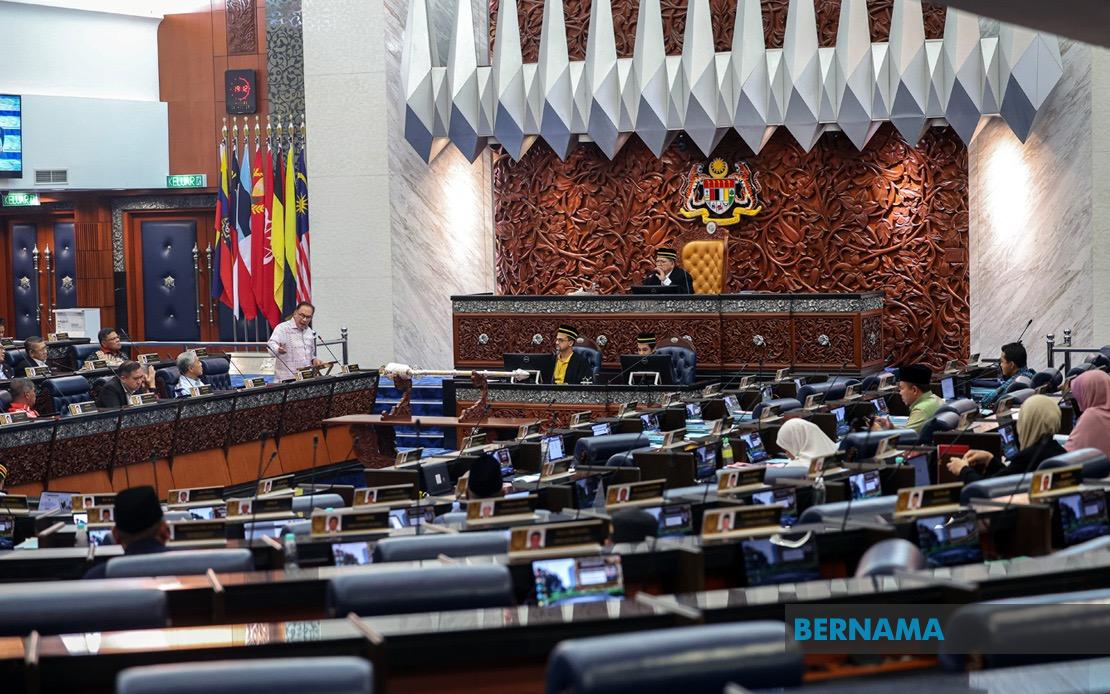
Malaysia's Dewan Rakyat has given its backing to redirect RM14.5 billion in residual Malaysian Government Investment Issues (MGII) proceeds towards the Development Fund, marking a significant step in the government's debt management and infrastructure financing strategy. The legislature approved the motion through a majority voice vote following parliamentary debate, clearing the way for funds accumulated between January and May 2026 to bolster the nation's development initiatives.
The approval represents part of a substantially larger MGII issuance programme totalling RM95 billion for the year. Deputy Finance Minister Liew Chin Tong outlined the detailed allocation framework during his parliamentary presentation, explaining how the government strategically deploys borrowed funds across competing fiscal priorities. Of the total issuance, RM55 billion addresses the refinancing of maturing MGII obligations, while RM2 billion partially covers redemptions of Malaysian Islamic Treasury Bills, the government's short-term shariah-compliant debt instruments. The remaining RM38 billion contributes towards financing the nation's 2026 fiscal deficit, underscoring how the government balances debt servicing with new spending needs.
The mechanics of the latest transfer illustrate the government's careful arithmetic in managing its debt portfolio. Between the start of the year and May 2026, MGII gross issuance reached RM40 billion. After setting aside RM25.5 billion for refinancing existing maturing obligations, the net proceeds available for transfer to the Development Trust Account amount to RM14.5 billion. This calculated approach ensures that gross borrowing figures do not inflate the true additional financing entering the system, a distinction often lost in public discourse around government debt.
Under Malaysia's existing legal framework, the government faces clear constraints on how it deploys borrowed capital. Borrowings may only finance development expenditure—infrastructure projects, capital equipment, long-term assets—whilst operating expenditure covering day-to-day government functions must be funded exclusively through tax revenue and other government receipts. Liew reiterated this constitutional distinction when explaining the Development Fund transfer, emphasising that the framework maintains discipline over deficit financing and prevents unlimited recourse to debt for routine spending.
The Development Fund itself operates as a specialised financing mechanism, drawing resources from multiple sources beyond MGII proceeds. The fund receives transfers from the Consolidated Revenue Account when revenue permits, inflows from the Consolidated Loan Account encompassing all government borrowing vehicles, repayments on previous development loans extended to states and entities, and various receipts tied to development activities. This diversified funding base means the RM14.5 billion addition represents one component within a broader portfolio of development financing tools available to the government.
Parliament will encounter the question of further MGII proceeds during its next sitting, as the government intends to table a motion covering the June through December 2026 period. This phased approach to approval reflects constitutional requirements whilst allowing parliament to review issuance decisions at regular intervals rather than approving the entire year's borrowing programme in a single motion. The staggered presentation also provides opportunities for legislators to scrutinise the government's fiscal management as conditions evolve throughout the year.
Concern about potential crowding-out effects in Malaysia's domestic financial markets prompted parliamentary questioning during the debate. The scenario envisioned involves government securities absorbing capital that major domestic institutional investors—particularly the Employees Provident Fund and the Retirement Fund Incorporated—might otherwise deploy into private sector investments. Liew countered this concern by noting that the government has progressively reduced new borrowings year upon year, suggesting the trajectory of debt accumulation remains sustainable. He further argued that government securities issuance actually serves the interests of institutional investors by providing stable, reliable investment vehicles that generate returns whilst keeping capital within the Malaysian economy.
The investment opportunity argument carries particular weight given Malaysia's currency and balance-of-payments considerations. Without attractive domestic investment outlets, Liew cautioned, Malaysian institutional investors might direct capital abroad seeking superior returns, potentially weakening demand for ringgit-denominated assets and exerting downward pressure on the currency. Conversely, government securities offering competitive yields create incentives for local financial institutions to continue channelling savings into Malaysian investments, supporting both the currency and the nation's capital formation.
The MGII instrument itself represents a distinct category within Malaysia's government debt arsenal, differentiated from Malaysian Government Securities (MGS) and Treasury Bills in maturity profile and mechanics. As intermediate-term debt issued through MGII, the government accesses capital markets whilst maintaining flexibility in borrowing maturity structures. The MGII proceeds transfer underscores how modern government finance in Malaysia involves orchestrating complex flows across multiple debt instruments, refinancing requirements, deficit needs, and development priorities simultaneously.
For Malaysian readers and investors monitoring government finances, the approval signals continuity in the administration's infrastructure investment agenda despite fiscal constraints. The channelling of RM14.5 billion towards development initiatives reflects policy commitment to maintaining capital spending even as the government manages a substantial overall debt burden. Whether directed towards transport infrastructure, water systems, digital networks, or other capital projects, these funds represent tangible commitments to productive investments that theoretically generate future economic returns exceeding their initial costs.
The legislative debate and approval process itself reflects Malaysia's bicameral parliamentary scrutiny of fiscal matters, with members from both government and opposition benches able to interrogate finance ministry officials on debt management strategy. Questions about MGII breakdowns and crowding-out risks indicate that parliament maintains genuine engagement with fiscal policy rather than rubber-stamping executive proposals. This institutional interaction, whilst sometimes contentious, provides accountability mechanisms for public borrowing decisions.

