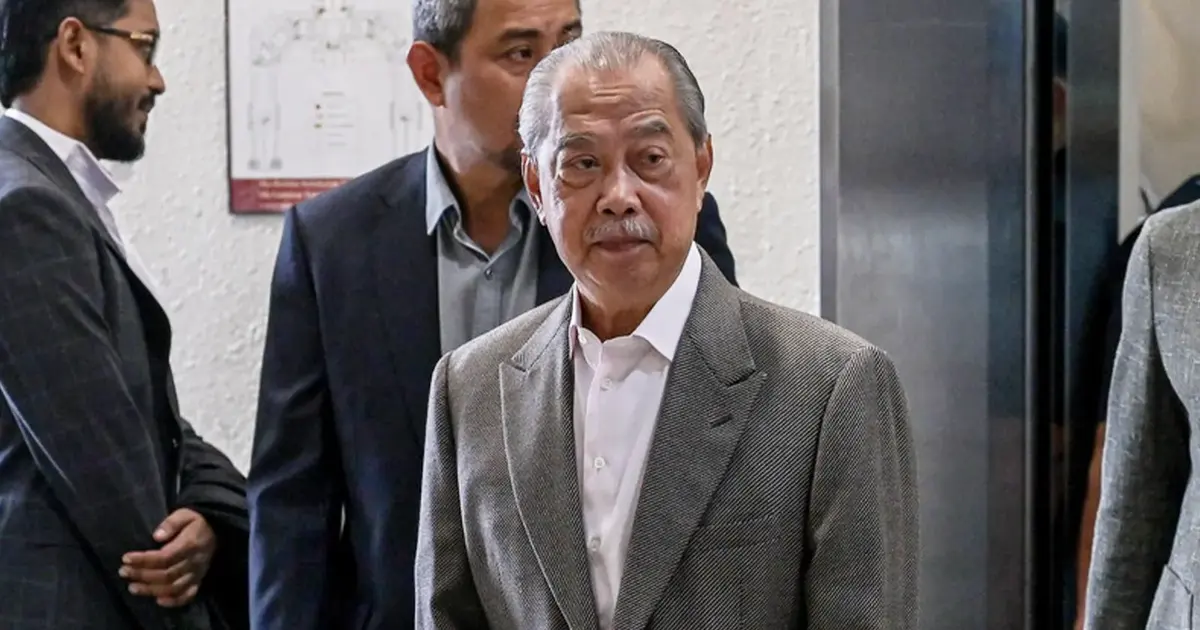
The High Court has become the setting for a revealing examination of how power actually functioned within Bersatu, with the Deputy Public Prosecutor's office suggesting that party president Muhyiddin Yassin may have wielded less genuine authority than his title implied. Bersatu's financial officer Zulhelmi Zaulkafly took the stand to provide testimony about the mechanics of the party's monetary management, offering insights into a governance structure that appears considerably more diffuse than the traditional hierarchy one might expect from a political organisation with a single figurehead.
Zulhelmi's testimony centred on the critical point that no individual within Bersatu possessed exclusive or unrestricted control over the party's financial operations. This statement has significant implications for understanding how decisions were actually made at the highest levels of the organisation. Rather than presenting a picture of centralised authority under Muhyiddin, the testimony suggests a more distributed system of checks and balances, where financial authority appears to have been shared or compartmentalised among various office holders and structures within the party apparatus.
The questioning from the DPP appears designed to establish whether Muhyiddin, despite holding the party presidency, was essentially a figurehead or consensus builder rather than a decision-maker wielding true executive power. In many political parties across Southeast Asia, the formal structure of leadership can mask the actual distribution of authority, which often depends on personal relationships, factional alignments, and informal power networks. The court proceedings suggest that Bersatu's internal dynamics may have followed this pattern, with real influence potentially residing elsewhere than the official position would indicate.
For Malaysian observers, this line of questioning touches on fundamental questions about political accountability and institutional governance. If a party president does not exercise meaningful control over financial affairs, it raises questions about personal responsibility, the clarity of chains of command, and how party resources are deployed. These issues matter not merely as abstract organisational questions, but as reflections of how political parties function as institutions within Malaysia's broader democratic framework.
The testimony also highlights the complexity of modern Malaysian politics, where party structures have become increasingly sophisticated and, in some cases, opaque. Bersatu itself was established relatively recently and emerged from particular political circumstances, attracting members from various backgrounds. The financial governance arrangements that evolved within the party may reflect compromises between different factions or power centres rather than a coherent design reflecting a single individual's vision or authority.
Zulhelmi's statement that financial control was not vested in any single person could mean several things in practice. It might indicate that spending decisions required multiple approvals, that different officials managed different revenue streams, or that the party operated through committees or boards where decisions were collective. Each arrangement implies different levels of personal accountability for individual leaders and different distributions of actual influence within the organisation.
The DPP's line of questioning suggests an attempt to establish whether Muhyiddin can be held personally responsible for certain party decisions or transactions. If he did not exercise genuine control over finances, the argument might go, then how much authority did he truly exercise, and over what matters? This distinction between formal position and actual power becomes legally and politically significant when questions of accountability arise.
From a regional perspective, Malaysia's major political parties have grappled with similar governance questions in recent years. The evolution of these structures often reflects the increasing complexity of party administration, the need to accommodate multiple power centres within coalitions, and the practical challenges of managing large organisations with significant financial resources. Bersatu's particular arrangements, whatever they prove to be, likely contain lessons relevant to how other parties organise themselves.
The court proceedings also illuminate the broader political context in which Bersatu operates. As a relatively newer entrant to Malaysian politics with a complicated history involving transitions between coalitions and shifting allegiances, the party has had to establish its internal governance norms. The extent to which Muhyiddin could unilaterally make decisions, including financial ones, probably reflected the political circumstances of the party's founding and evolution.
For Malaysian citizens concerned with democratic governance and institutional transparency, these court revelations matter. Political parties are not merely private organisations; they are central to Malaysia's democratic system and significant custodians of public trust. How they manage their internal affairs, distribute authority, and maintain financial accountability reflects on the broader health of democratic institutions. The testimony about Bersatu's financial governance thus contributes to an important public record about how one significant player in Malaysian politics actually operated.
The implications extend beyond Bersatu itself. As Malaysian voters and political observers assess parties and their leadership, understanding the actual structures of power and authority within these organisations becomes more important than simply accepting official titles and hierarchies. The DPP's questioning in this High Court case serves the public interest by encouraging clarity about how power genuinely flows within Malaysian political parties, rather than allowing formal structures to obscure the reality of decision-making authority.

