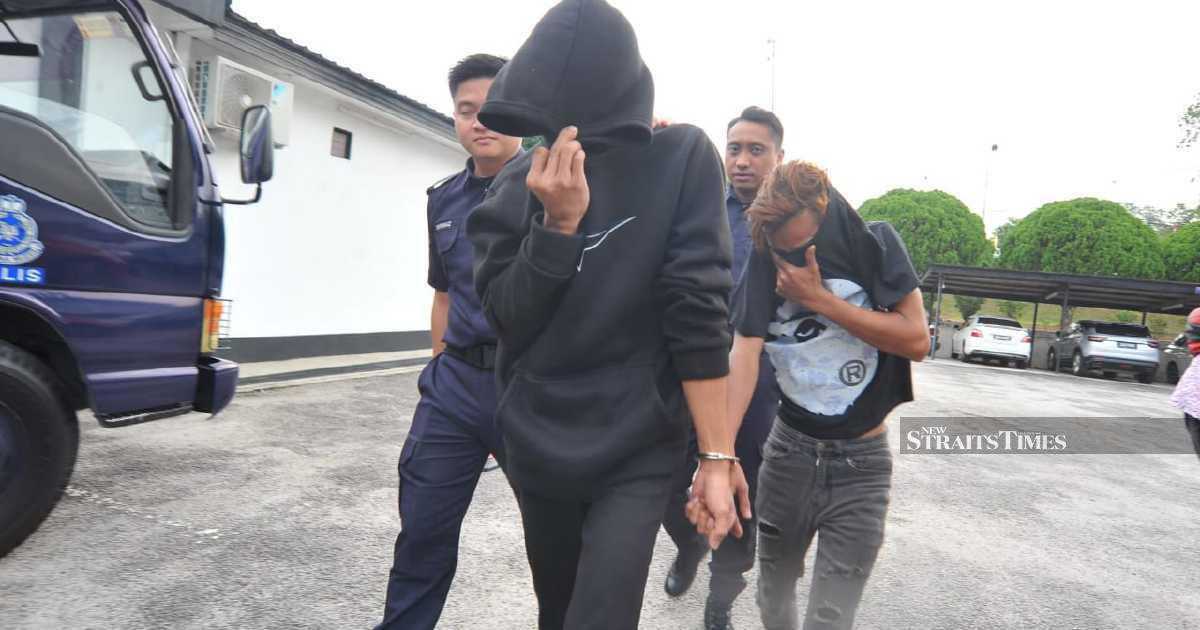
Two mechanics appeared before the magistrate's court in Kulai yesterday to face charges stemming from what authorities allege was an illegal street race conducted on the Johor Second Link expressway. The incident, which reportedly took place last Saturday, has drawn attention not only for the serious traffic violations involved but also for the fact that one of the accused is a disabled individual, raising questions about accessibility and justice in Malaysia's legal system. Both men were charged with reckless and dangerous driving, offences that carry significant penalties and reflect the authorities' ongoing crackdown on street racing activities that endanger other road users.
Street racing has remained a persistent problem across Malaysia, particularly on major expressways where long stretches of road and lighter traffic during off-peak hours create conditions that attract illegal racers. The Johor Second Link, which connects Malaysia to Singapore, is a particularly critical infrastructure corridor carrying both commercial and private vehicles. Such racing activities not only pose immediate safety risks to the participants themselves but also jeopardise the lives of innocent motorists, delivery drivers, and travellers passing through the route at the time. Enforcement agencies have intensified their surveillance and patrol activities on key expressways in recent years, resulting in more prosecutions of individuals engaged in such behaviour.
The involvement of a disabled mechanic in this case adds a notable dimension to the proceedings. While disability status does not exempt individuals from responsibility for their actions under Malaysian law, it raises important questions about accessibility, employment opportunities, and the social circumstances that may influence behaviour. The mechanic's participation in alleged illegal racing, assuming the charges are proven, suggests that being disabled has not prevented involvement in risky activities that carry legal consequences. This serves as a reminder that while society must provide support and opportunities for persons with disabilities, such support does not absolve them of legal responsibilities when they breach traffic laws designed to protect public safety.
Mechanics, as a professional group, occupy a unique position in Malaysia's transport ecosystem. They are responsible for maintaining vehicles that operate on public roads, and their skills and conduct directly affect road safety. When mechanics themselves are implicated in dangerous driving incidents, it raises questions about the standards within the profession and whether formal training and licensing bodies adequately emphasise the importance of responsible vehicle operation. The fact that two individuals from this profession were allegedly engaged in street racing together may also suggest potential workplace or social dynamics that contributed to their participation in the illegal activity.
The charges of reckless and dangerous driving under Malaysian traffic law represent serious offences. These charges typically carry penalties that may include substantial fines, driving disqualifications, and potentially custodial sentences depending on the severity of the incident and whether any collateral damage or injuries resulted. The court proceedings will establish whether the evidence presented by traffic enforcement officers and prosecutors is sufficient to prove beyond reasonable doubt that illegal racing actually occurred and that both accused parties were active participants rather than merely present at the scene.
The Johor Second Link is a major artery for regional commerce and travel between Malaysia and Singapore, with thousands of vehicles crossing daily. Illegal racing on such strategic routes carries implications beyond simple traffic violations; it affects economic productivity, road safety statistics, and regional cooperation on transport safety matters. Singapore's authorities are also invested in ensuring safety on this vital cross-border corridor, and coordinated efforts between Malaysian and Singaporean traffic enforcement agencies play a role in managing such incidents.
The magistrate's court hearing represents the initial stage of the legal process. Depending on the outcome of this appearance, the case may proceed to trial where evidence will be presented and tested. The court will need to examine whether eyewitness accounts, traffic camera footage, vehicle data, and other evidence conclusively demonstrate that a deliberate street race took place. The specific characteristics of reckless and dangerous driving—including excessive speed, aggressive manoeuvres, and disregard for other road users—must be established before convictions can be secured.
This incident reflects broader concerns about road safety culture in Malaysia. Despite ongoing public awareness campaigns and enforcement initiatives, illegal racing continues to attract participants, particularly among younger drivers and mechanics who may view such activities as demonstrations of driving skill or vehicle capabilities. The penalties imposed by courts in these cases serve both punitive and deterrent functions, aiming to discourage similar behaviour among other motorists who might be tempted to engage in illegal racing.
As the case progresses through Malaysia's judicial system, it will be closely watched by road safety advocates, enforcement agencies, and the mechanic community. The outcome will likely influence future enforcement strategies targeting illegal racing and may provide insights into the social and professional factors that lead individuals to engage in high-risk traffic violations despite the availability of legal racing venues and driving schools throughout Malaysia.

