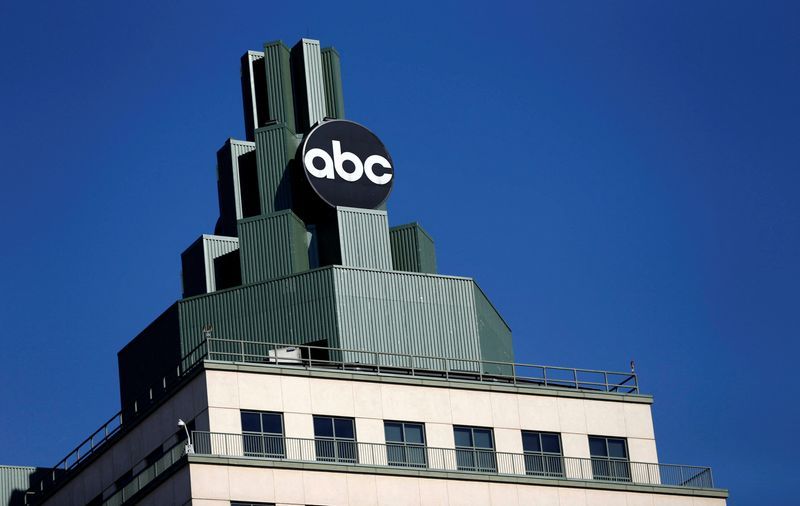
Disney and its ABC broadcast unit filed legal action in Washington on Tuesday to block an accelerated licence review for eight television stations, asserting that the Trump administration has weaponised the regulatory process as retaliation against a news and entertainment network that has resisted pressure to alter or suppress content critical of the presidency. The lawsuit frames the FCC's actions as an unconstitutional attack on press freedom, marking a significant escalation in an ongoing dispute between a major media conglomerate and the federal government over the boundaries of regulatory authority and editorial independence.
The conflict between Trump and Disney has simmered for two years, intensifying in recent months as the president has repeatedly demanded that broadcasters abandon programmes he finds objectionable or that have scrutinised his administration. Most notably, Trump called for ABC to lose its broadcast licences after the network declined to air a prime-time address on elections last month, and earlier urged the network to terminate late-night comedian Jimmy Kimmel's programme. These public statements form the backdrop to Disney's assertion that the FCC's licensing investigation represents political retaliation rather than legitimate regulatory oversight.
In its court filing, Disney contends that the FCC is abusing its regulatory authority to suppress free speech and coerce editorial compliance. The company characterises the accelerated review as an "extraordinary assault" on constitutional protections for media outlets, arguing that the agency is deploying its licensing power—historically reserved for rare circumstances—as a tool to punish the network for programming decisions the administration views unfavourably. This argument represents a direct constitutional challenge to the administration's use of regulatory mechanisms to influence media content.
The FCC, led by Chair Brendan Carr, has justified the early review by citing a year-long investigation into whether Disney's diversity policies constitute unlawful discrimination—an allegation the company firmly rejects. Carr ordered the accelerated reviews in April despite the stations' regular licence renewals not being scheduled until October 2028, marking the first such early review the agency has initiated in more than fifty years. When contacted, Carr maintained that the agency has reached no conclusions and will continue to "follow the facts and the law," though he declined to specify timelines for decisions on licence revocation proceedings.
The regulatory stakes extend beyond ABC's television stations to encompass the popular daytime programme "The View", which faces separate FCC scrutiny over whether it complies with regulations requiring broadcasters to offer equal opportunity for political candidates. Disney notes that the show has not invited political candidates since February, a decision the network attributes to the FCC's "pressure campaign." This broader investigation signals that the administration's concerns extend across Disney's entire broadcast portfolio and programme portfolio, not merely isolated instances of critical coverage.
U.S. District Judge Loren AliKhan issued an order on Tuesday requiring both Disney and the FCC to propose scheduling for consideration of Disney's request for a temporary restraining order—a preliminary legal step that, if granted, would halt the licence renewal proceedings. The judge further directed the FCC to notify her immediately if the agency initiates formal procedures to revoke ABC's licences. This judicial intervention reflects the seriousness with which the court is treating Disney's allegations and the urgency of the constitutional questions at stake.
Democratic FCC Commissioner Anna Gomez publicly denounced the investigation as a "campaign of censorship and control," stating that the threat of licence revocation serves to punish expression the administration dislikes. Her statement underscores the partisan nature of the dispute and suggests that the FCC's action has divided the agency itself along ideological lines, with commissioners interpreting the regulatory authority differently based on their political perspectives.
The case represents a crucial test of how far the federal government may go in using licensing authority to influence media content and editorial decisions. While broadcast stations operating on public airwaves are subject to FCC regulation—including public interest obligations—networks retain broad First Amendment protections regarding their programming choices. The threshold question before the courts is whether an early licence review, ostensibly grounded in discrimination investigations, constitutes an improper use of regulatory power when pursued against a network that has resisted political pressure from the White House.
For Malaysian and Southeast Asian media observers, this dispute carries significant implications regarding the relationship between governmental authority and press independence. The case demonstrates how regulatory agencies nominally created to serve public interest can become instruments of political control when weaponised by administrations hostile to critical journalism. In a region where media freedom indices have shown concerning trends, the Disney-FCC battle illustrates the sophisticated methods by which governments can suppress dissent through ostensibly neutral regulatory mechanisms rather than outright censorship.
Historically, licence revocations for broadcasters are extraordinarily rare, yet the mere threat of such action exerts considerable pressure on editorial decision-making. Critics argue that the FCC's accelerated investigation, coupled with the Trump administration's public threats, creates a chilling effect that discourages networks from pursuing investigative journalism or hosting critical commentary. This dynamic represents a particular concern in democracies where regulatory independence from political interference is essential to sustaining a free press.
The White House has declined to comment on the lawsuit, maintaining official silence even as the president continues making public statements about media organisations he perceives as hostile. This studied detachment—combined with the FCC Chair's stated commitment to regulatory process—reflects an attempt to create distance between political rhetoric and agency action, though Disney's allegations centre precisely on whether such separation truly exists or merely obscures coordinated pressure.
As the case proceeds through the federal courts, the outcome will likely establish precedent for how aggressively regulatory agencies can pursue investigations into media companies that resist political pressure. The court's eventual ruling could either reinforce the principle that editorial independence remains protected even when broadcasters use public airwaves, or alternatively, could expand government authority to enforce "public interest" standards in ways that enable political retaliation under the guise of regulatory scrutiny.

