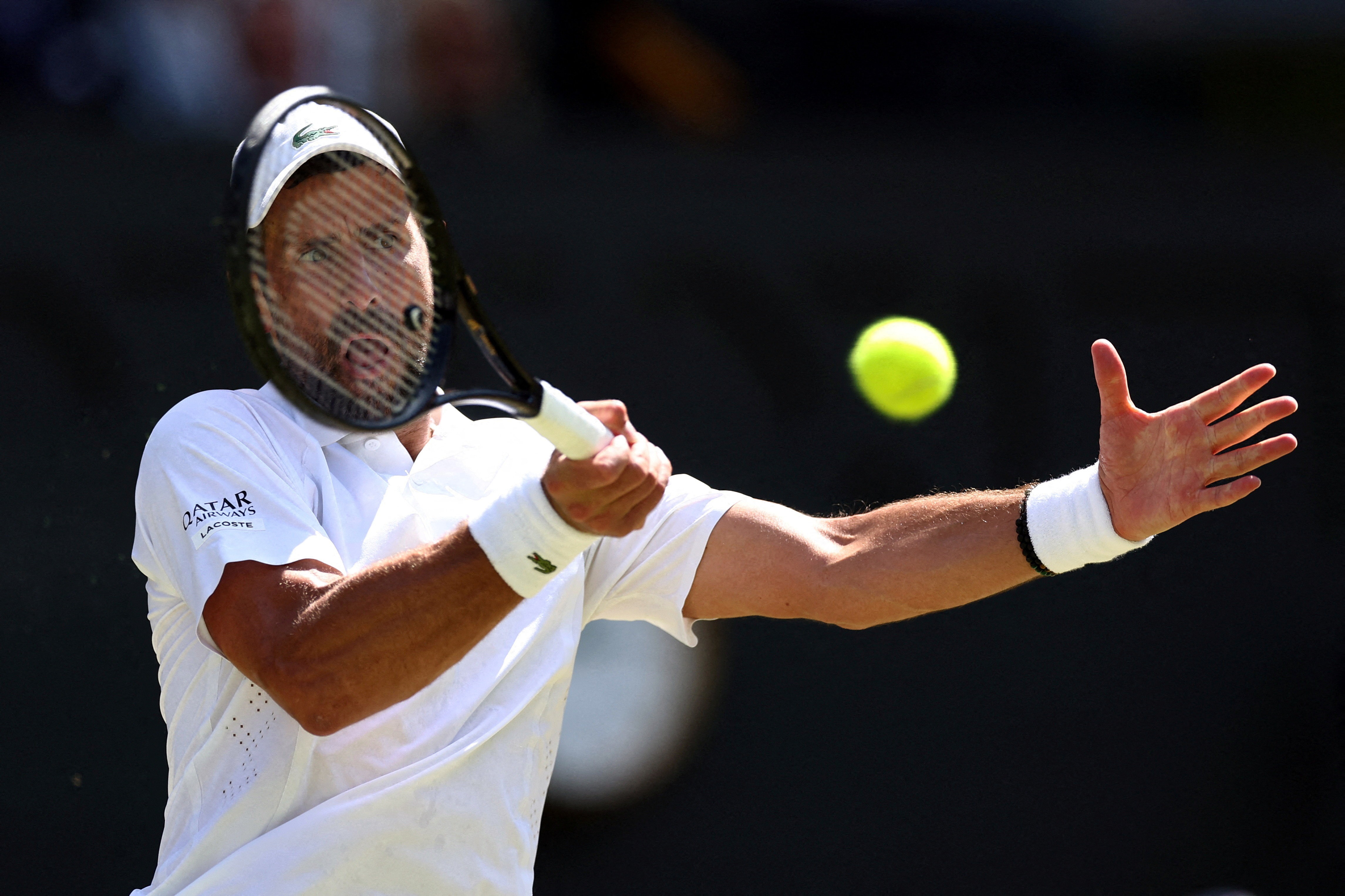
Novak Djokovic's progression to the Wimbledon semifinals came at considerable cost, both physically and temperamentally, after an extraordinary five-hour-15-minute battle against Canada's Felix Auger-Aliassime that stretched beyond any quarterfinal the grass-court championship has witnessed. The 39-year-old Serbian star clinched the grueling encounter 7-6 (12-10), 3-6, 6-3, 6-7 (4-7), 7-6 (10-4), finishing just six minutes before the tournament's 11 pm curfew, setting the stage for a semifinal confrontation with defending champion Jannik Sinner.
Djokovic's path to victory was marked by an intense confrontation with tournament referee Denise Parnell midway through the contest, revealing the mounting frustration that accumulates during such marathon encounters. The flashpoint erupted when the match stood level at one set each around 7.40 pm, with Parnell approaching the players to inform them that the Centre Court roof would be closed due to fading light. The Serbian competitor erupted in protest, contending that sufficient daylight remained to complete another full set and questioning the consistency of the tournament's application of its own regulations.
Djokovic's grievance centered on what he perceived as inconsistent decision-making by match officials. He referenced his first-round encounter against Wu Yibing, where the roof remained open until nearly 8.30 pm, yet on this occasion closure was being mandated more than 50 minutes earlier. His exasperation boiled over as he declared: "You are so proud of your rules and you're not sticking to any kind of rule. We have no idea what the rule is." The timing of the roof closure decision appeared to concern Djokovic particularly given his opponent's formidable indoor credentials—Auger-Aliassime, 14 years his junior, is renowned as a dangerous performer under indoor conditions, potentially offsetting any advantage the Serbian might maintain on an open court.
Parnell's rationale for her decision reflected lessons learned from Sinner's fourth-round match against Japan's Shintaro Mochizuki, during which the roof had to be deployed mid-set because darkness descended too rapidly for safe play. However, Djokovic remained unmoved by this explanation, dismissing the relevance of another player's circumstances with characteristic bluntness: "With Jannik, I don't care what happens. I care about our match right now!" His frustration underscored the psychological pressure accompanying such extended contests, where external factors beyond a competitor's control can feel like decisive interference in the outcome.
Intriguingly, events that unfolded immediately afterward appeared to vindicate the referee's concerns. During the second game of the third set, Auger-Aliassime held serve for an extraordinary 14 minutes, a length that suggested Parnell's worries about lengthening darkness were not unfounded. The Canadian's monumental holding of serve effectively demonstrated that managing light conditions represented a legitimate operational concern, even if Djokovic's competitive frustration made him reluctant to acknowledge it.
The physical dimension of this quarterfinal proved equally demanding. Djokovic required a medical timeout in the closing stages of the opening set after apparently tweaking his left calf muscle, movements that prompted visible discomfort throughout his serving motion. Despite these evident difficulties and the injury concern, he recovered sufficiently to claim the first set through a marathon tiebreak contested at 12-10, an indication of the ferocious intensity characterizing this encounter from its outset.
Auger-Aliassime responded with characteristic resilience, capturing the second set after Djokovic had seemed to gain the upper hand. The Canadian third seed had demonstrated remarkable consistency throughout the tournament, having dropped serve on only one occasion before this match, but Djokovic's superior tactical acumen finally produced a break to love in his progression through the third set. The fourth set descended into a tiebreak that Auger-Aliassime won decisively, dragging the contest into a final-set decider where the first player to accumulate 10 points would prevail—a format that amplifies both the pressure and the drama surrounding every point.
Djokovic's eventual triumph in that decisive tiebreak, which he won 10-4, represented a triumph of experience and mental fortitude over raw youth and power. In his post-match reflection, Djokovic acknowledged the psychological toll of such encounters: "I did it with a racket, and a lot of heart. A lot of management of the nerves and the extreme tension you feel in these kind of matches." His words captured the reality that victories in such extended affairs are determined as much by emotional resilience and competitive character as by technical excellence or physical capacity.
The Serbian champion's comment that "these are the moments I still play tennis for, for sure" revealed the motivation sustaining his career at an age when most professionals have retired. Yet his subsequent remark—"I wish it was the final so I don't need to worry about how the body will feel tomorrow"—hinted at genuine concerns about recovery following such an extraordinary exertion. For Malaysian and Southeast Asian tennis enthusiasts, Djokovic's progression represents the continuation of his pursuit for an eighth Wimbledon title, a quest that will now encounter Sinner's formidable defending champion status in the semifinals.
The match's significance extends beyond mere sporting spectacle, illustrating how modern professional tennis operates at the intersection of athletic performance, regulatory frameworks, and the human capacity to endure extreme physical and mental challenge. Djokovic's willingness to engage in heated disputes with officials, even at this late stage of his career, demonstrates that competitive fire and the drive for victory remain undiminished regardless of age or accumulated accolades.

