Novak Djokovic enters the U.S. Open with circumstances perhaps more favourable than any moment in the past two years, as he pursues what would be a standalone record of 25 Grand Slam titles—one more than Margaret Court's achievement. The absence of Jannik Sinner through injury and the return of Carlos Alcaraz from an extended layoff have shifted the landscape of the men's draw, potentially clearing a path for the 39-year-old Serbian to capture his fifth championship at Flushing Meadows. Yet the tournament remains far from a coronation for Djokovic, with Alexander Zverev having recently shattered his major drought at Roland Garros and subsequently reaching the Wimbledon final, establishing himself as a genuine contender capable of disrupting any narrative.
Djokovic's recent trajectory reflects the brutal mathematics of modern tennis. Since his 2023 triumph in New York, he has remained a persistent force at the sport's biggest occasions, yet Alcaraz and Sinner have monopolised the major titles, claiming 10 of the last 11 championships between them. More painfully for Djokovic, these two rivals have combined to defeat him five times across the most recent six Grand Slams, forming a seemingly impenetrable barrier to his ascent of tennis's all-time honours list. The Australian Open final earlier this year, where Alcaraz prevailed, epitomised the frustration—a tournament Djokovic targeted as his breakthrough opportunity, only to fall short against an opponent in peak condition.
Yet Djokovic has consistently demonstrated a psychological resilience that transcends conventional sport psychology. In a documentary released ahead of the year's final major, he articulated a concept drawn from his Serbian heritage—inat—describing it as a force of stubborn determination that emerges precisely when external circumstances appear most unfavourable. This philosophy has underpinned his career longevity and his continued pursuit of milestones that many contemporaries abandoned long ago. At an age when most champions have retired or substantially diminished their competitive appetite, Djokovic remains driven by the conviction that his record remains incomplete.
The practical reality facing Djokovic combines both encouragement and apprehension. Sinner's knee injury removes what had become the most consistent obstacle to Djokovic's ambitions, whilst Alcaraz's absence from competitive tennis for more than four months due to wrist problems introduces genuine uncertainty about the defending champion's readiness. Questions persist regarding whether Alcaraz can immediately recalibrate to the intensity required at major tournaments, or whether the extended break will exact a noticeable toll on his form. However, the defending champion has cultivated a reputation for elevating his performance at tennis's grandest stages, suggesting that dismissing his prospects would be premature.
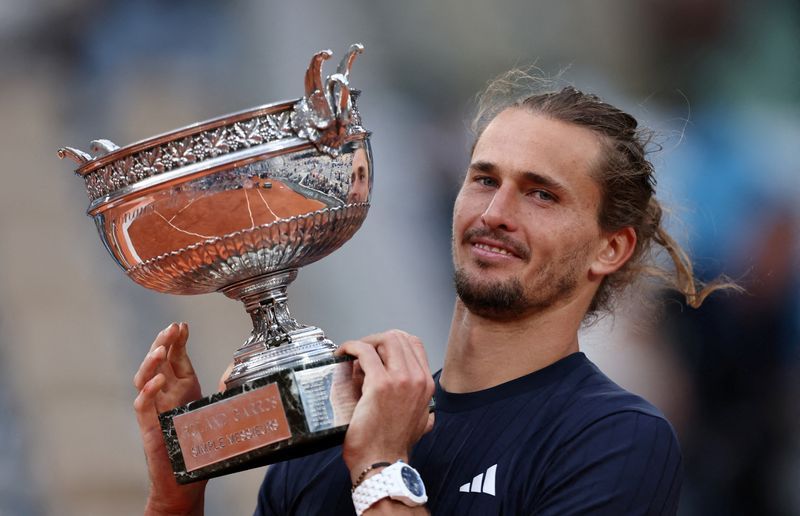
Zverev's emergence as a credible threat marks a significant development in the tournament's narrative. His maiden major victory at the French Open represents not merely a statistical milestone but rather a declaration that he belongs among tennis's elite. The subsequent run to the Wimbledon final provided validation that the breakthrough was no anomaly, and the German arrives in New York with demonstrable evidence that he can sustain excellence across consecutive majors. For Djokovic, Zverev presents perhaps the most unpredictable opponent—no longer the talented underachiever of previous years, but rather a player who has finally synthesised his considerable skills into major-championship performance.
Djokovic's confidence receives external validation from an unlikely source. Roger Federer, speaking to reporters in New York, offered an assessment grounded in decades of observing tennis at the highest level. Federer emphasised that Djokovic's mere presence in any tournament draw constitutes a genuine threat, drawing from extensive experience of the Serbian's capacity to produce exceptional tennis in high-pressure moments across all surfaces and all venues. This perspective, coming from someone who directly competed against Djokovic through multiple eras of the sport, carries considerable weight beyond typical sports commentary.
The American contingent presents an intriguing secondary narrative. Ben Shelton, the recent Canadian Open champion, has captured attention through performances that suggest genuine major-tournament potential, though his Cincinnati runner-up finish and early elimination from Wimbledon introduce questions about consistency. Andy Roddick, himself a U.S. Open champion from 2003, emphasises that Shelton's ability to navigate the tournament's first week successfully will prove decisive—the Canadian has struggled to translate his undoubted talent into sustained major performances. Taylor Fritz, the defending champion's runner-up from last year, harbours ambitions of ending a 23-year drought for American men at the Open, whilst Frances Tiafoe, as the Cincinnati runner-up, arrives with momentum.
For Malaysian and Southeast Asian observers, Djokovic's pursuit carries broader significance beyond the immediate tournament outcome. His continued dominance at 39 defies the conventional narrative that athletes possess finite windows of elite performance. In a region where athletic longevity and dedication carry cultural resonance, Djokovic's refusal to accept diminishment resonates as a powerful statement about human potential and resilience. Moreover, his search for records represents the continuation of a legacy that has shaped professional tennis for nearly two decades.
The broader field extending beyond the established contenders includes emerging talents such as Arthur Fils and Felix Auger-Aliassime, who reached the semi-finals last year and seeks to build upon his joint-best major performance. These players represent tennis's generational transition, though none has yet demonstrated the consistency or major-tournament success required to displace the established hierarchy. Jodar and other rising competitors will seek to exploit opportunities that may arise should the favoured challengers stumble, yet the tournament structure increasingly suggests that the men's game remains dominated by a narrow cohort of exceptional talents.
The convergence of injuries, returns, and the emergence of Zverev as a credible champion creates a tournament landscape unlike recent U.S. Opens. Djokovic enters not as the overwhelming favourite—Zverev's credentials and Alcaraz's pedigree prevent that assessment—but rather as a legitimate contender positioned to exploit a unique alignment of circumstances. Whether his psychological resilience and competitive acumen can overcome the physical demands required to win a major at 39, against opposition that includes at least one rejuvenated rival, remains the defining question of his final chase for tennis immortality.

