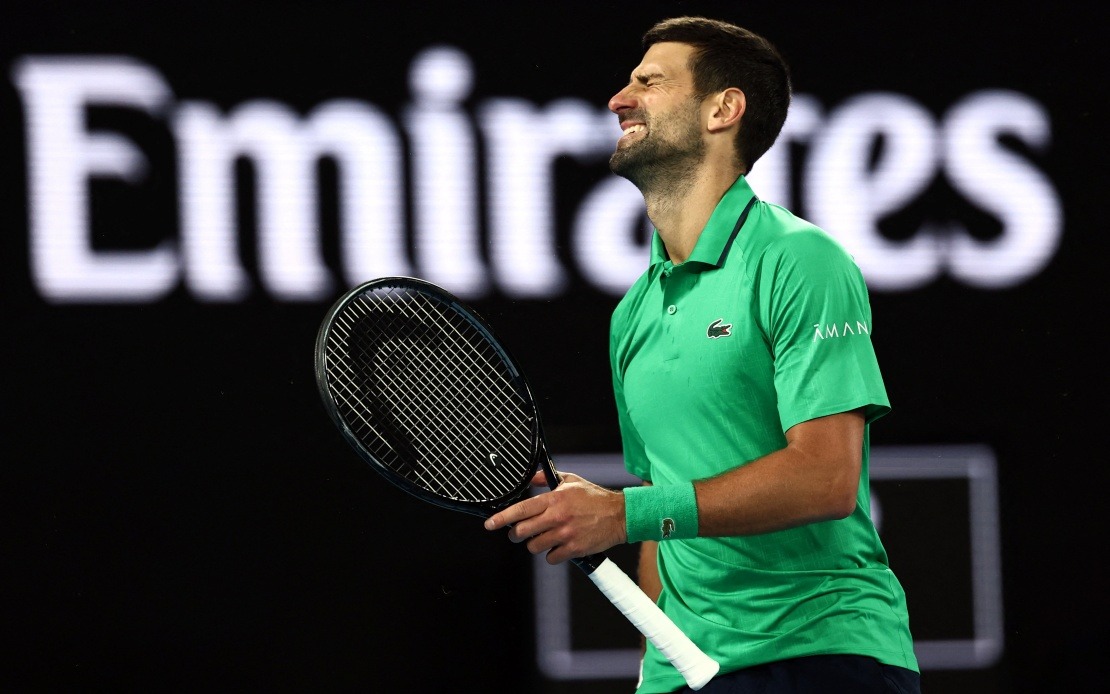
Novak Djokovic has etched his name further into tennis history by reaching a milestone that underscores his dominance at the All England Club. The Serbian champion equalled Roger Federer's men's record of 105 singles victories at Wimbledon following a four-set victory over France's Arthur Rinderknech on Friday, advancing to the tournament's fourth round in the process. The achievement, reached in Djokovic's 18th appearance in the Wimbledon last 16, adds another chapter to a legacy already distinguished by multiple Grand Slam titles and numerous records across professional tennis.
Djokovic's performance against Rinderknech demonstrated the resilience that has characterised his career at SW19. The match unfolded across three hours on Centre Court, with the 39-year-old prevailing 7-5, 6-4, 1-6, 7-6 (7-4) against a determined opponent seeded 25th in the draw. The contest remained competitive throughout, with Rinderknech capturing the third set convincingly before Djokovic reasserted control in the decisive fourth-set tiebreak. This victory places him squarely among the tournament's most prolific winners in the professional era, a distinction that carries particular significance given Wimbledon's special place in his competitive history.
When addressing the crowd following his win, Djokovic injected humour into his historical achievement by playfully proposing a one-off match against Federer to determine who would claim the 106th victory. The remark reflected both his respect for his long-time rival and his measured perspective on individual records. In his formal interview, Djokovic emphasised the honour of making tennis history, particularly at a venue where he developed his childhood ambitions. He deflected questions about whether he would pursue the 106th win, suggesting instead that his focus remains on performing well in each individual match rather than chasing specific statistical milestones.
The significance of this record extends beyond mere numbers. Djokovic's 105 Wimbledon victories represent the accumulated result of sustained excellence across nearly two decades, during which he has navigated an increasingly competitive field of opponents and adapted his game to overcome evolving challenges. His record 24 Grand Slam titles contextualise his achievement at Wimbledon, demonstrating that his success at this particular venue reflects broader patterns of dominance across the sport's most prestigious tournaments. Looking ahead, Djokovic faces Russian qualifier Roman Safiullin in his next match, with a quarter-final berth at stake.
In the men's draw, defending champion Jannik Sinner continued his impressive run with a commanding straight-sets victory over American Jenson Brooksby, winning 6-4, 6-3, 6-4. The Italian world number one's performance extended a remarkable streak: his perfect record in third-round Grand Slam matches now stands at 20 consecutive wins, an Open Era record for men's competitors at this stage. Sinner acknowledged the crowd's contribution to his performance, highlighting how home support and audience energy can influence outcomes at the professional level. His progression suggests that his maiden Grand Slam title defence remains on track despite the traditional challenge that defending a Wimbledon crown presents.
The women's tournament witnessed the advancement of two formidable competitors bidding to capture the title. World number one Aryna Sabalenka dismantled former French Open champion Jelena Ostapenko 6-4, 6-4, maintaining her pursuit of a first Wimbledon crown. The Belarusian champion has long possessed the aggressive baseline game suited to success on grass, though previous appearances at the All England Club have not yielded the elusive title. Sabalenka's clinical performance against Ostapenko suggested she has refined her approach to grass-court tennis, managing her powerful game while limiting the unforced errors that occasionally disrupt her performance on faster surfaces.
Sabalenka's fourth-round opponent will be four-time Grand Slam champion Naomi Osaka, who engineered her own impressive victory by defeating Russian Daria Kasatkina 6-1, 6-3. The result represents a significant milestone for Osaka, as it marks the first time she has advanced to the Wimbledon fourth round in her professional career. Despite her extraordinary success at the Australian and US Opens, and her French Open triumph, Osaka has historically found the grass courts of SW19 challenging. Her comprehensive defeat of Kasatkina suggests she may have overcome some of the technical adjustments required to compete effectively on grass, where her game's characteristics require subtle modification compared to hard-court tennis.
When discussing her imminent clash with Osaka, Sabalenka acknowledged the calibre of her opponent, describing the matchup as another meeting between two powerful, aggressive competitors. She characterised the encounter as demanding and physically intense, while expressing her readiness to deploy whatever tactical and mental resources necessary to prevail. The prospect of this fourth-round encounter has attracted significant attention within the tennis community, as both players possess the capacity to overwhelm opponents through sheer power and aggressive positioning. Neither player is likely to engage in prolonged baseline rallies; instead, the match will likely be decided by who best manages their attacking tennis while minimising costly errors.
For Malaysian and Southeast Asian tennis enthusiasts, these developments carry relevance beyond their immediate sporting interest. The performances of established champions like Djokovic and Sinner provide benchmarks against which emerging regional talent can measure themselves. Meanwhile, Osaka's breakthrough at Wimbledon resonates across Asia, as her success demonstrates that non-European players can master the unique demands of grass-court tennis. Sabalenka's ascendancy as world number one, meanwhile, reflects how the sport's hierarchy has shifted beyond the traditional European dominance, with Eastern European and other emerging regions producing increasingly competitive players. These trends suggest that regional players aspiring to Grand Slam success need not view Wimbledon as inherently disadvantageous.
The tournament's progression through its early rounds has underscored several broader themes relevant to contemporary tennis. The continued presence of players in their late thirties competing at elite levels, as demonstrated by Djokovic's ongoing dominance, challenges conventional assumptions about athletic careers' trajectories. Simultaneously, the emergence of players like Sinner, who represent the next generation of champions, indicates that the sport maintains robust depth. The women's draw particularly showcases competitive equilibrium, with multiple players possessing genuine prospects of capturing the title rather than a single dominant figure. As the tournament advances toward its conclusion, these dynamics will become increasingly apparent.
The week ahead will determine whether Djokovic can add to his Wimbledon legacy beyond the statistical record, whether Sinner can progress toward a second consecutive title, and whether Sabalenka or Osaka will claim their respective breakthroughs at the All England Club. Each outcome will shape narratives around contemporary tennis and inform assessments of where the sport's power structures currently lie as it enters the latter stages of the professional year.

