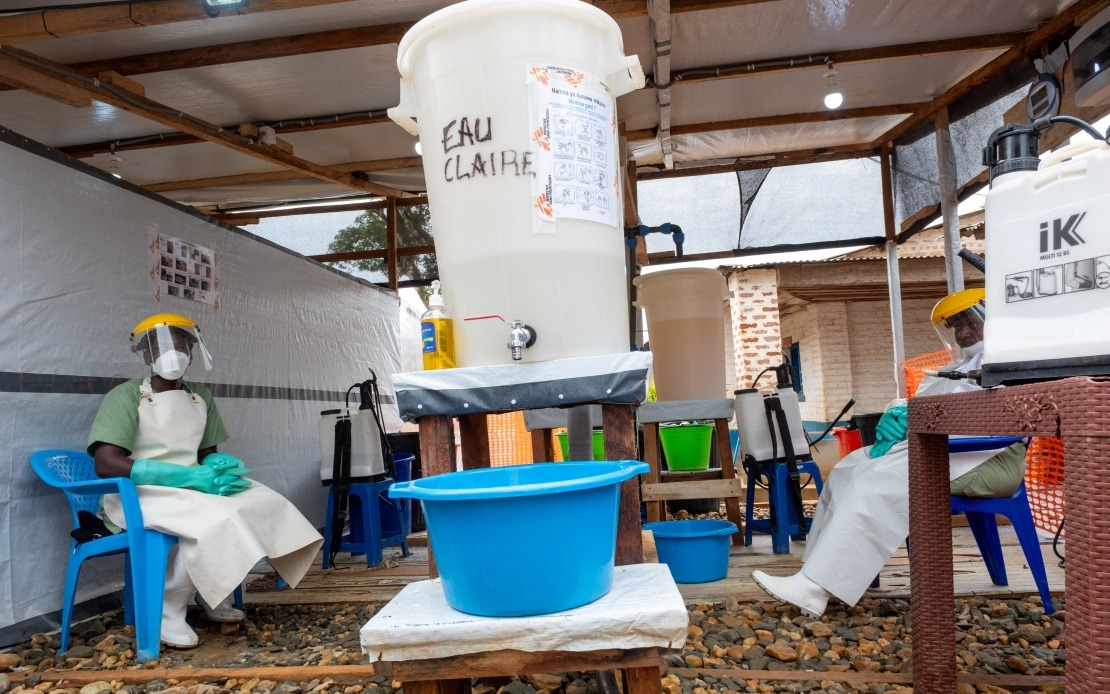
The Ebola outbreak in the Democratic Republic of Congo has reached a sobering milestone with confirmed cases now exceeding 3,000, marking one of the most significant public health crises affecting Central Africa. Official health authorities reported 3,075 confirmed infections as of late July, accompanied by 1,354 deaths and 556 documented recoveries, underscoring the severity of a crisis that continues to strain healthcare infrastructure across multiple regions of the vast nation.
The geographic spread of the Bundibugyo ebolavirus reflects the challenges facing response efforts in a densely populated region with complex infrastructure. Five provinces—Ituri, North Kivu, South Kivu, Haut-Uele and Tshopo—remain active outbreak zones where the virus circulates across communities. The persistence of cases across such diverse geographic areas indicates sustained transmission chains rather than isolated pockets, a pattern that typically complicates containment strategies and extends the duration of emergency response operations.
At present, 755 patients are hospitalized or isolated as the outbreak continues its trajectory through affected populations. This figure represents the immediate caseload demanding intensive medical resources and constant epidemiological surveillance. The simultaneous management of thousands of cases across five provinces tests the capacity of the DRC's health system, which already operates under significant resource constraints and has limited access to specialized isolation facilities required for safe Ebola patient management.
Recognizing the urgency of the situation, DRC Prime Minister Judith Suminwa Tuluka announced that research teams are actively pursuing therapeutic and preventive solutions against this specific virus variant. The Bundibugyo ebolavirus, one of several known species within the Ebola genus, had previously caused smaller, contained outbreaks but now presents a sustained challenge requiring rapid scientific innovation. Government authorities have committed financial resources to accelerate development timelines, reflecting the political and public health priority assigned to ending the outbreak.
Prime Minister Tuluka expressed cautious optimism that both a functional vaccine and effective treatment regimen could reach deployment within two to four months. This aggressive timeline underscores the mobilization of research capacity, though she provided limited detail regarding the specific development stages of candidate vaccines and treatments or the regulatory pathways that would ultimately determine availability for field use. The absence of currently approved vaccines or specifically licensed treatments for Bundibugyo ebolavirus creates an unprecedented pressure to move experimental candidates through trials with appropriate speed while maintaining rigorous safety standards.
The pharmaceutical and academic landscape for Ebola preparedness has shifted substantially since earlier outbreaks. Several experimental vaccine candidates and therapeutic agents are undergoing clinical evaluation globally, representing years of prior research investment in closely related filovirus species. This existing pipeline of candidates positions the international research community to potentially adapt and test approaches for the current Bundibugyo strain, creating pathways to treatment that simply did not exist during previous African Ebola crises.
A significant development occurred when the University of Oxford announced that human testing of an experimental vaccine designated ChAdOx1 BDBV has commenced, with the first volunteer receiving a vaccination shot. This represents the initial step in rigorous clinical evaluation of a vaccine specifically designed to generate immune protection against Bundibugyo ebolavirus. The transition from laboratory development and preclinical testing to actual human trials marks a critical juncture in the race to provide protection against ongoing transmission in the DRC.
For Malaysian and Southeast Asian observers, the DRC outbreak carries multiple implications. First, the region's vulnerability to Ebola—demonstrated repeatedly over recent decades—underscores the interconnected nature of global infectious disease risk. Southeast Asia's position as a major international travel hub and its trade relationships with African nations create pathways through which novel pathogens might eventually reach the region. The DRC experience demonstrates how rapidly localized outbreaks can scale into multi-provincial crises requiring international response coordination.
Second, the scientific response demonstrates how regional health systems must develop diagnostic capabilities and contingency planning even for diseases not currently endemic in their territories. The existence of experimental vaccines and therapeutics under clinical evaluation reflects decades of pharmaceutical investment, but accessing these tools during emergencies requires pre-established relationships with manufacturers, regulatory frameworks permitting emergency deployment, and healthcare worker training in unfamiliar protocols. Southeast Asian nations should assess their own preparedness for hypothetical introductions of high-consequence pathogens by reviewing agreements with vaccine manufacturers and clinical trial networks.
Third, the outbreak illustrates the consequences of weak health infrastructure in resource-limited settings, a lesson particularly relevant for less developed areas within Southeast Asia itself. The inability to contain the DRC outbreak across five provinces despite international assistance reflects persistent challenges in disease surveillance, contact tracing, and community health worker capacity. Nations throughout the region investing in rural health infrastructure and epidemiological surveillance capacity are building resilience against not only Ebola-class threats but the broader spectrum of infectious disease emergencies.
The continued expansion of confirmed cases in the DRC reflects the virus's persistence within affected communities and potentially gaps in isolation and infection control practices. As researchers race to develop and test interventions, field teams simultaneously work to improve case finding, isolation, and contact management using currently available public health tools. Success ultimately depends upon both scientific breakthroughs and sustained operational effectiveness in outbreak response—a dual challenge that demands resources, expertise, and political commitment that the DRC continues to marshal despite competing developmental needs.

