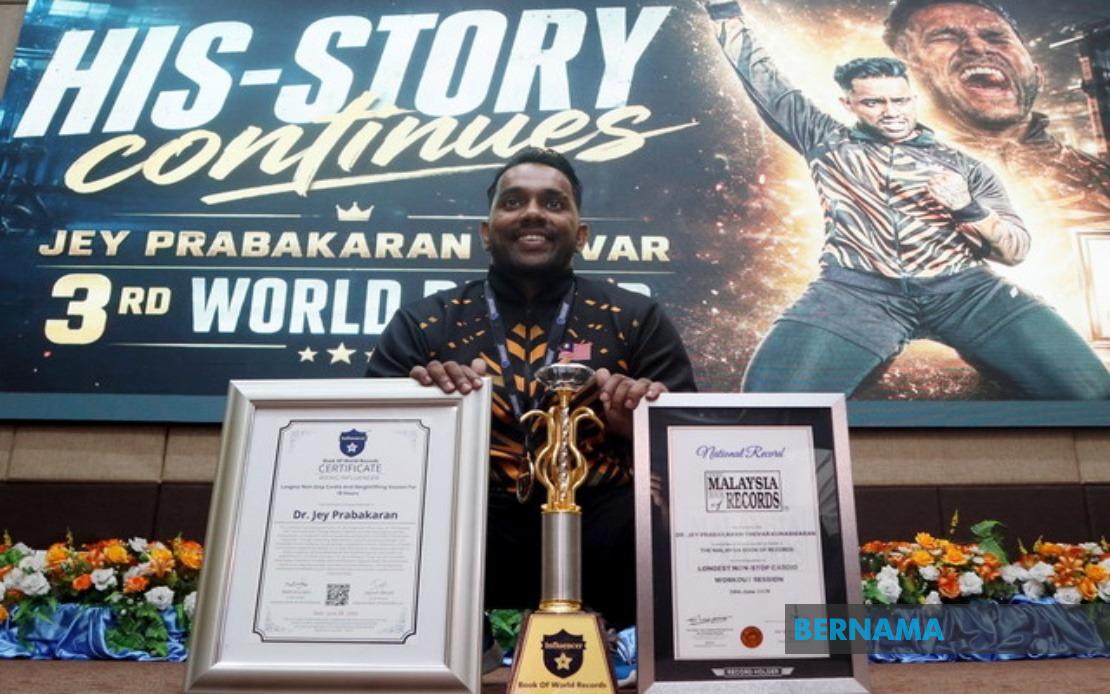
Dr Kjey Prabakaran Thevar, a 29-year-old Malaysian fitness athlete known professionally as Dr Kjey, has achieved his third world record by completing an gruelling 18-hour non-stop cardio and weightlifting challenge at Healthland Kuala Lipis in Pahang last Sunday. The feat, which commenced at 4 am and concluded at 11 pm, has been officially recognised by the Malaysia Book of Records and the Influencer Book of World Records, further elevating Dr Kjey's profile as one of the nation's most accomplished fitness champions. With this latest triumph, the Kuala Lipis native has dedicated his success to the memory of his late father, Kunasigaran Suppiya Thevar, who passed away on March 3, 1999.
The significance of this record extends beyond the physical accomplishment itself. Dr Kjey spoke candidly about how the loss of his father during his childhood became a driving force throughout his athletic journey. Growing up without paternal guidance, he channelled his grief and sense of loss into a powerful motivational engine that propelled him towards successive record-breaking achievements on the international stage. His willingness to publicly acknowledge this personal dimension transforms what might otherwise be viewed as a purely physical feat into a more meaningful narrative about resilience and channelling adversity into positive outcomes.
This third world record builds upon Dr Kjey's established track record of breaking barriers in endurance fitness. In 2023, he first set a Malaysia Book of Records entry through a 12-hour non-stop cardio and weightlifting challenge. He subsequently extended this achievement in 2024 with a 15-hour variant, which earned him recognition in both the Malaysia Book of Records and Guinness World Records. Additionally, Dr Kjey holds an Asian record with a documented time of 13 hours in this discipline. The progressive nature of these records, each pushing the physical boundaries further, demonstrates a systematic approach to record-breaking rather than isolated stunt performances.
The preparation for this latest record attempt began almost immediately following Dr Kjey's completion of a national record challenge conducted in October of the previous year as part of Malaysia's National Sports Day celebrations. This timeline reveals the intensity of his training regimen and the considerable planning required to condition the body for such an extraordinary endurance test. The interval between the national record and the international attempt provided sufficient recovery time while maintaining competitive momentum and psychological focus.
Among the most revealing details from Dr Kjey's account of the challenge are the substantial lifestyle modifications he undertook. Most notably, he completely restructured his dietary approach by transitioning to vegetarianism specifically for this record attempt. This dietary shift resulted in a loss of 32 kilogrammes, demonstrating the dramatic physical transformation required to optimise performance for the event. Such weight reduction requires careful planning to ensure adequate nutritional intake while maximising endurance capacity, suggesting professional guidance and scientific methodology underpinned his preparation.
The actual execution of the 18-hour challenge exposed Dr Kjey to multiple physiological stressors beyond simple fatigue. He encountered significant difficulties managing weight loss while maintaining energy levels, wrestling continuously with exhaustion and the psychological battle against drowsiness throughout the extended period. These candid observations about the mental and physical toll highlight that world records in endurance athletics represent not merely displays of strength but profound tests of mental fortitude and the body's capacity to persist under extreme duress.
Beyond his individual achievements, Dr Kjey serves as president of the Malaysian India Fitness Association, positioning him as an influential figure within Malaysia's fitness community. This leadership role amplifies the reach and impact of his record-breaking pursuits, extending their significance beyond personal accomplishment to encompass broader messaging about health and wellness. He has consistently articulated that his primary motivation extends beyond personal glory, instead aiming to inspire younger Malaysians to embrace healthier lifestyles and consider pursuing serious fitness as a viable and rewarding pathway.
The implications of Dr Kjey's achievements for Malaysian sports culture merit consideration. In a region where endurance sports and fitness records often receive less international attention than team sports or traditional athletic disciplines, his systematic record-breaking demonstrates the viability of individual athletes from Malaysia achieving world-class status in niche but globally recognised domains. This visibility contributes to a more diverse sporting landscape and provides alternative role models for Malaysians seeking inspiration beyond conventional sports hierarchies.
Looking forward, Dr Kjey has outlined ambitious plans to continue his record-breaking trajectory. He intends to attempt a national record involving 5,000 jumping jacks completed within a five-hour timeframe, scheduled for conjunction with next year's National Sports Day in October. This announcement indicates that his record-breaking career remains actively in motion rather than reaching a plateau, suggesting continued evolution in both the types of challenges he pursues and the physiological boundaries he challenges. The staggered timeline for these attempts reflects a measured approach to elite athletic performance, allowing adequate recovery and preparation between major endeavours.

