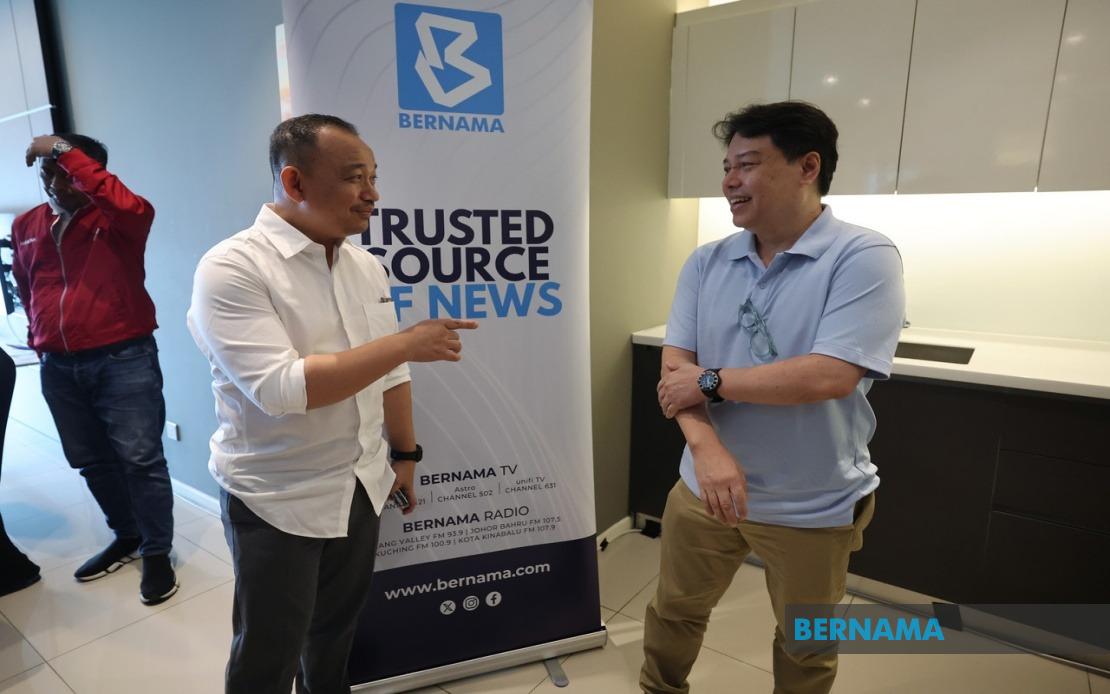
Dr Maszlee Malik, the Pakatan Harapan candidate vying for the Puteri Wangsa state seat in Johor, accepted a social media challenge to drive a Perodua Myvi across some of the state's most troublesome stretches of road. The exercise, which took him from Kampung Melayu Tebrau through Pandan and Kangkar Tebrau before reaching Ulu Tiram, was designed to move beyond political rhetoric and provide him with tangible evidence of the infrastructure complaints that have dominated local conversations for months.
The former education minister and former Simpang Renggam Member of Parliament embarked on the drive to bridge a common gap between elected representatives and the communities they serve. Rather than relying solely on constituent feedback or technical reports, Maszlee opted for direct personal experience. He navigated the route during peak traffic hours, witnessing both the vehicular congestion and the physical deterioration of the road surface that residents routinely highlight on social media platforms.
Maszlee's characterisation of the driving experience proved vivid and colourful. He described the sensation of traversing the uneven road surfaces as akin to riding in a traditional wooden boat on the waters of Tanjung Surat—a comparison that conveyed the constant swaying, jolting, and bouncing that occurs when vehicles encounter severely degraded pavement. This visceral description resonated more powerfully than abstract descriptions of road conditions, lending credibility to long-standing resident complaints that had sometimes been dismissed as exaggerated.
The drive revealed multiple layers to Johor's infrastructure crisis. Beyond the immediate damage caused by deteriorating road surfaces, Maszlee observed how rapid urban development in neighbourhoods such as Taman Daya, Taman Pelangi Indah, and surrounding Tebrau areas had proceeded without corresponding enhancements to the supporting road network. What planners perhaps envisioned as minor local roads had become critical arterial routes, handling traffic volumes far beyond their original design capacity. This mismatch between development and infrastructure represents a systemic planning failure that will require comprehensive intervention.
During his visit to the Bernama Operations Room, Maszlee demonstrated awareness of the bureaucratic and inter-agency complexities that typically hamper infrastructure reform. He acknowledged that addressing these issues demands meaningful collaboration between the Public Works Department (JKR), urban planners, and other relevant government bodies. His ministerial experience at the federal level has exposed him to the institutional mechanisms required for large-scale projects, positioning him with at least theoretical understanding of how such coordination operates in practice.
Yet Maszlee's candour about the severity of conditions on the ground stands in sharp contrast to his measured confidence that solutions exist. While he validated resident complaints entirely—confirming that roads genuinely are uneven and traffic genuinely is congested—he positioned remediation as achievable through long-term strategic planning and sustained community engagement. This balance between acknowledging problems and projecting optimism about resolution represents a deliberate electoral calculation, one that takes the concerns seriously while avoiding defeatist messaging.
The Puteri Wangsa state constituency, with 128,723 registered voters comprising 128,525 ordinary voters and 198 police personnel and spouses, presents a complex electoral landscape. The seat will experience a five-cornered contest involving Maszlee, Rashifa Aljunied representing MUDA, Teow Chia Ling from Barisan Nasional, Nicholas Paul Vincent from Parti Bersama Malaysia, and independent candidate Wang Wee Siong. This fragmented field means that infrastructure issues, being tangible and locally felt, could influence outcomes more decisively than state-level political dynamics.
Maszlee's approach of listening to constituents before identifying priorities and developing solutions reflects a grass-roots campaign strategy suited to competitive multi-candidate contests. By demonstrating personal engagement with the actual conditions residents endure daily, he distinguishes himself from opponents who may rely on traditional campaign messaging. The Myvi drive, though informal and somewhat theatrical, serves as evidence of commitment to understanding local grievances rather than imposing external solutions.
For Malaysian voters across other states, the Puteri Wangsa campaign offers insights into how infrastructure and urban planning failures are becoming increasingly salient electoral issues. As development accelerates in secondary cities and suburban areas, the gap between growth rates and infrastructure investment creates visible frustration. Candidates who address these issues with specificity and demonstrated understanding gain electoral advantages, particularly among younger, digitally-connected voters who document and share their experiences through social media.
The road conditions Maszlee experienced reflect broader Southeast Asian urban development patterns where economic growth outpaces planning capacity. Johor's rapid expansion has attracted investment and created opportunities, but has also strained existing systems. The challenge facing any elected representative will be translating campaign commitments into actual budget allocations, bureaucratic coordination, and construction timelines that the electorate can monitor.
Polling for the Johor state election is scheduled for July 11, with early voting on July 7. Maszlee's campaign strategy in Puteri Wangsa demonstrates that in tightly contested races with fragmented voter bases, direct engagement with lived experience can outweigh broader party messaging. Whether his first-hand assessment of road conditions translates into electoral support will depend not only on voter appreciation for his diligence but also on whether competing candidates address infrastructure issues with equal seriousness and specificity.

