%22%2F%3E%3C%2Fpattern%3E%3C%2Fdefs%3E%3Crect%20width%3D%22100%25%22%20height%3D%22100%25%22%20fill%3D%22url(%23ph5u0dg)%22%2F%3E%3Crect%20width%3D%22100%25%22%20height%3D%22100%25%22%20fill%3D%22url(%23ph5u0dp)%22%2F%3E%3Ctext%20x%3D%2250%25%22%20y%3D%2250%25%22%20text-anchor%3D%22middle%22%20dominant-baseline%3D%22central%22%20fill%3D%22rgba(255%2C255%2C255%2C0.95)%22%20font-family%3D%22Georgia%2C%20'Times%20New%20Roman'%2C%20serif%22%20font-weight%3D%22700%22%20font-size%3D%22320%22%20letter-spacing%3D%22-0.02em%22%3EDr%3C%2Ftext%3E%3C%2Fsvg%3E)
Dr Wan Azizah Wan Ismail, President of Pergerakan Puteri Islam Malaysia (PPIM) and wife of the Prime Minister, attended the closing celebration of the National Level Nature Camp 2026 on June 20 at the National Planetarium in Kuala Lumpur. The event brought together approximately 395 young participants who had completed the three-day outdoor educational programme held from June 18 to 20 at Laman Puteri, Kompleks Darul Puteri, Jalan Cheras. The gathering served as both a ceremonial conclusion and an extended learning experience, combining official recognition of the participants' achievements with an interactive science and astronomy visit to the planetarium facility.
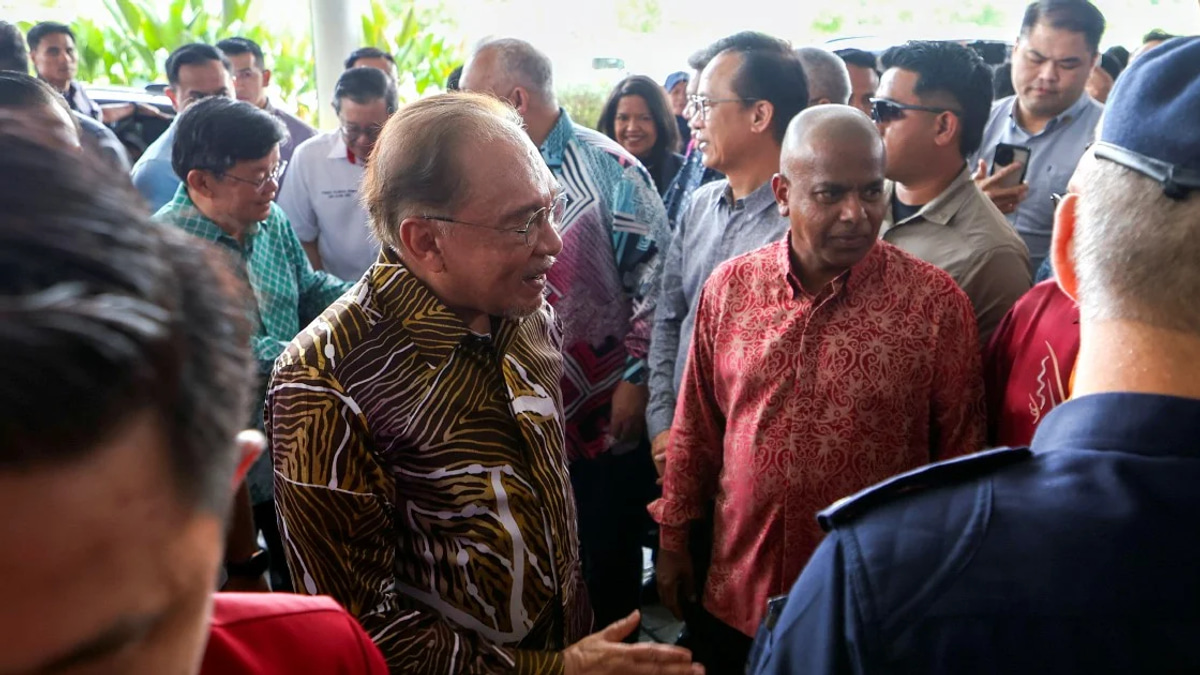
Dr Wan Azizah arrived at the National Planetarium lobby at 1.17 pm, where she spent time engaging directly with the camp participants in an informal setting before performing the traditional visitors' book signing ceremony. Her presence underscored the significance that PPIM places on the nature camp programme and demonstrated institutional commitment to youth development and Islamic values integration within educational frameworks. The informal interaction period allowed the Prime Minister's wife to understand firsthand the experiences and learning outcomes achieved by participants during their three days in the field.
The attendance list reflected the multi-level institutional support mobilized for the event. Datuk Ruziah Shafei, deputy secretary-general of the Ministry of Science, Technology and Innovation with responsibility for planning and science enculturation, represented the government's scientific establishment. PPIM honorary secretary Aizar Mohd Jaman coordinated organizational logistics, while Mohd Zamri Shah Mastor, director of the National Planetarium, facilitated the facility's educational contributions. The presence of national and state PPIM leadership demonstrated the programme's significance across organizational hierarchies and geographic reach.
According to PPIM honorary secretary Aizar, the camp curriculum reflects a distinctive pedagogical approach that integrates spiritual development with practical competency-building. The emphasis placed during this iteration centered specifically on weaving environmental consciousness, Quranic principles, and life skills training into a cohesive educational experience designed to reinforce participants' personal and religious identity. This integration represents an intentional effort to move beyond compartmentalized learning, instead positioning environmental stewardship and spiritual practice as interconnected dimensions of holistic personal development.
The PPIM curriculum framework encompasses eight comprehensive developmental areas that structure the organization's youth programming. Beyond the environmental and spiritual elements emphasized in this camp, the curriculum addresses skills development, camping proficiency, management and administrative competencies, health and wellness, and broader personal development goals. This expansive approach reflects the organization's conviction that Islamic youth development requires simultaneous attention to physical, intellectual, social, emotional, and spiritual dimensions. The nature camp programme serves as a practical vehicle for advancing these interconnected objectives simultaneously.
The biennial scheduling of the PPIM National Level Nature Camp represents a significant institutional commitment to outdoor education and environmental exposure. By organizing the programme once every two years at the national level, PPIM ensures consistent investment in youth engagement while allowing sufficient time between iterations for programme evaluation, curriculum refinement, and organizational capacity-building. The scale of participation, with 395 young people gathered for the closing ceremony, suggests substantial organizational infrastructure and logistical capability required to coordinate such activities across Malaysia's diverse geography.
The decision to hold the closing ceremony at the National Planetarium rather than at the campsite adds an educational dimension that extends learning beyond the outdoor environment. The planetarium visit transforms the final day into a science and astronomy educational experience, introducing participants to formal scientific frameworks and institutional scientific resources. This transition from field-based outdoor learning to facility-based astronomical education demonstrates pedagogical intentionality around exposing young people to diverse learning modalities and institutional scientific spaces. The approach bridges PPIM's spiritual and environmental mission with national scientific infrastructure and professional scientific expertise.
For Malaysian youth development broadly, the PPIM Nature Camp exemplifies how faith-based organizations are adapting traditional youth programmes to contemporary educational priorities including environmental sustainability and scientific literacy. The integration of Quranic teaching with environmental education reflects emerging Islamic environmental ethics movements gaining prominence across Southeast Asia and globally. By positioning environmental responsibility as a religious obligation rather than purely secular concern, programmes like this potentially deepen participants' commitment to sustainability practices through moral and spiritual frameworks alongside rational environmental arguments.
The closing ceremony gathering also reflects the sustained social role of women's Islamic organizations in Malaysian civil society. PPIM's continued prominence in youth education, environmental stewardship, and spiritual formation demonstrates how women-led Islamic institutions maintain distinct spaces for female leadership development and gender-specific educational programming. Dr Wan Azizah's attendance as both PPIM president and Prime Minister's wife simultaneously recognizes organizational autonomy and highlights influential women's positions within Malaysia's institutional landscape. The event thus carries significance beyond immediate programmatic scope, reflecting broader patterns of women's participation and influence in religious, educational, and social spheres.
%22%2F%3E%3C%2Fpattern%3E%3C%2Fdefs%3E%3Crect%20width%3D%22100%25%22%20height%3D%22100%25%22%20fill%3D%22url(%23ph33f18g)%22%2F%3E%3Crect%20width%3D%22100%25%22%20height%3D%22100%25%22%20fill%3D%22url(%23ph33f18p)%22%2F%3E%3Ctext%20x%3D%2250%25%22%20y%3D%2250%25%22%20text-anchor%3D%22middle%22%20dominant-baseline%3D%22central%22%20fill%3D%22rgba(255%2C255%2C255%2C0.95)%22%20font-family%3D%22Georgia%2C%20'Times%20New%20Roman'%2C%20serif%22%20font-weight%3D%22700%22%20font-size%3D%22272%22%20letter-spacing%3D%22-0.02em%22%3EISTAF%3C%2Ftext%3E%3C%2Fsvg%3E)