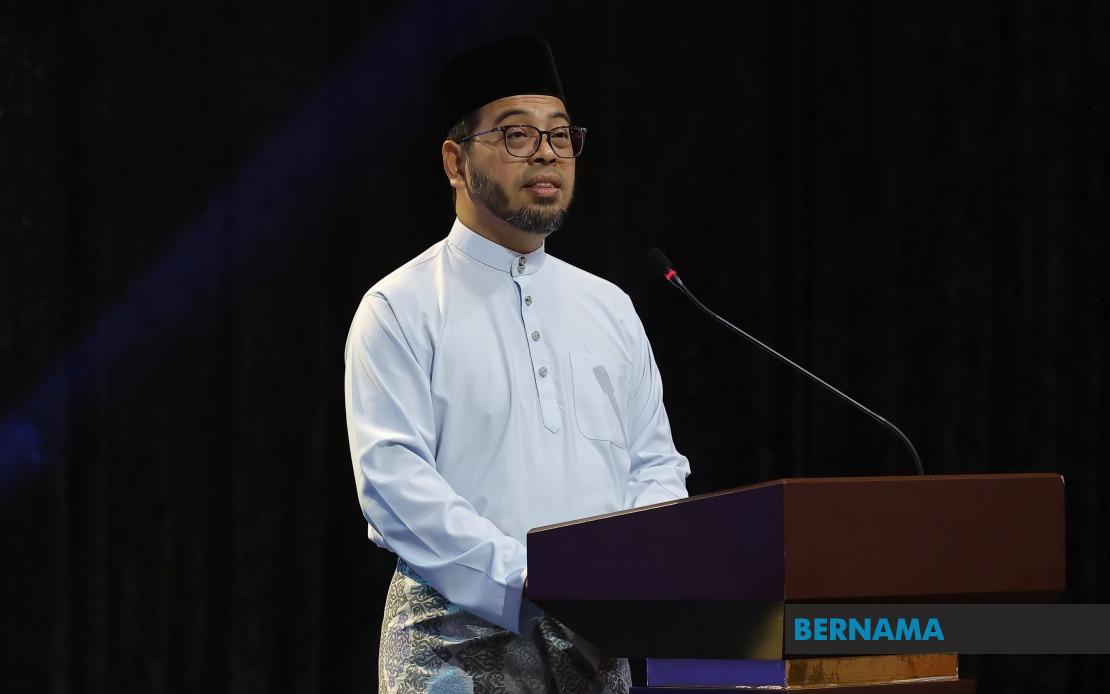
Malaysia's Muslim community must transcend internal divisions and resolve lingering tensions to forge a stronger ummah capable of weathering increasingly complex geopolitical and economic headwinds, according to Minister in the Prime Minister's Department (Religious Affairs) Dr Zulkifli Hasan. Speaking at the national-level Maal Hijrah 1448H/2026M celebration held at Putra Mosque in Putrajaya on June 17, he stressed that genuine social transformation hinges on individuals undertaking profound personal development that encompasses intellectual growth, spiritual enrichment, and moral fortification.
The ceremony, which carried the theme "MADANI Dihayati, Ummah Diberkati", was attended by Sultan of Perak Sultan Nazrin Shah and Deputy Prime Minister Datuk Seri Fadillah Yusof. Dr Zulkifli articulated a vision in which a cohesive and united community generates prosperity and blessings for all members, whilst fragmentation and discord inevitably precipitate hardship and undermine national strength. His remarks reflected broader concerns about Malaysia's vulnerability to destabilising international forces, from disrupted supply chains to widespread economic uncertainty affecting nations throughout the region and beyond.
Central to Dr Zulkifli's message was an appeal for the nation's Muslim population to sustain backing for government programmes designed to enhance the standing of Islam and preserve the vitality of Islamic civilisation within Malaysia's multicultural context. He positioned unity not merely as a religious imperative but as a pragmatic necessity in an era of mounting transnational challenges that respect no borders. The minister's emphasis on collective commitment reflected recognition that Malaysia's economic resilience and social stability depend significantly on the capacity of its largest religious community to present a consolidated front.
In reframing the classical Islamic concept of hijrah for contemporary audiences, Dr Zulkifli moved beyond its historical association with Prophet Muhammad's migration from Mecca to Medina. Instead, he characterised hijrah as an ongoing process of spiritual and moral transformation—a continuous journey involving the deliberate rejection of behaviour that harms both individuals and society, coupled with the deliberate cultivation of virtues and character traits that bind Muslim communities together. This reinterpretation attempts to make classical Islamic teaching relevant to modern challenges facing Malaysian Muslims navigating plural, technologically advanced societies.
The minister contended that only through strengthened communal unity can initiatives designed to elevate and reinforce Islamic values gain sufficient momentum and organisational capacity to succeed meaningfully. This assertion carries implications for how Islamic institutions, religious scholars, and community leaders approach divisive issues. It suggests that doctrinal disagreements and theological disputes, whilst perhaps inevitable within any large religious community, must not be allowed to calcify into permanent institutional divisions that weaken Islam's collective voice in national affairs.
Simultaneously, Dr Zulkifli acknowledged that Malaysian society comprises citizens of diverse backgrounds and belief systems, all bearing shared responsibility for maintaining peace, stability, and prosperity throughout the country. This framing attempts to navigate a delicate balance between advocating for Muslim unity and affirming the inclusive principles embedded in Malaysia's constitutional pluralism. His remarks suggest that strengthening the ummah need not entail marginalising non-Muslim communities or compromising the nation's founding compact regarding religious coexistence.
The awards ceremony component of the day's proceedings underscored Malaysia's ambitions to position itself as a centre of Islamic scholarship and values. The National Tokoh Maal Hijrah award, presented to International Islamic University Malaysia Rector Prof Emeritus Datuk Dr Osman Bakar, recognised domestic intellectual contributions to Islamic thought and practice. The International Tokoh Maal Hijrah award, conferred upon Moroccan Islamic scholar Dr Ahmad Al-Raysuni, demonstrated Malaysia's engagement with the broader Muslim world and its appreciation for Islamic scholarship emanating from other regions.
Dr Zulkifli's intervention arrives amid a period when Malaysia's Muslim community faces pressures from multiple directions. Globalisation and digital communication expose Malaysians to theological interpretations and political ideologies originating from varied Islamic traditions and geographies. Simultaneously, Malaysia's non-Muslim minorities increasingly advocate for secular governance frameworks that some Muslim leaders perceive as threatening to Islamic interests. The minister's emphasis on internal unity and collective strength represents an attempt to equip Malaysia's Muslim community with the organisational cohesion necessary to navigate these competing pressures whilst maintaining the country's multicommunal social contract.
For policymakers across Southeast Asia observing Malaysia's approach, Dr Zulkifli's remarks carry implications for how Islamic-majority societies can modernise and integrate into globalised economies whilst preserving religious identity and institutional influence. Malaysia's model of managed religious pluralism, where Islam retains constitutional primacy whilst non-Muslim rights receive legal protection, remains a reference point for other regional nations attempting similar balancing acts. The minister's emphasis on voluntary commitment to Islamic values rather than coercive enforcement reflects this pragmatic approach.
The government's investment in staging this national-level Maal Hijrah celebration and granting attendance to high-ranking officials including the Deputy Prime Minister signals official recognition of Islam's centrality to Malaysia's national identity. Yet the event's inclusive rhetoric, emphasising shared responsibility across religious lines, demonstrates awareness that Malaysia's continued stability and prosperity require genuine multicommunal cooperation rather than sectarian mobilisation. This approach, whilst politically astute, requires constant reiteration and reinforcement, suggesting that tensions between different visions of Malaysia's Islamic identity will persist.