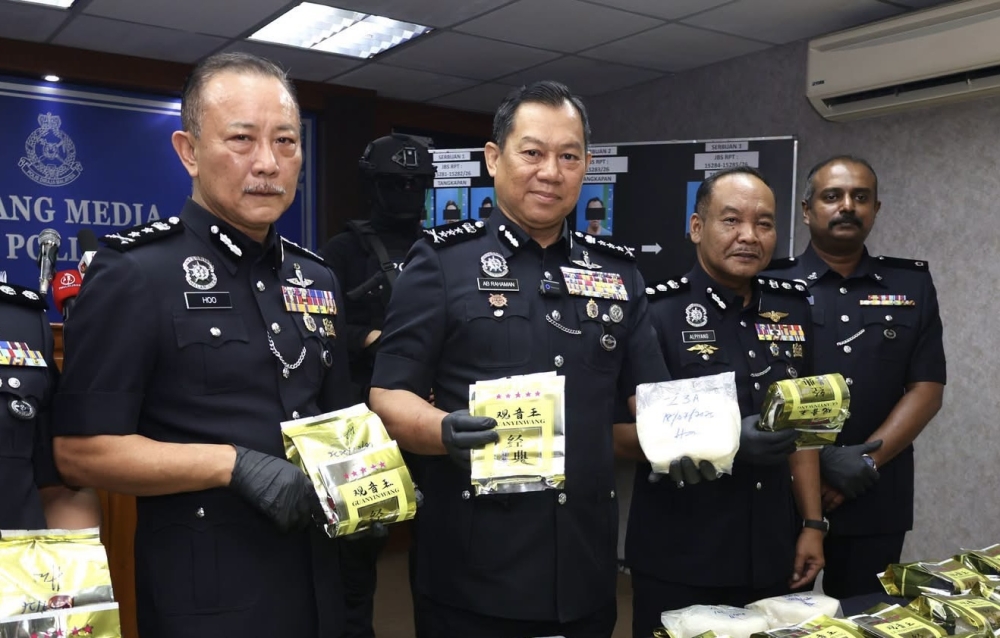
Johor Bahru authorities have successfully rolled back a significant synthetic drug operation following co-ordinated raids that resulted in eight arrests spanning July 22. The breakthrough came as law enforcement intensified efforts to combat the proliferation of illicit drugs, particularly those targeting younger demographics in the southern Malaysian state.
Among those detained was a 16-year-old, highlighting a troubling trend of juvenile involvement in drug trafficking networks. The teenager's participation in such activities underscores growing concerns about how criminal syndicates are increasingly recruiting minors to facilitate distribution, often exploiting their perceived lower risk in the eyes of law enforcement and their proximity to peer networks as potential consumers.
The investigation revealed a sophisticated operation that had been utilising unconventional methods to move contraband. Particularly striking was the discovery that an elderly man's motor vehicle had been commandeered as a mobile storage facility for narcotics. This tactic demonstrates the calculated ruthlessness of trafficking organisations, which exploit family relationships and elderly persons' vehicles to evade detection, banking on law enforcement's relative hesitation to suspect vehicles associated with senior citizens.
The choice to employ a grandfather's car underscores a pattern observed throughout Southeast Asia where traffickers strategically manipulate domestic relationships to shield operations from scrutiny. Family vehicles are less likely to be subjected to intensive checks at checkpoints, and the presence of an elderly driver can deflect suspicion. This approach has proven effective in multiple jurisdictions before being detected by Malaysian authorities.
Police operations in Johor Bahru have intensified significantly in recent months as the state grapples with shifting drug distribution patterns. The transition from traditional street-level dealing to more decentralised, family-based networks reflects broader adaptations within the regional drug trade responding to enforcement pressure. These changes require law enforcement agencies to recalibrate their surveillance and intelligence-gathering strategies.
The synthetic drug market in Malaysia continues expanding despite consistent enforcement actions. These substances, which include methamphetamine variants and designer drugs, carry heightened health risks compared to traditional narcotics and have become the preferred product among traffickers due to their profitability and ease of concealment. The involvement of a juvenile in this market segment particularly concerns public health authorities.
The eight individuals detained remain under investigation as authorities work to map the full network's extent and identify additional participants. Interrogations typically focus on establishing supply chains, identifying upstream suppliers, and determining how widely the operation had distributed its products throughout Johor Bahru and potentially neighbouring areas. Such intelligence proves invaluable for mapping regional trafficking ecosystems.
For Malaysian readers, this case exemplifies how drug networks adapt to enforcement pressure by incorporating family members and exploiting domestic circumstances. The pattern of recruiting teenagers provides insight into how these organisations perpetuate themselves across generations and sustain operational continuity despite periodic disruptions. Understanding these mechanics proves essential for communities seeking to protect young people from recruitment.
Johor Bahru's position as a major commercial hub with significant cross-border connectivity to Singapore makes it particularly vulnerable to trafficking operations. The state's strategic location and transportation infrastructure facilitate both the movement of contraband and the dispersal of products to consumer markets throughout the region. These geographical factors have long made enforcement agencies' work comparatively challenging.
The seizure of drugs and financial assets from this operation will now form part of evidence in forthcoming prosecutions. Malaysian courts handle synthetic drug trafficking cases with considerable severity, with sentences determined by both quantity involved and aggravating circumstances such as involvement of minors or distribution to juveniles. Convictions typically result in substantial custodial sentences and asset forfeiture.
This dismantling operation reflects the Royal Malaysia Police's continued commitment to disrupting supply networks before products reach street-level consumers. However, enforcement experts acknowledge that such successes, while important for public safety, represent only singular interventions within an endemic regional problem requiring sustained, multi-agency collaboration and international co-operation to address comprehensively.
The case also highlights why community vigilance remains critical in combating drug trafficking. Information from residents concerning suspicious activity—including unusual vehicle movements or unfamiliar individuals in residential areas—often provides crucial leads that enable police to identify and dismantle operations before they expand significantly or cause community harm.

