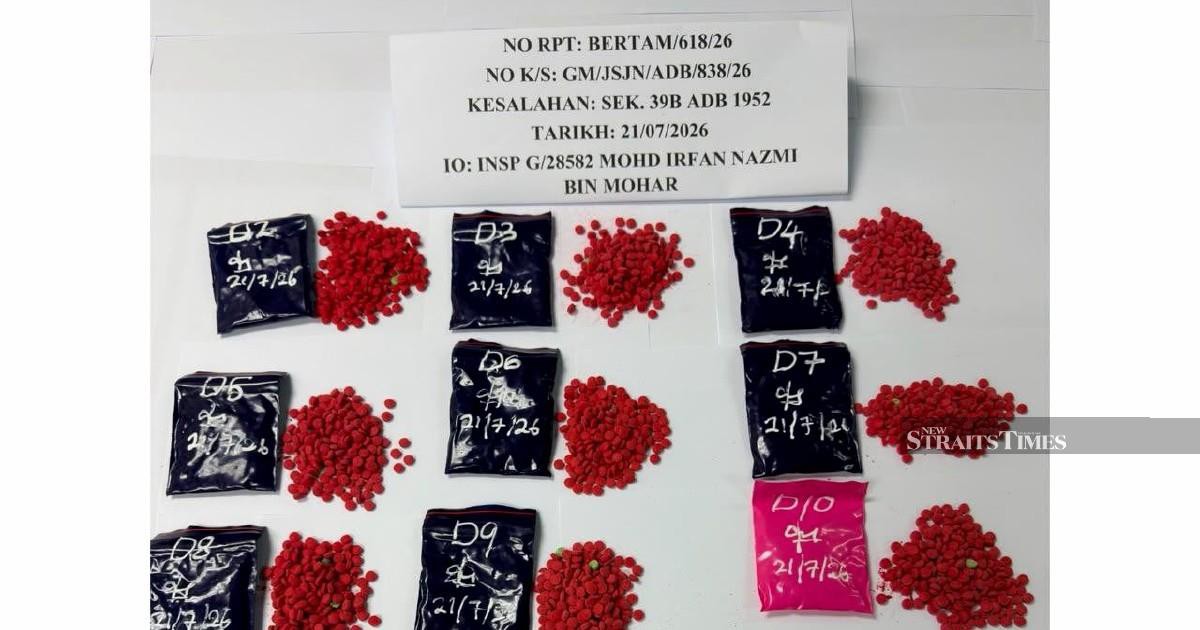
Law enforcement officers in Kelantan successfully intercepted a drug trafficking operation in Gua Musang yesterday, apprehending two Myanmar nationals and recovering a substantial cache of methamphetamine tablets commonly known as yaba. The seized consignment, comprising 6,000 pills, carries a street value of approximately RM60,000, underscoring the scale of illicit narcotics operations flowing through the peninsula's vulnerable northeastern border region.
The apprehension came after a short pursuit operation, which authorities say highlighted the escalating cat-and-mouse game between enforcement agencies and transnational smuggling networks operating along Malaysia's porous northern frontier. The timing of the arrest demonstrates the continued pressure that Kelantan police maintains on drug trafficking corridors, even as sophisticated criminal organisations continually adapt their operational methods to evade detection.
Yaba tablets, sometimes referred to as crazy pills or madness pills on the street, represent a particularly insidious drug problem across Southeast Asia. These stimulant pills typically combine methamphetamine with caffeine and are manufactured clandestinely in the Golden Triangle region, primarily Myanmar and Thailand. The pills are favoured by trafficking networks because they are compact, relatively easy to conceal during transportation, and command strong demand among consumers throughout Malaysia, Thailand, and neighbouring countries seeking cheap stimulant highs.
The Myanmar connection to yaba trafficking reflects deeper supply chain realities in the region. Myanmar's porous borders, weak enforcement capacity in certain jurisdictions, and role as a major production hub for synthetic drugs mean that transnational criminal organisations operate with relative impunity. Thailand's territory, particularly in the northern provinces bordering Myanmar, serves as a transit point where consolidated shipments move southward into Malaysian territory through multiple clandestine routes. The Kelantan-Perlis corridor remains one of the most active trafficking zones, given its proximity to Thailand and relative isolation of certain rural areas.
The scale of seizure—6,000 tablets—represents an intermediate-level consignment rather than a major trafficking operation. This volume suggests the two suspects may have been mid-level operatives in a broader smuggling network rather than organisational leaders. Police sources typically note that individuals caught at this level often operate under instructions from larger syndicates based across the border, carrying limited information about supply chain logistics or end destinations. Breaking down these networks requires patient intelligence work and collaborative efforts with Thai and Myanmar counterparts.
Kelantan has emerged as a critical enforcement priority for Malaysian narcotics authorities, given its geographic proximity to Thailand and historical significance as a trafficking entry point. The state experiences disproportionate volumes of synthetic drug flows compared to its population size. This concentration results partly from geography but also reflects the coordinated efforts of criminal networks who exploit established smuggling infrastructure through specific highway corridors and rural border crossing points. Authorities have gradually increased checkpoints and intelligence operations focused on these vulnerable zones.
The arrest reflects broader regional trends in methamphetamine trafficking that Malaysian law enforcement increasingly confronts. Unlike traditional opiates that are harvested and processed from opium poppies, synthetic drugs like methamphetamine can be manufactured anywhere with basic chemistry knowledge and precursor access. This decentralisation of production capacity across multiple clandestine laboratories makes supply interdiction more challenging than targeting agricultural-based drug sources. Yaba pills specifically require only relatively crude equipment to produce in bulk, enabling prolific manufacturing despite sporadic law enforcement raids on laboratory facilities.
For Malaysian communities, particularly in peninsular states near trafficking corridors, the availability of cheap yaba pills poses public health challenges beyond traditional addiction concerns. The stimulant's accessibility to adolescents and young adults, coupled with false perceptions about safety compared to heroin or cocaine, has driven consumption patterns in working-class and rural communities. Emergency departments increasingly report treating yaba-related acute intoxications, psychological crises, and violent incidents linked to the drug's stimulant effects on the central nervous system.
Cooperative enforcement between Malaysia and Thailand remains essential but faces practical difficulties. While both countries have formalised agreements addressing cross-border crime, intelligence sharing remains inconsistent, and jurisdictional complexities sometimes limit response speed when trafficking activities straddle national boundaries. The Kelantan operation itself likely benefited from tip-offs regarding suspected movement of contraband through known trafficking zones, but identifying the upstream source remains challenging without Thai cooperation and bilateral investigation protocols.
The sentencing possibilities for the two detained Myanmar nationals depend on drug quantity and individual roles. Malaysian law distinguishes between trafficking and possession, with trafficking carrying substantially harsher penalties including potential capital punishment in certain circumstances. The 6,000 yaba tablets almost certainly trigger trafficking charges rather than simple possession, meaning the suspects face imprisonment terms of years rather than months, and substantial fines. Non-citizen defendants typically face deportation following sentence completion.
Looking forward, Kelantan police and federal narcotics enforcement agencies continue intensifying border security and intelligence-led policing strategies throughout the state. Enhanced technology including scanning equipment at suspected smuggling routes, deployment of additional personnel during identified high-risk periods, and intelligence cooperation with international partners all form part of the multifaceted response. However, as long as demand persists and price differentials between Myanmar production costs and Malaysian street prices remain favourable, transnational criminal organisations will continue attempting importation through evolving methods.

