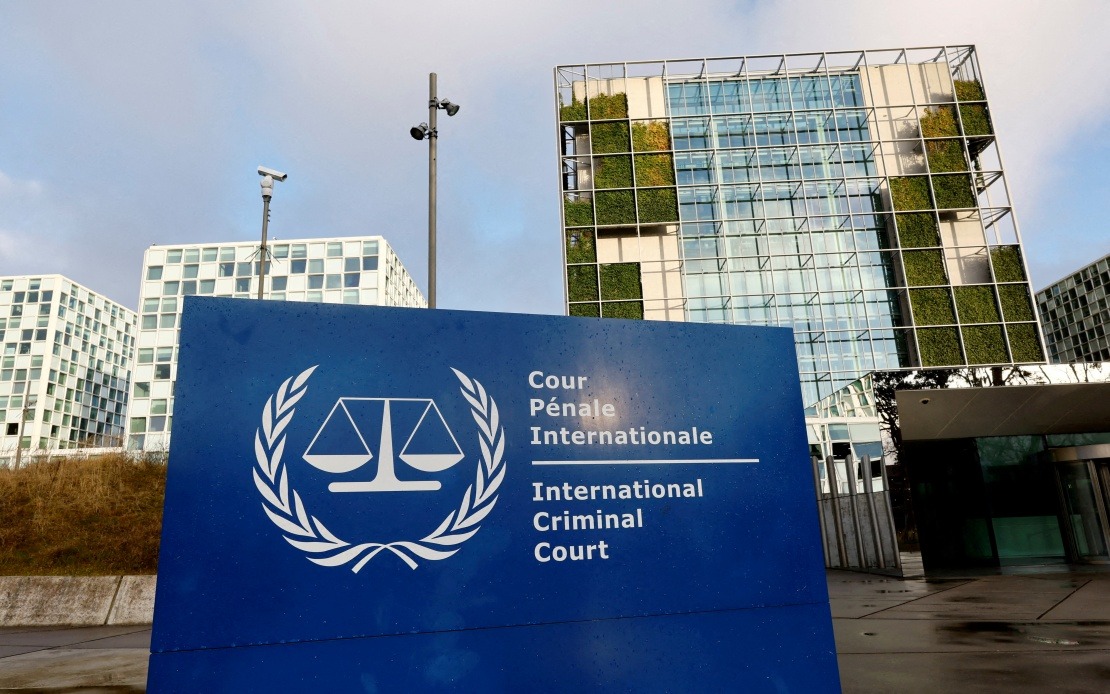
The Dutch academic community has emerged as a vocal critic of Washington's aggressive stance toward the International Criminal Court, with leading international law experts warning that the US strategy represents a fundamental threat to the architecture of global justice. The criticism comes as tension between the United States and the Hague-based institution continues to escalate, reflecting deeper disagreements over sovereignty, accountability, and the proper role of international institutions in holding state actors responsible for serious crimes.
On July 13, the US Department of State announced a comprehensive campaign designed to counter what American officials characterise as an unacceptable threat to US interests and independence. According to the official statement, the ICC's assertion of authority to investigate and prosecute American military personnel and government officials acting in what Washington regards as legitimate national interest constitutes an intolerable infringement on American sovereignty. This rhetorical framing—casting the court as a threat rather than a mechanism for justice—has proven deeply controversial among international legal scholars who view the ICC as a crucial safeguard against mass atrocities.
Alette Smeulers, a professor specialising in international crimes at the University of Groningen, articulated the core concern driving Dutch legal criticism in recent remarks to media. She warned that if powerful nations like the United States successfully dismantle multilateral institutions designed to uphold justice, the international system would deteriorate into an arrangement based fundamentally on power and coercion rather than consistent application of law. This shift would represent a dangerous regression in humanity's efforts to create accountability mechanisms that function equally regardless of a perpetrator's nationality or government position. Smeulers emphasised that such institutional dismantling poses profound risks not merely to the ICC itself but to the entire post-World War II framework of international law that has, despite significant imperfections, constrained state behaviour and provided avenues for victims of mass violence to seek justice.
The Dutch academic perspective gains additional weight when examining the actual mandate and operational constraints of the ICC. Smeulers noted that the court operates under stringent jurisdictional limitations designed precisely to protect state sovereignty while enabling prosecution of the world's most serious crimes. The ICC can only exercise authority when crimes occur on the territory of member states or involve nationals of member states, thereby respecting the traditional principle of state jurisdiction. These safeguards demonstrate that the court functions within well-established parameters rather than exercising the sweeping prosecutorial power that American officials suggest.
Kyra Wigard, an assistant professor of law at Utrecht University, offered additional criticism focused on the increasingly coercive measures Washington has deployed. Last December, the United States imposed sanctions against two ICC judges, a step Wigard characterised as absurd when examined against the customary purposes and targets of economic sanctions. Sanctions typically function as instruments of foreign policy directed against entities engaged in terrorism or armed conflict, not against judicial officials performing their professional duties within an international institution. The application of sanctions to ICC judges therefore represents an unprecedented breach of international norms governing the treatment of judicial officers, creating concerning precedents for future governmental interference with judicial independence.
The escalating American pressure campaign extends beyond direct actions against ICC personnel to encompass efforts to undermine the court's institutional base. According to Dutch experts, Washington has signalled its intention to pressure other nations to withdraw from the Rome Statute, the foundational treaty establishing the ICC. This strategy would systematically erode the court's membership and consequently its capacity to function as a genuinely universal mechanism for accountability. For smaller nations and middle powers—particularly those without the military or economic capacity to resist American pressure—such coercion creates impossible choices between maintaining their international commitments and managing relationships with the world's leading military superpower.
The timing and intensity of the American campaign warrant particular scrutiny given recent international developments. The ICC's willingness to investigate and consider allegations regarding various parties in geopolitical conflicts, including allied nations, appears to have provoked this defensive reaction from Washington. American officials have expressed particular concern about investigations potentially affecting Israeli actions, reflecting how the ICC's universal jurisdiction mandate—a foundational principle of international justice—intersects with contemporary Middle Eastern politics and great power strategic interests. The conflict between universal accountability and great power privilege represents a fundamental tension that American opposition seeks to resolve in favour of traditional state sovereignty.
For Malaysia and other Southeast Asian nations, the implications of American success in weakening the ICC would extend far beyond disputes involving Western powers. Many Southeast Asian countries remain members of the Rome Statute and supporters of the international criminal justice system precisely because they view the ICC as a constraint on powerful nations' ability to act with impunity. If the United States successfully demonstrates that determined opposition and coercive tactics can undermine the court, other powerful nations might adopt similar strategies when their interests face scrutiny. This fragmentation of international justice institutions would disproportionately harm smaller nations that depend upon such mechanisms for protection against great power domination.
Dutch legal experts argue that the fundamental issue transcends the specific disagreements between Washington and the ICC. Rather, it reflects a choice about what kind of international order the world should maintain going forward. An order based on universal application of law to all actors regardless of power or status differs fundamentally from one permitting the strongest nations to exempt themselves from accountability mechanisms while remaining free to intervene in others' affairs. Smeulers warned that the US campaign could produce cascading damage to the ICC's operations and broader international legal architecture, potentially rendering international justice institutions ineffective even in cases where powerful nations might theoretically support intervention.
The Dutch critique also highlights how the American campaign mischaracterises the ICC's actual influence and capacity. The court operates with extremely limited resources, manages a backlog of cases spanning decades, and depends entirely upon state cooperation for enforcement. No ICC judge can unilaterally imprison American officials; such an outcome would require American cooperation or enforcement through UN Security Council mechanisms where the United States holds veto power. The ICC poses no practical threat to US sovereignty as American officials describe, yet that rhetorical exaggeration appears designed to mobilise domestic political constituencies rather than reflect serious legal analysis.
As the dispute between Washington and the ICC continues evolving, the Dutch legal community's sustained criticism represents an important counterweight to American arguments. These scholars speak with particular authority given the Netherlands' historical role in developing international law, its hosting of the ICC, and its commitment to rules-based international order. Their warnings suggest that American efforts to undermine the court could provoke significant diplomatic and institutional responses from other nations committed to multilateral justice mechanisms. The outcome of this struggle will shape not merely the ICC's future but the viability of international law itself as a meaningful constraint on state power.

