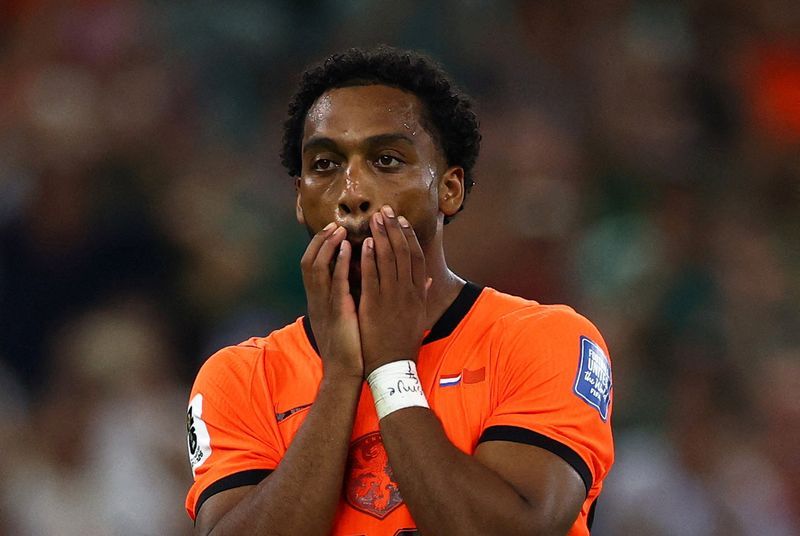
Three Netherlands footballers have been subjected to racist and hateful comments online following their team's penalty shootout defeat to Morocco in the World Cup round of 32, the Dutch football association announced this week. Justin Kluivert, Quinten Timber and Crysencio Summerville were each unable to convert their spot kicks as the North African side prevailed 3-2 from the penalty mark in Monterrey after the match ended level at 1-1 following extra time. The discriminatory abuse that followed their missed efforts has prompted the KNVB to escalate the matter through formal legal channels, signalling the federation's determination to combat what has become an increasingly troubling phenomenon in modern football.
The KNVB's response involves filing a complaint with Meld Online Discriminatie, a Dutch organization dedicated to reporting and investigating online discrimination. The mechanism is designed to filter allegations through a legal assessment process that determines whether the statements constitute criminal offences under Dutch law. Should the evaluation confirm unlawful conduct, the organization can escalate the matter to the Public Prosecution Service, which possesses the authority to launch formal criminal investigations against the perpetrators. This structured approach reflects growing recognition among European football authorities that online hate requires institutional intervention beyond the reach of individual platforms.
The targeting of these three players represents a continuation of a troubling trend that has gained prominence in recent years, particularly when high-profile matches conclude with missed penalties. The emotional intensity surrounding penalty shootouts, combined with the anonymity afforded by social media platforms, has created an environment where discriminatory rhetoric flourishes with relative impunity. Major tournaments, which unite national fan bases and amplify the stakes of individual performances, have proven especially prone to triggering waves of online vitriol directed at players of colour who fail to deliver under pressure.
The most prominent recent example involved England's Marcus Rashford, Bukayo Saka and Jadon Sancho following their team's loss to Italy in the 2020 European Championship final, held in 2021. All three players missed penalties in the decisive shootout, and the racist abuse that ensued became so widespread that British authorities mounted a significant law enforcement response. Multiple arrests were made as police conducted what amounted to a coordinated crackdown on online hate speech targeting the trio. The consequences for offenders were sufficiently serious to serve as a potential deterrent, with two individuals receiving prison sentences and another accepting a suspended sentence.
The England incident demonstrated both the scale of online racist abuse and the capacity of state authorities to respond with meaningful consequences. However, the fact that similar abuse has recurred following the Netherlands-Morocco match suggests that deterrence mechanisms remain insufficient. The interval between the 2021 European Championship and the 2022 World Cup incident indicates that progress in preventing such abuse has been limited, despite increased awareness and the implementation of accountability measures. This pattern raises questions about whether current enforcement approaches are adequately addressing the root causes of online discrimination.
For Malaysian and Southeast Asian audiences, the phenomenon carries particular relevance given the region's growing engagement with global football and the increasing visibility of Asian and minority players in European competitions. The abuse directed at Dutch players of diverse backgrounds following the Morocco match underscores how discrimination in sport transcends geographical and cultural boundaries, affecting players regardless of their ethnicity or heritage. As Southeast Asian football develops and more regional players secure opportunities in European leagues, understanding the dynamics of online harassment becomes increasingly important for protecting athlete welfare.
The KNVB's statement emphasizes a fundamental principle that resonates across football cultures: the sport's universal appeal rests on its capacity to unite people across different backgrounds and identities. Racism and discrimination represent direct contradictions to this inclusive ethos, undermining the values that football purports to champion. By framing the response in these terms, the Dutch federation connects anti-discrimination efforts to broader questions about what football represents and what kind of environment the sport should cultivate.
The role of social media platforms themselves remains a contentious issue in these discussions. While the KNVB has chosen to work through formal legal channels, persistent criticism suggests that technology companies have not implemented sufficiently robust safeguards to prevent discriminatory content from circulating. The speed with which racist comments proliferate across platforms, combined with the difficulty of removing harmful material comprehensively, demonstrates the limitations of relying solely on platform moderation policies. Effective intervention appears to require coordination between football authorities, law enforcement agencies, and technology companies.
The response from Dutch authorities also reflects evolving legal standards across Europe regarding online hate speech. Several European nations have introduced or strengthened legislation addressing discriminatory content on social media, recognizing that the borderless nature of digital communication requires updated legal frameworks. The Netherlands' approach through Meld Online Discriminatie demonstrates how specialized organizations can serve as intermediaries between affected communities and law enforcement, streamlining the identification and prosecution of offences.
Looking forward, the recurring nature of such incidents suggests that single-incident responses, however thorough, may prove insufficient without broader cultural and institutional change. Education campaigns, community engagement, and platform accountability measures represent complementary strategies that merit consideration alongside legal enforcement. The challenge for football authorities worldwide involves establishing frameworks that protect player safety while promoting the inclusive values that attract global audiences to the sport.
The cases of Rashford, Saka, Sancho and now Kluivert, Timber and Summerville have created documentation of a pattern that demands sustained attention. Each incident provides opportunities for deeper investigation into the sources of online abuse, the effectiveness of current countermeasures, and the adequacy of existing legal protections. As global football continues to evolve and become increasingly diverse, combating discrimination will remain essential to ensuring the sport lives up to its ideals.

