Dutch Prime Minister Rob Jetten delivered a formal state apology on Sunday to members of the Moluccan community, offering belated recognition of their decades-long suffering at the hands of the Dutch government following Indonesia's independence from colonial rule. The emotional ceremony in Rotterdam, where an estimated 12,500 Moluccans were initially brought after 1949, marks a significant moment of reckoning for a chapter of Dutch history that has long simmered as an unresolved wound within both the Netherlands and Indonesia.
The Moluccans, indigenous to Indonesia's eastern spice islands, had sided with the Dutch during the violent decolonisation struggle that erupted after World War II. Many served in the Dutch colonial military, believing that their loyalty would be rewarded with security and autonomy in an independent Indonesia. When Indonesian independence became inevitable in 1949, however, those Moluccans who had fought for the Dutch faced the prospect of violent reprisals from Indonesian nationalists. The Dutch government arranged their transfer to the Netherlands in what was framed as a temporary humanitarian measure, a promise that would define and ultimately betray an entire generation.
What transpired over the subsequent decades exposed a stark contradiction between Dutch promises and Dutch actions. The Moluccans were assured their stay would be brief, a holding arrangement until conditions in Indonesia stabilised and they could return to rebuild their lives in their homeland. Instead, the Dutch government reneged on this commitment, leaving the community in a state of permanent limbo. Rather than receiving integration support, job training, or adequate housing, the Moluccans found themselves warehoused in substandard accommodation with minimal governmental assistance. Many were housed in former Nazi concentration camps that had been repurposed, a particularly cruel irony that compounded their sense of abandonment and displacement.
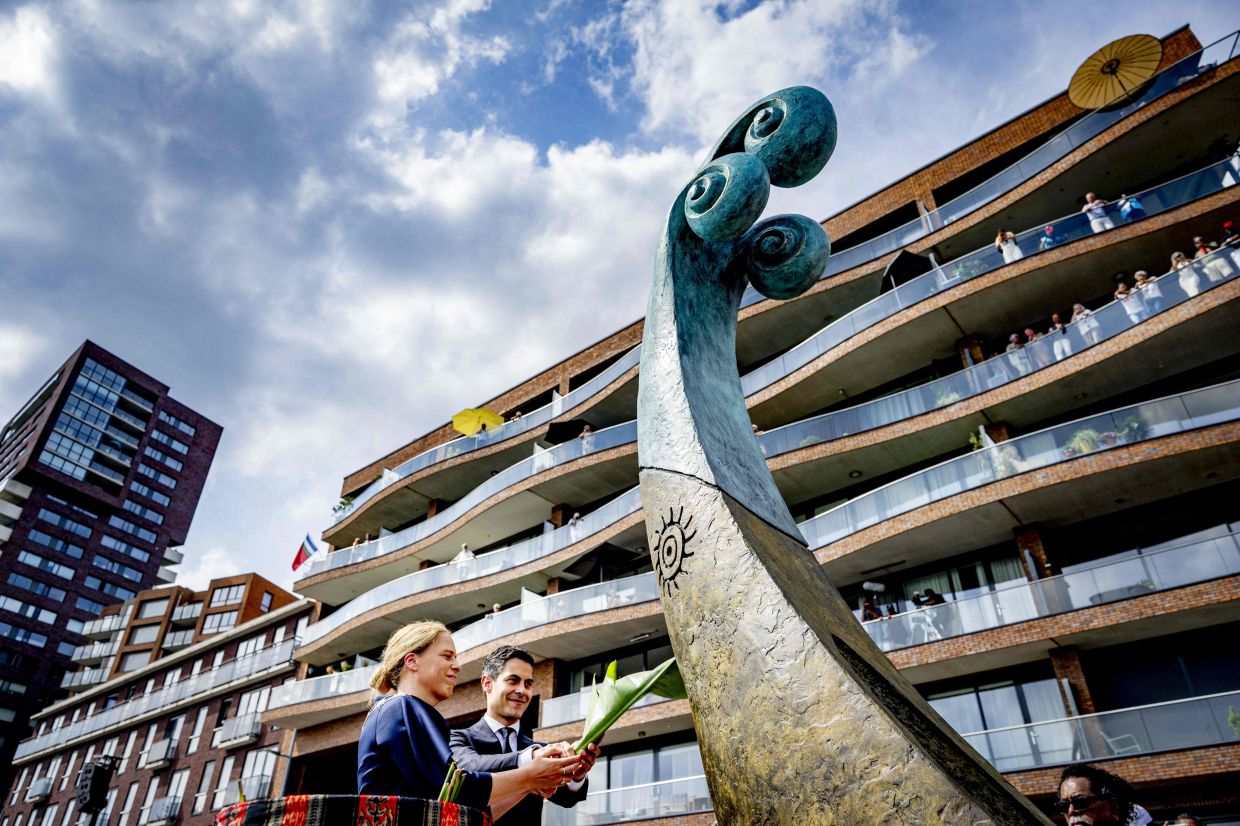
The unveiled Ulu Kora monument at Lloydkade in Rotterdam now serves as a physical reminder of where the first ships carrying Moluccans arrived in 1951, beginning their unexpected exile in Northern Europe. For many Moluccans, this location carries profound emotional weight, representing both the moment they fled danger and the moment their hopes for swift return began to dissolve. Jetten acknowledged the systematic failures of his government with words that reflected genuine contrition, addressing the specific injuries inflicted upon the community: the inadequate housing, the social isolation, the broken promises, and the generational trauma that rippled through families separated by geography and circumstance.
The consequences of Dutch betrayal extended beyond mere economic hardship or social exclusion. The second generation of Moloccans, born or raised in the Netherlands but steeped in stories of their parents' homeland they had never seen, grew increasingly frustrated and angry as the 1960s gave way to the 1970s. This resentment manifested in violent actions by radicalised youth who felt abandoned by both the Dutch state that had failed them and the Indonesian state that had driven them into exile. These incidents, though limited in scope, underscored the psychological toll of protracted displacement and unresolved grievance, revealing how broken governmental promises could poison community relations across generations.
For Malaysian and Southeast Asian observers, the Moluccan case carries particular resonance as a cautionary tale about the legacies of colonialism and the fragility of post-independence nation-building. Indonesia's own historical experience encompasses similar complexities—communities displaced by political upheaval, minorities whose loyalty to colonial powers created dangerous complications once independence arrived. The Moluccan situation illustrates how Cold War-era geopolitics and nationalist movements could create permanent diasporas, leaving former allies of colonial powers stranded in foreign lands without clear pathways to return or integration.
Jetten's apology, while welcomed by many in the Moluccan community, also carries limitations that the Prime Minister himself acknowledged with candour. Words alone cannot restore lost decades, reunite families separated by death and distance, or undo the psychological trauma embedded in community memory. The apology functions instead as symbolic recognition that the Dutch state was unjust in its treatment of a vulnerable population, a public acknowledgment of institutional failure that can help move both communities toward healing without erasing the historical wrong.
The broader significance of this apology extends to how European nations reckon with their colonial histories and the enduring consequences of decolonisation. The Netherlands, like other former imperial powers, has struggled to honestly confront the human costs of its imperial project and its aftermath. The Moluccan case represents a distinctly post-colonial injury—not the direct exploitation of colonial rule itself, but the betrayal that followed independence, when former allies were deemed expendable or inconvenient. This makes the apology particularly important as a model for how states can acknowledge failures of conscience rather than merely economic extraction.
For Indonesia, the apology indirectly validates historical grievances about the colonial period while also suggesting opportunities for bilateral reconciliation on this contentious legacy. The Moluccas themselves remain significant to Indonesia's national identity and resource base, and acknowledging the historical injustices experienced by Moluccans—even those in diaspora—reinforces Indonesian sovereignty and the legitimacy of the independence struggle. The formal nature of the Dutch apology signals that nations can move beyond defensive postures toward accountability, potentially encouraging similar reassessments elsewhere in Southeast Asia where colonial legacies continue to shape contemporary relationships.
The practical implications for the remaining Moluccan community in the Netherlands remain to be seen. Many descendants of the original 12,500 are now third or fourth-generation Dutch citizens, integrated into Dutch society while maintaining distinct cultural and family identities. The apology provides symbolic justice and official recognition, but questions remain about whether the Dutch government will offer material restitution, support for cultural preservation initiatives, or facilitated pathways for those who wish to reconnect with the Moluccas. The true measure of the apology's sincerity will be demonstrated through subsequent governmental action and resource allocation.
Jetten's statement that historical injustice cannot be erased through words alone reflects a mature understanding that apologies occupy a unique space between acknowledgment and remedy. For the Moluccan community, many of whom attended the ceremony carrying photographs of deceased relatives who never returned home, the apology represented a moment of official recognition that their suffering was real, unjust, and worthy of state remorse. Yet it also crystallises the painful reality that such formal recognitions, however necessary and overdue, arrive after irreplaceable losses have already occurred.