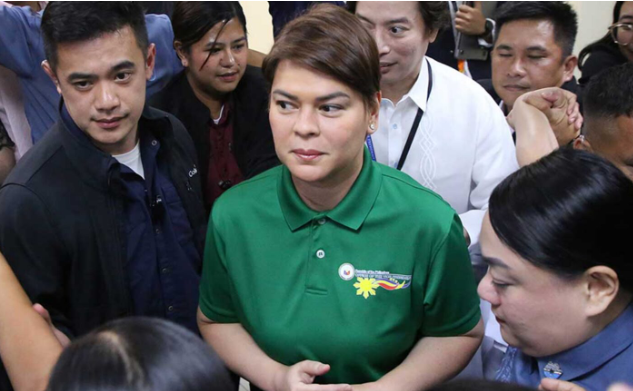
Vice President Sara Duterte continues to assert that the impeachment complaint charging her with involvement in an alleged assassination plot against President Ferdinand R. Marcos Jr., First Lady Liza Marcos, and former Speaker Martin Romualdez remains devoid of credible evidence. Speaking as the Senate impeachment court reconvened on Tuesday, Duterte seized on developments from that day's proceedings to bolster her position that the case rests on conjecture rather than substantiated facts.
The controversy centres on Article IV of the formal charges against her, which deals specifically with the assassination plot allegations. This particular article emerged when Duterte herself disclosed the existence of alleged threats during a previous public appearance, subsequently becoming the subject of the impeachment petition. The article has consumed significant courtroom time, with the House prosecution panel tasked with presenting their case across eleven designated days of proceedings.
During cross-examination on Tuesday, Duterte's legal team, represented by attorney Mark Vinluan, demonstrated apparent discrepancies in the documentation trail surrounding the case. Vinluan questioned Jeremy Lotoc, the Regional Director of the National Bureau of Investigation's Bangsamoro Autonomous Region in Muslim Mindanao office, regarding inconsistencies in affidavit dates and docket numbering within NBI files. These gaps in documentation, Duterte's camp contends, undermine the prosecution's foundational claims and suggest inadequate investigative groundwork.
In her statement, Duterte characterised the prosecution's approach as a progression from allegation to fabrication. She argued that merely repeating assertions about threats, inventing purported assassins, and constructing supporting evidence does not transmute false narratives into legitimate accusations. The Vice President framed the pattern as corrosive to institutional credibility and wasteful of public resources that could be directed toward authentic governance concerns. Her language suggests a strategy of attacking not merely the evidence itself but the institutional integrity of those bringing the charges.
The impeachment trial, scheduled to extend across 92 days in total, remains in its early phases despite already consuming considerable judicial and legislative time. With the prosecution having presented only two witnesses thus far and having covered less than half of their allocated time for Article IV alone, the proceedings could potentially extend into early 2027. This timeline raises questions about the administrative burden of such protracted proceedings on the Philippine government's ability to function effectively during a period of domestic political turbulence.
Duterte's insistence on evidentiary standards reflects a broader legal principle that impeachment—as the ultimate constitutional sanction against an executive officer—demands a rigorous factual foundation. Her argument that the rule of law depends upon facts rather than fiction invokes classical constitutional jurisprudence, positioning her defence around the philosophical requirements for legitimate state action. This framing allows her supporters to argue that the impeachment represents a procedural violation rather than merely a factual dispute.
Notably, Duterte has not personally appeared at the trial proceedings to date, conducting her defence through legal representatives instead. This absence from the courtroom presents both strategic and symbolic dimensions. Strategically, it allows her team to argue the case on legal and evidentiary grounds without her presence becoming subject to political interpretation. Symbolically, her non-attendance could be read as a demonstration of confidence in her legal position or, conversely, as a gesture dismissing the proceedings' legitimacy.
The impeachment complaint represents one of the most significant constitutional challenges in recent Philippine history, occurring during a period already marked by considerable political friction between the executive and legislative branches. The Vice President's public statements throughout the proceedings indicate a strategy focused on discrediting the prosecution's evidence collection and presentation rather than directly addressing the substantive allegations. This approach suggests her legal team believes the case can be defeated on procedural and evidentiary grounds without requiring a full factual rebuttal.
For Malaysian observers, the Philippine impeachment trial illustrates how constitutional mechanisms designed to hold executive officials accountable can become vehicles for inter-branch political conflict. The protracted nature of the proceedings and the emphasis on documentary inconsistencies demonstrate the technical complexity that such trials entail. The case also reflects broader questions about institutional autonomy and the role of evidence in constitutional disputes—issues that resonate across Southeast Asia's varied governance structures.
The trial's continuation will likely depend substantially on whether the prosecution can tighten its evidentiary presentation and address the document inconsistencies that Duterte's legal team has highlighted. The resolution of Article IV, and the subsequent articles yet to be addressed, will have significant implications not only for Duterte's political future but also for precedent-setting regarding the standards of proof required in Philippine impeachment proceedings. The slow pace of witness presentation suggests that meaningful legal resolution remains distant, leaving the political question unresolved for an extended period.

