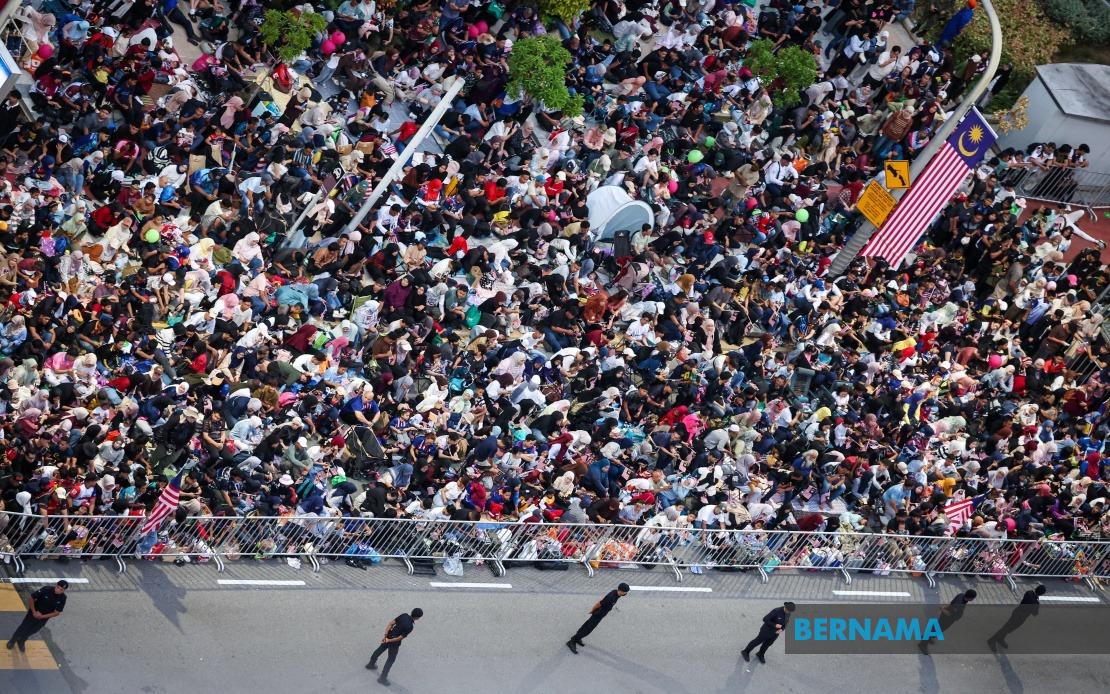
Enthusiasm for Malaysia's 69th National Day celebration brought hundreds of spectators to Dataran Putrajaya well before dawn, with many arriving the evening prior to claim advantageous vantage points along the parade route. The gathering reflected deep public interest in witnessing the festivities firsthand, as families and individuals staked out locations overnight to ensure unobstructed views of the proceedings scheduled to commence at 8 am.
Among the early arrivals were young creatives determined to document the occasion through their lenses. Mock Wei Qi, 23, and his photography associates reached the sprawling federal administrative centre by 11 pm the previous evening, driven by professional ambition and personal investment in Malaysia's cultural heritage. Their motivation extended beyond casual attendance; they sought cinematically compelling angles that would encapsulate the nation's distinctive character and appeal to international audiences. For this freelance photographer, the National Day pageantry represented an invaluable opportunity to demonstrate technical prowess whilst simultaneously celebrating Malaysian identity through visual storytelling.
Family groups likewise contributed substantially to the overnight encampments dotting Dataran Putrajaya. A couple identified as As and Adib arrived with their children at 5 pm, determined to rectify the previous year's disappointment when late arrival had forced them to observe proceedings from considerable distance. Their strategic decision to come considerably earlier this time reflected lessons learned and heightened determination to provide their children with an immersive, proximate experience of national commemoration. Such planning demonstrates how families view National Day attendance not merely as entertainment but as meaningful participation in shared cultural moments.
The overnight camping experience transformed the venue into an improvised family gathering space. Ahmad Azri Onn, 55, accompanied by his wife and three children aged between 10 and 15, deliberately embraced the waiting period as an adventure rather than inconvenience. Arriving around 5.30 pm, his family capitalised on the school holiday period to combine entertainment with educational exposure to national pageantry. Despite modest weather challenges—including light drizzle—the family unit remained comfortable and engaged, with Ahmad Azri noting that inclement conditions posed minimal disruption to their enthusiasm.
Weather patterns actually facilitated crowd comfort during the extended waiting period. The drizzle that descended upon Dataran Putrajaya provided welcome relief from the tropical heat that typically characterises August conditions in the capital region. Rather than deterring attendance, precipitation seemed to enhance the experience for many families who viewed meteorological variability as a natural component of outdoor celebration. This adaptability underscored the commitment that spectators had demonstrated through their early arrival and overnight presence.
The gradual accumulation of crowds throughout the morning hours created a dynamic, evolving atmosphere at the venue. As dawn broke and morning progressed, Dataran Putrajaya transformed from a sparsely populated gathering space into a densely populated amphitheatre of national sentiment. Each arrival contributed to mounting anticipation for the celebration proper, whilst the accumulated presence of thousands reinforced the collective significance attributed to National Day observance within Malaysian society.
This year's celebration carried the unifying theme Malaysia MADANI: Kesejahteraan Dinikmati, which translates to emphasising shared prosperity and collective wellbeing. The thematic choice resonated with public consciousness, potentially explaining the substantial pre-dawn participation observed across demographic categories. The opportunity to physically witness manifestations of this national vision, as expressed through ceremonial pageantry, parade performances, and civic gatherings, motivated citizens from diverse backgrounds to prioritise attendance despite logistical challenges.
The diversity of motivations evident among attendees illuminated how National Day celebrations function within Malaysian public life at multiple registers simultaneously. For professional photographers, the occasion offered technical and artistic challenges worthy of serious engagement. For families navigating school holidays, it represented accessible cultural participation and memorable bonding opportunities. For individual citizens broadly, it signified an important moment for affirming national identity and civic connection. This layered significance ensured broad appeal transcending narrow demographic segments.
The overnight camping phenomenon also reflected evolving attitudes toward public space utilisation within the federal territory. Dataran Putrajaya, designated as the symbolic heart of national administration, transformed temporarily into communal camping grounds where ordinary citizens claimed temporary residency in pursuit of optimal viewing experience. This democratic appropriation of public ceremonial space suggested neither institutional resistance nor community hesitation, indicating normalised acceptance of such temporary occupation for patriotic observance.
Logistical preparations by authorities had clearly anticipated substantial early arrival patterns. Infrastructure arrangements, crowd management protocols, and facility provisioning appeared calibrated to accommodate overnight gathering, suggesting that overnight camping had become anticipated practice rather than unexpected phenomenon. Such institutional responsiveness to public behaviour patterns demonstrated adaptive management of civic occasions.
As the scheduled commencement time approached, the accumulated crowd—composed of photographers, families, individuals, and diverse demographic cohorts—occupied virtually every accessible vantage point throughout Dataran Putrajaya. The physical manifestation of this collective presence testified to enduring resonance of National Day within Malaysian public consciousness, despite evolving contexts and competing demands upon citizen attention and time. The 69th celebration thus proceeded against backdrop of substantial, enthusiastic, and deliberately mobilised public participation.

