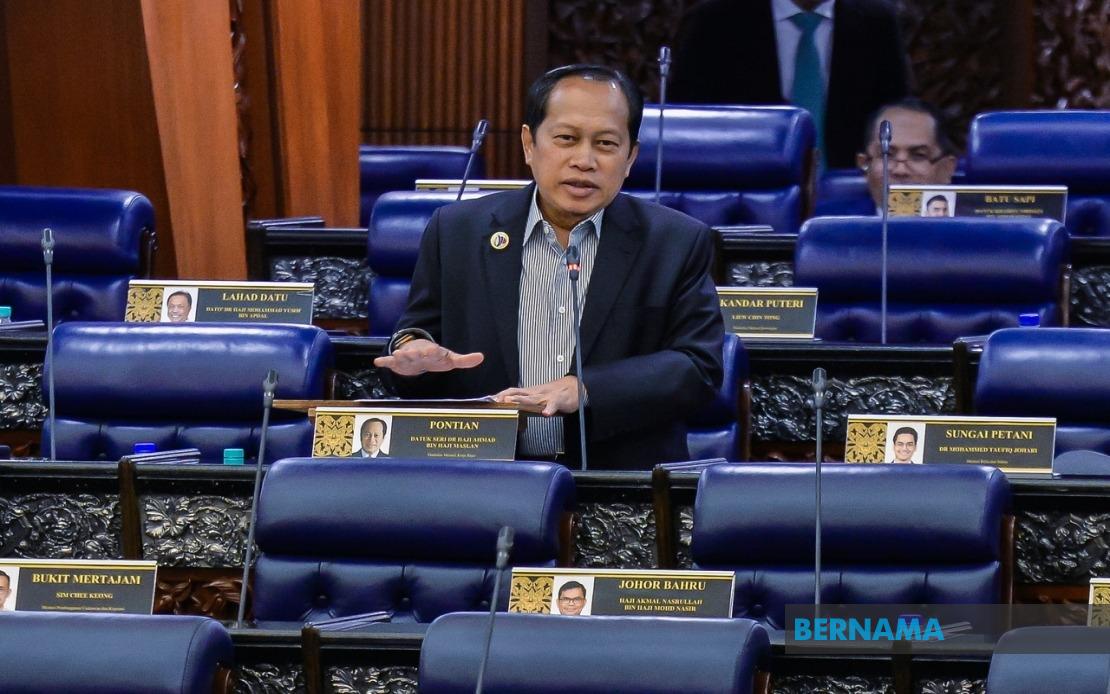
Malaysia's planned East Coast Expressway Phase 3 will proceed as a public-private partnership venture rather than a government-funded infrastructure project, Deputy Works Minister Datuk Seri Dr Ahmad Maslan announced in Parliament this week. The shift to a PPP framework reflects budgetary pressures confronting the Federal Government, which has prioritised spending across multiple competing sectors and developmental initiatives across the country.
The project will be tendered through a Request for Proposal mechanism, placing the financial burden squarely on the successful private bidder who will assume all development costs. This approach represents a pragmatic solution to infrastructure expansion when public coffers face constraints, allowing the government to oversee transport development without immediate budget impact. The concession model has become increasingly common in Malaysian infrastructure delivery, particularly for expressways and toll-based transport corridors where user fees can support operational viability.
The proposed expressway spans 122 kilometres, forming a dual two-lane carriageway that will connect Kampung Gemuruh in Kuala Terengganu through to Tunjung in Kota Bharu. The route will incorporate five interchanges strategically positioned to facilitate traffic flow and regional connectivity. Engineers conducting a 2022 feasibility study estimated the total development cost at RM9.8 billion, a figure that will likely inform the tender parameters and financial projections presented to potential bidders.
The announcement positions the LPT3 within a broader regional transport ecosystem developing across the East Coast. Ahmad highlighted that current congestion on East Coast routes concentrates during peak travel periods, particularly around major holidays such as Hari Raya when urban populations travel homeward. Once the East Coast Rail Link reaches completion, passengers will have a high-capacity alternative for intercity journeys. Simultaneously, the Kota Bharu-Kuala Krai Expressway and the Lingkaran Tengah Utama Expressway will add further road-based options, collectively transforming transport accessibility for residents and businesses across Terengganu and Kelantan.
Within this multi-modal context, the LPT3 emerges as a tertiary alternative rather than the sole solution to East Coast connectivity challenges. This positioning may influence toll-setting strategies, as operators must balance revenue requirements with competitive pressure from other transport modes. Travellers choosing between rail, alternative expressway routes, and the LPT3 will make decisions based on cost, convenience, and travel time considerations, requiring the PPP operator to maintain competitive pricing while servicing debt and operational expenses.
Crucial commercial parameters remain unresolved, with Ahmad confirming that the toll rate structure has not yet been finalised. The eventual toll quantum will depend on multiple interconnected variables including actual construction expenditures, financing arrangements secured by the bidder, anticipated operational and maintenance costs, projected traffic volumes, and the length of the concession period granted. These elements typically remain subject to negotiation between government and the private sector during tender evaluation and contract finalisation phases.
The concession period itself represents a particularly significant commercial variable, as it determines how many years the operator has to recoup investments and generate profit. Shorter concession periods require higher annual toll revenues to achieve financial viability, potentially pricing some traffic off the new route. Conversely, longer periods allow lower tolls but extend the duration during which the private entity controls the critical transport corridor. Malaysian toll road history demonstrates that toll rate setting frequently generates public and political controversy, particularly when operators seek rate adjustments to address inflation or traffic shortfalls.
The toll gantry configuration and technology platform have similarly deferred resolution. Modern expressway systems increasingly employ sophisticated toll collection apparatus including electronic tagging systems compatible with national standards, cash collection points, and increasingly, vehicle recognition technology. The choice of technology influences both operational costs and user experience, affecting adoption rates and traffic patterns. Compatibility with Malaysia's existing toll ecosystem—including highways managed by entities like PLUS Malaysia Berhad—will require coordination to ensure seamless interoperability for long-distance travellers.
From a Southeast Asian perspective, this project represents a notable infrastructure addition to the region's road corridor network. The LPT3 will strengthen connectivity between Thailand's southern provinces and Malaysia's northern states while improving domestic east-west transport dynamics. Enhanced accessibility to Kelantan and Terengganu may stimulate economic activity in these traditionally less industrialised states, potentially attracting manufacturing investment and tourism development. The project thus carries implications extending beyond Malaysia's borders into the broader ASEAN economic landscape.
The PPP model deployment for LPT3 underscores Malaysia's evolving approach to infrastructure financing in an era of fiscal constraints. Rather than shelving projects or relying exclusively on government budgets, authorities increasingly leverage private capital and expertise to deliver strategic infrastructure. However, this model places responsibility on private operators to balance commercial viability with public service obligations—a tension that frequently surfaces in toll road operations when usage falls short of projections or when operators seek rate increases.
For the East Coast region specifically, the expressway promises to unlock economic potential through improved freight logistics and reduced travel times for business commuters. Manufacturing enterprises may find production relocation more feasible if supply chain connectivity improves substantially. Agricultural producers could access central markets more efficiently, potentially improving profitability for rural enterprises. Tourism operators might expand their market reach if intercity travel becomes faster and more convenient.
The tender process itself will reveal private sector appetite for this infrastructure asset. Multiple qualified bidders would signal confidence in the project's financial viability, potentially leading to competitive tension that improves terms for the government. Conversely, limited bidder participation might indicate that the risk-return profile requires adjustment through extended concession periods or higher toll-rate flexibility.
As the government proceeds with detailed tender preparation, stakeholder engagement will prove critical. East Coast residents and businesses require clarity on anticipated toll rates and implementation timelines to plan accordingly. Transport industry participants need certainty regarding specifications and operational procedures. Regional governments and economic development agencies must understand how the LPT3 integrates with broader development strategies. Managing these expectations while negotiating optimal commercial terms represents the multifaceted challenge confronting transport authorities as Malaysia advances this significant infrastructure initiative.

