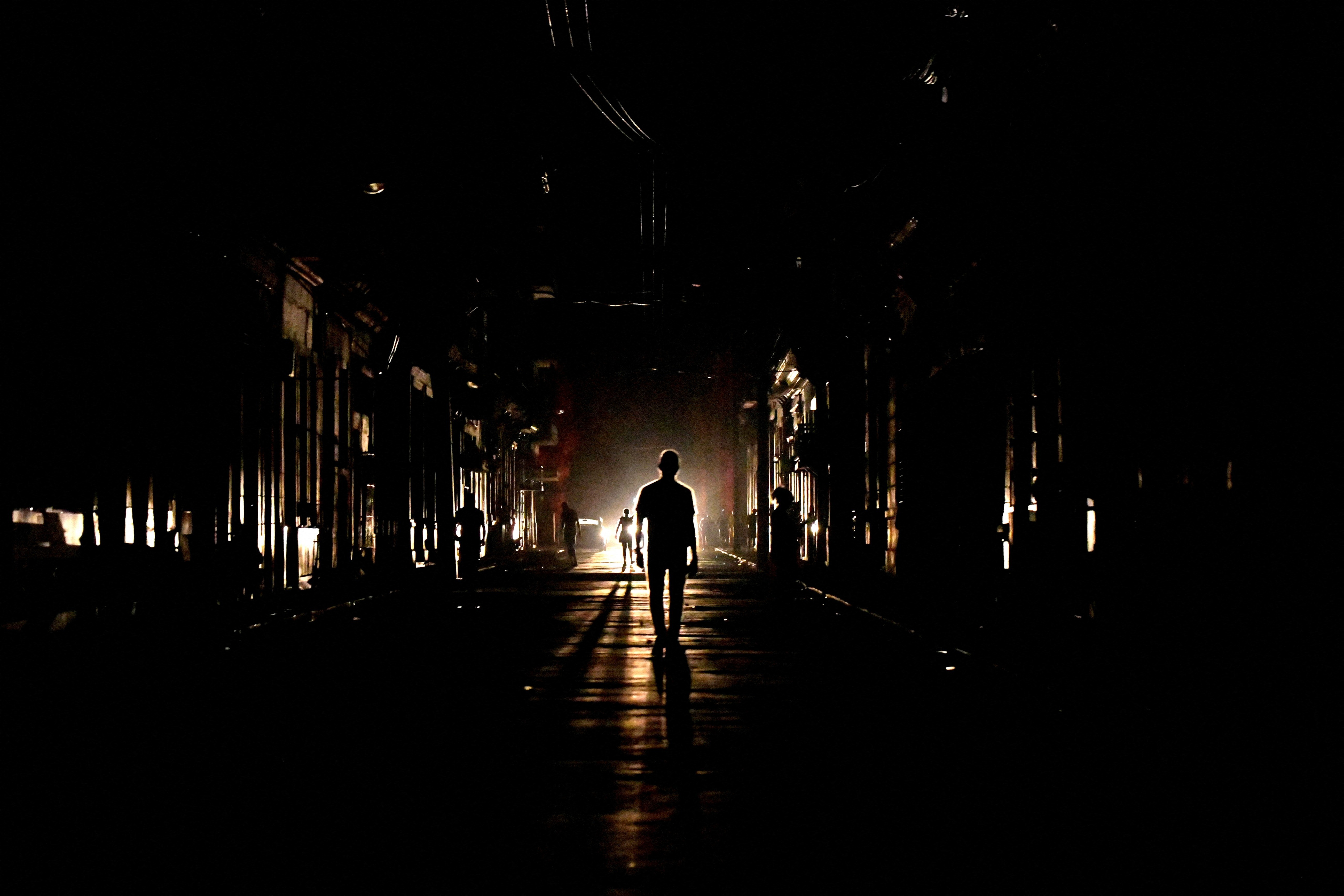
Eastern Libya experienced a significant electrical failure late Thursday evening, plunging major population centres including the port city of Benghazi into complete darkness. The outage extended across multiple cities and towns throughout the eastern region, creating widespread disruption to residents and infrastructure. Visual documentation from affected areas such as Marj showed streets and neighbourhoods devoid of streetlights and building illumination, underscoring the scale of the infrastructure collapse.
The blackout struck a region already grappling with deteriorating public services and mounting security challenges. Recent weeks have witnessed intensifying conflict in western Libyan cities including Zawiya and Sorman, coupled with coordinated drone attacks targeting critical oil infrastructure. This latest power crisis adds another layer to Libya's spiralling governance and service delivery challenges, which have become increasingly difficult for state institutions to manage given the country's fractured political landscape.
Libya's electricity sector has faced persistent challenges stemming from both technical failures and the broader institutional breakdown accompanying the nation's prolonged political division. The country remains bifurcated between two competing governments, each claiming legitimacy and territorial control. Prime Minister Abdul Hamid Dbeibah's internationally recognised Government of National Unity operates from Tripoli, administering western regions, while a rival administration headed by Osama Hammad, appointed by the House of Representatives, governs from Benghazi in the east. This institutional fragmentation has severely constrained investment in power generation and distribution infrastructure, leaving the electrical grid vulnerable to cascading failures.
The Electricity Ministry within Libya's eastern government moved swiftly to address the emergency, announcing that several generation units had been brought back online within hours of the initial failure. These restoration efforts began to yield results, with power successfully restored to Benghazi's principal hospital, a 1,200-bed facility critical to the city's healthcare system. Several neighbourhoods in the southern portions of Benghazi also regained electrical supply, providing temporary relief to residents in those areas. However, substantial sections of the sprawling city remained without power, necessitating continued technical intervention.
Libya's power authorities emphasised the need for a calibrated restoration approach to prevent secondary failures. Technical teams systematically reintroduced electrical loads across the generation, transmission, and distribution networks in measured increments, prioritising grid stability throughout the recovery process. This methodical strategy reflects lessons learned from previous outages that have caused cascading damage when power systems were reactivated too rapidly. Engineers and technicians across multiple operational sectors worked simultaneously to identify and rectify faults while managing the restarting of generation facilities.
Authorities announced that specialist teams had commenced investigations to establish the underlying cause of the blackout. Preliminary findings were expected to illuminate whether the failure originated from mechanical breakdown within generation facilities, transmission line problems, or distribution network issues. Such diagnostic work occurs against a backdrop of chronic underinvestment in electrical infrastructure maintenance, a consequence of Libya's prolonged political instability and the international isolation that has accompanied it.
The political fragmentation underlying Libya's infrastructure crisis has persisted for years, with competing administrations unable to coordinate essential governance functions. The internationally recognised Government of National Unity and the eastern-based rival administration have feuded over resources, territorial control, and legitimacy, effectively paralyzing coordinated response mechanisms. This division has impeded comprehensive power sector reform and the capital investment necessary for modernising generation capacity and transmission networks.
The United Nations Support Mission in Libya (UNSMIL) has attempted to mediate between the rival power centres, focusing diplomatic efforts on resolving political disputes that have repeatedly postponed national elections. These elections represent the anticipated pathway toward resolving Libya's institutional divisions and restoring legitimate, accountable governance structures. However, progress remains glacially slow, with vested interests within each competing administration resistant to power-sharing arrangements or democratic transitions that might diminish their influence.
For Malaysian observers, Libya's trajectory offers sobering lessons regarding the consequences of prolonged political division on essential service delivery. The wholesale collapse of public utilities, security apparatus, and economic infrastructure following the 2011 overthrow of Muammar Gaddafi demonstrates how swiftly state capacity can deteriorate when political consensus fractures. East and Southeast Asian nations with significant stakes in regional stability, including Malaysia, maintain diplomatic connections to Libya and share interests in preventing further state failure that could generate refugee flows or regional instability.
The immediate crisis confronting eastern Libya's electricity system remains unresolved despite partial restoration efforts. Technical teams face ongoing challenges restoring capacity to areas throughout Benghazi and other eastern cities. Whether authorities can fully restore the power grid before subsequent failures occur depends partly on the speed of repairs and partly on the underlying structural challenges afflicting Libya's fragmented governance apparatus. Without meaningful progress toward political reconciliation and institutional reunification, similar infrastructure crises will likely recur with increasing frequency.

