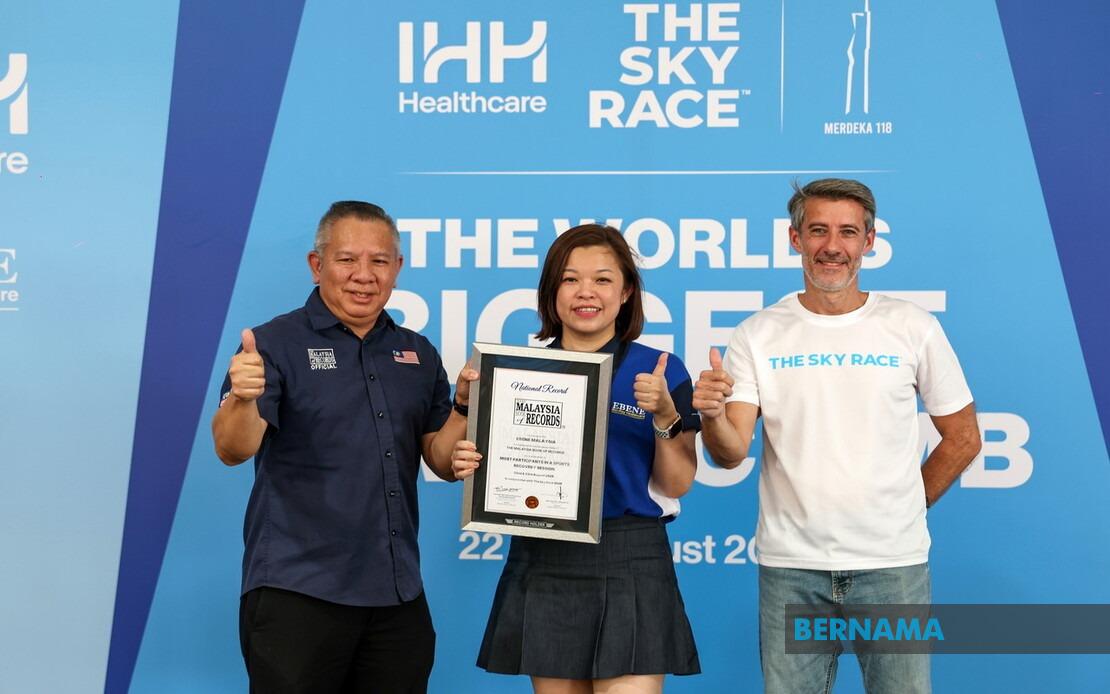
EBENE Bio-Ray Healthcare has leveraged its partnership with Sky Race 2026 to underscore a message many Malaysian athletes overlook: recovery is as essential as the training itself. The healthcare company's attempt to set a Malaysia Book of Records for the most participants in a single sports recovery session reflects a broader shift in how fitness enthusiasts across the region are approaching their physical wellbeing. By exceeding an initial target of 1,000 participants at the event held at Stadium Merdeka on August 22 and 23, EBENE has demonstrated that there is considerable appetite among Malaysians to learn more about proper post-exercise care.
The initiative gained momentum as EBENE positioned itself as the Official Main Partner and Official Knee Support Partner of Sky Race 2026, an event that attracted roughly 8,000 runners and fitness enthusiasts. Marketing and E-Commerce Director Goh Sa Ki explained that the brand saw the record attempt as an opportunity to embed recovery consciousness into Malaysia's growing running culture. Tower running, the specialist discipline featured at Sky Race, represents a particularly punishing physical challenge that demands sustained effort on the legs, knees and lower back—making post-activity recovery especially relevant for participants in this segment.
The physical demands of tower running deserve particular attention given the sport's explosive growth in Southeast Asia. Competitors face intense muscular and cardiovascular strain as they ascend tall structures, creating cumulative pressure on joints and connective tissues. Goh articulated how EBENE's product portfolio directly addresses these stresses, with knee guards and compression socks designed to stabilise joints during exertion and facilitate blood circulation during the recovery window. The company's approach reflects a professionalisation of amateur athletic practice, where runners increasingly adopt techniques and equipment previously reserved for elite competitors.
Beyond product promotion, EBENE established a dedicated Sports Recovery Zone at the event, offering sports massage and guided stretching sessions to participants who had completed the tower-running challenge. This hands-on intervention served multiple purposes: it provided immediate relief to fatigued muscles, demonstrated the practical benefits of structured recovery protocols, and generated the participant numbers needed for the Malaysia Book of Records application. The recovery zone effectively transformed a marketing activation into a functional health intervention, allowing thousands of Malaysians to experience evidence-based recovery practices in a live setting.
The timing of this initiative carries significance within Malaysia's evolving health consciousness. Urban Malaysians are increasingly pursuing structured fitness activities, yet many lack formal guidance on injury prevention and recovery management. EBENE's messaging deliberately shifts focus from reactive treatment—addressing pain only after it has become problematic—toward proactive care that maintains mobility and enables sustained participation in sports. This preventative stance aligns with broader public health trends favouring lifestyle medicine and self-directed wellness.
Goh emphasised that proper support through the recovery phase remains crucial for individuals seeking to maintain long-term engagement with running and other physical pursuits. Without adequate recovery infrastructure, even enthusiastic participants risk overuse injuries that force extended breaks from activity. The integration of compression technology, knee supports and professional recovery techniques creates a comprehensive ecosystem designed to keep active individuals moving consistently. For Malaysia's running community, which has grown substantially over the past decade, access to these insights could translate into healthier, more durable athletic careers.
The "Move with EBENE" activation represents the company's fifth major campaign promoting active lifestyles while raising awareness of preventative knee care. This positioning distinguishes EBENE from competitors by framing the brand around enablement rather than treatment alone. By associating itself with aspirational events like Sky Race and charismatic activities like tower running, EBENE reaches potential customers at moments when they are most receptive to messages about maintaining mobility and pursuing physical goals. The strategy has proven effective in accumulating the 1,000-plus participants needed to challenge existing Malaysia Book of Records benchmarks.
For Malaysian athletes and fitness enthusiasts, the broader implications extend beyond EBENE's commercial interests. The visibility of sports recovery at major events normalises practices that remain unfamiliar to many amateur runners. Tower runners and distance athletes increasingly recognise that finishing a race represents only the midpoint of the physical challenge; what happens in the hours and days afterward determines whether they can train again soon without pain or dysfunction. This education, delivered at scale through events like Sky Race, gradually shifts cultural attitudes toward athletic practice.
EBENE's three decades of experience in healthcare support products have positioned the company to speak credibly on recovery and mobility topics. The firm's investment in major sporting events and record-setting initiatives suggests confidence in the Malaysian market's receptiveness to preventative health messaging. As regional competitors in the healthcare support category intensify their focus on emerging markets, initiatives like the MBOR attempt help establish brand presence and consumer familiarity before more crowded competitive phases emerge.
The partnership between EBENE and Sky Race 2026 ultimately reflects a maturation of Malaysia's running scene. Events increasingly incorporate health and wellness dimensions alongside athletic competition, creating holistic experiences for participants. Recovery zones, guided stretching sessions and proper equipment are no longer luxuries reserved for elite athletes but rather baseline expectations for well-organised sporting gatherings. This elevation of recovery standards across the broader Malaysian athletic landscape promises to improve long-term health outcomes for the thousands of individuals pursuing running and tower-running disciplines.

