The Election Commission has intensified efforts to encourage registered voters across Malaysia to align their polling addresses with their current residential locations, highlighting the fundamental importance of this alignment to the nation's democratic architecture. Speaking on a public radio programme in Kuala Lumpur, EC deputy chairman Dr Azmi Sharom underscored that voters who have relocated to different constituencies should prioritise updating their electoral registration, as Malaysia's political system operates on a constituency-based foundation where elected representatives derive legitimacy from the communities they directly serve.
Malaysia's electoral framework depends critically on the principle that voters exercise franchise in the areas where they actually reside, ensuring that State Assemblyman and Members of Parliament are genuinely accountable to their constituents. When voters remain registered in distant constituencies—often their hometowns—they undermine this representational logic, as they cannot meaningfully participate in local decision-making affecting the communities where they spend their daily lives. Dr Azmi's intervention addresses a persistent challenge in Malaysian electoral management: the tendency among voters to maintain sentimental attachments to ancestral constituencies rather than transferring their registration to reflect current domicile.
The practical convenience argument reinforces the substantive democratic principle. Voting where one actually lives eliminates the logistical burden of travelling potentially hundreds of kilometres to participate in elections, reducing barriers to electoral participation. This consideration becomes especially significant for working professionals and younger voters who frequently migrate for employment or education, often relocating from rural constituencies to urban centres. By voting locally, these increasingly mobile populations can engage more meaningfully with the immediate issues affecting their daily environment rather than attempting to influence governance hundreds of kilometres away.
To facilitate this transition, the Election Commission has simplified the administrative process considerably. Voters must first update their address on their national identity cards before subsequently modifying their voting registration. Critically, this entire process can now be completed through online platforms, eliminating the need for physical visits to electoral offices. This digital convenience represents a significant modernisation of Malaysia's voter registration infrastructure, responding to contemporary citizen expectations for efficient government services.
The monthly updating cycle of the electoral roll constitutes another structural improvement enhancing the feasibility of address changes. Previously, the Commission operated on a quarterly revision schedule, creating significant delays between application submission and registration updates. The accelerated monthly cycle enables rapid processing, reducing the window during which voters might find themselves registered in incorrect constituencies due to bureaucratic delay. This operational efficiency directly addresses practical obstacles that previously discouraged voters from undertaking address updates.
Despite these improvements, Dr Azmi acknowledged the psychological resistance rooted in civic identity and personal history. Many Malaysians maintain emotional connections to their ancestral hometowns, viewing continued registration there as maintenance of a meaningful link to family heritage and community origins. This sentiment, while understandable, conflicts with the functional requirements of representative democracy. The EC's messaging strategy attempts to reframe this choice, presenting address updating not as abandonment of hometown identity but as responsible participation in one's actual community's governance.
The timing of these appeals gains particular significance given the immediate electoral calendar. The Johor state election proceeded on July 11, with organisational preparations nearing completion by the EC's announcement. The election mobilised over 43,000 personnel across the state, representing a substantial logistical undertaking requiring extensive coordination across multiple government agencies. Ensuring that registered voters remained in appropriate constituencies proved essential for smooth electoral administration and accurate representation of democratic will.
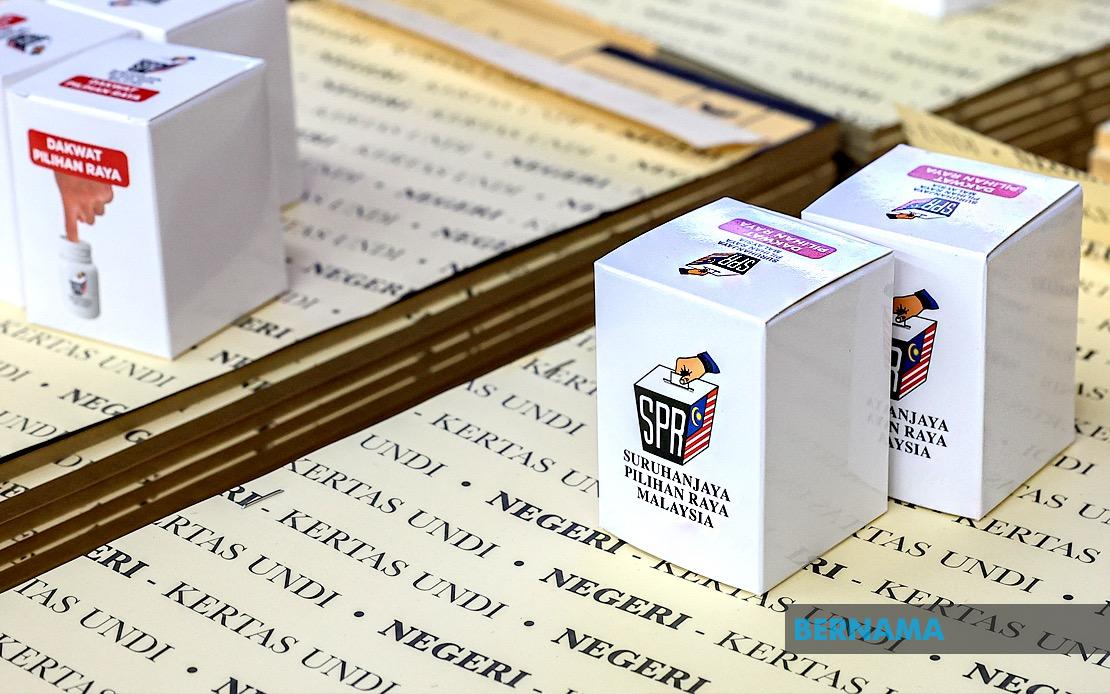
Negeri Sembilan's electoral timeline presented a different administrative profile. With the nomination process still pending and ballot papers unprinted at the time of the EC's public statements, the state election remained in earlier organisational phases. This staggered electoral calendar across Malaysia's states necessitates continuous public messaging about voter registration protocols, as each election presents a distinct administrative window and fresh opportunity to encourage address updates among affected constituencies.
The Election Commission's emphasis on this issue reflects broader concerns about electoral integrity and representative legitimacy. When electoral rolls become divorced from actual residential patterns, the resulting misalignment distorts representation, as MPs and ADUNs claim constituencies whose registered voter populations do not actually reside within their jurisdictions. This creates peculiar democratic outcomes where elected representatives may feel accountable primarily to absent voters maintaining nostalgic registration rather than to the actual residents directly affected by constituency policies. Over time, such disconnection erodes the responsiveness that underpins legitimate representative government.
For Malaysian voters, the practical implication involves recognising that updating one's voting address represents a constructive democratic act rather than an administrative chore. By registering where they currently reside, voters strengthen both personal democratic participation and systemic representational integrity. The EC's modernised procedures eliminate previous obstacles to address changes, placing the responsibility squarely on individual voters to maintain accurate registration. This shift toward voter responsibility aligns with broader trends toward digital governance, where citizens increasingly bear responsibility for maintaining accurate information within government systems through self-service online platforms.
Regional patterns of internal migration, particularly urban drift among youth and working-age populations, ensure this issue remains persistently relevant across Southeast Asia. Malaysia's experience reflects challenges facing democratic systems throughout the region as economic development drives geographic mobility. The EC's integrated approach—combining digital convenience, accelerated administrative processing, and public education—provides a model that other regional democracies managing similar voter registration challenges might consider adopting.
The deployment of over 58,000 personnel across the Johor and Negeri Sembilan elections demonstrates the substantial resource commitment required to administer Malaysia's electoral system across distributed constituencies. Accurate voter registration reduces administrative friction and enhances electoral efficiency, allowing EC staff to focus on core electoral integrity functions rather than managing confusion surrounding misaligned voter addresses. From this operational perspective, encouraging voters to update addresses improves overall system performance and justifies the EC's sustained emphasis on this administrative matter.

