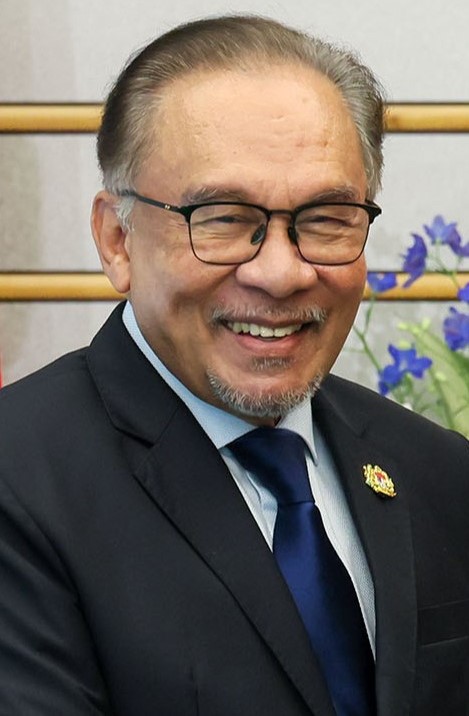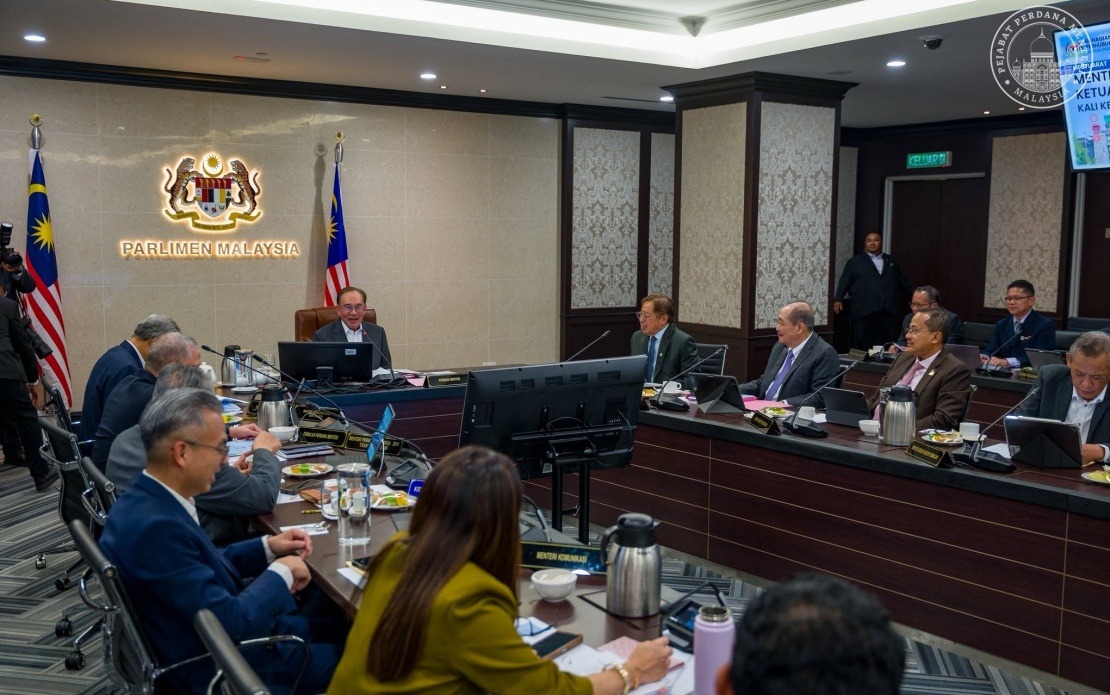
Prime Minister Datuk Seri Anwar Ibrahim presided over the 149th Meeting of Menteris Besar and Chief Ministers at the Parliament Building, directing the assembly's attention toward revitalising Malaysia's economic trajectory as external pressures mount from geopolitical instability and environmental threats. The gathering underscored the federal government's determination to foster coordinated action across state administrations in confronting interconnected challenges that demand comprehensive policy responses and seamless implementation mechanisms.
The deliberations centred on strategies to fortify the nation's economic standing despite turbulence stemming from conflicts engulfing West Asia, which have reverberated through global trade networks and investment flows. Anwar emphasised that these external shocks necessitate a unified approach where federal and state governments align their development agendas to maintain competitiveness and sustain growth momentum in an unpredictable environment. The emphasis reflects mounting concern that prolonged regional instability could disrupt supply chains and investor confidence affecting Malaysia's position as a critical hub in regional commerce.
Beyond immediate economic concerns, the meeting addressed Malaysia's vulnerability to the El Niño phenomenon, a cyclical climatic pattern expected to intensify across the region. Participants examined the nation's readiness to withstand potential water supply disruptions, agricultural productivity losses, and food security challenges accompanying severe weather conditions. The discussion acknowledged that El Niño-driven impacts extend beyond environmental metrics, threatening livelihood stability for farming communities and potentially destabilising prices in critical food sectors, thereby affecting household purchasing power across income groups.
Risk mitigation around extreme heat and haze formation featured prominently in discussions, reflecting accumulated experience from previous climate-related crises that tested infrastructure resilience and public health systems. State governments were evidently encouraged to strengthen early warning mechanisms, resource allocation protocols, and inter-agency coordination to minimise disruption and protect vulnerable populations. This proactive stance suggests recognition that climate adaptation requires decentralised action where state administrators possess contextualised knowledge of local vulnerabilities and implementation capacity.
Anwar stressed the imperative for policy integration across government tiers, rejecting siloed approaches where federal initiatives proceed independently of state-level implementation realities. He advocated for mechanisms ensuring that development benefits percolate comprehensively throughout Malaysian society rather than concentrating in select regions or demographic segments. This people-centric orientation signals a shift toward inclusive growth frameworks where economic gains are measured not merely by aggregate metrics but by tangible improvements in citizen welfare across geographical and socioeconomic boundaries.
The investment attraction agenda emerged as critical, with particular emphasis on quality over volume. Recognising that Malaysia competes within a crowded regional landscape featuring Vietnam, Thailand, and Indonesia, policymakers underscored the necessity of drawing high-value ventures that generate sustainable employment and technological spillovers. This strategic calibration reflects maturation of development thinking beyond manufacturing cost advantages toward constructing ecosystems supporting innovation-driven sectors aligned with long-term economic transformation objectives.
The meeting's emphasis on economic competitiveness simultaneously addressed structural vulnerabilities accumulated during periods of external dependency. Building domestic resilience requires diversification across sectors, strengthening supply chain autonomy, and cultivating human capital capacities matching technological advancement trajectories. State governments, controlling significant economic levers through licensing, land administration, and infrastructure development, constitute essential partners in executing these complex transformations.
Anwar's framing of federal-state relations as collaborative rather than hierarchical carries implications for implementation effectiveness and political sustainability. Consensus-building approaches, while time-intensive, generate ownership among state administrations and enhance compliance with national directives. This collaborative ethos proves particularly valuable when addressing challenges like El Niño preparedness requiring coordinated action across administrative boundaries, or economic development where local context shapes implementation possibilities.
The gathering's timing reflects heightened policy activism as global uncertainties crystallise into tangible domestic pressures. Regional conflicts increasingly filter through trade disruptions and investor risk recalibrations, while climate variability transitions from abstract possibility to imminent challenge. Malaysia's strategic positioning as a trade-dependent economy exacerbates exposure to both dimensions, necessitating anticipatory policymaking rather than reactive crisis management. The meeting's comprehensive agenda suggests readiness to engage these interconnected challenges through systematic, coordinated approaches rather than fragmented responses.
For Southeast Asian observers, Malaysia's emphasis on federal-state coordination amid economic and environmental pressures offers instructive lessons. Nations across the region grapple with comparable vulnerabilities to global market fluctuations and climate impacts, yet institutional capacity for integrating responses varies considerably. Malaysia's formalistic mechanisms for elite consensus, exemplified through regular Mentri Besar assemblies, provide structured forums for aligning federal and subnational agendas, potentially yielding more coherent policy frameworks than informal coordination arrangements elsewhere.
Looking ahead, implementation will determine whether the meeting translates rhetoric into concrete outcomes. Economic revival requires sustained investment mobilisation, policy consistency, and institutional coordination beyond summit-level declarations. Similarly, El Niño preparedness demands resource allocation, capacity building, and operational readiness at state administration level where actual implementation capacity resides. The gathering's significance ultimately depends upon translating consensus into tangible administrative action affecting Malaysians' economic security and environmental resilience.