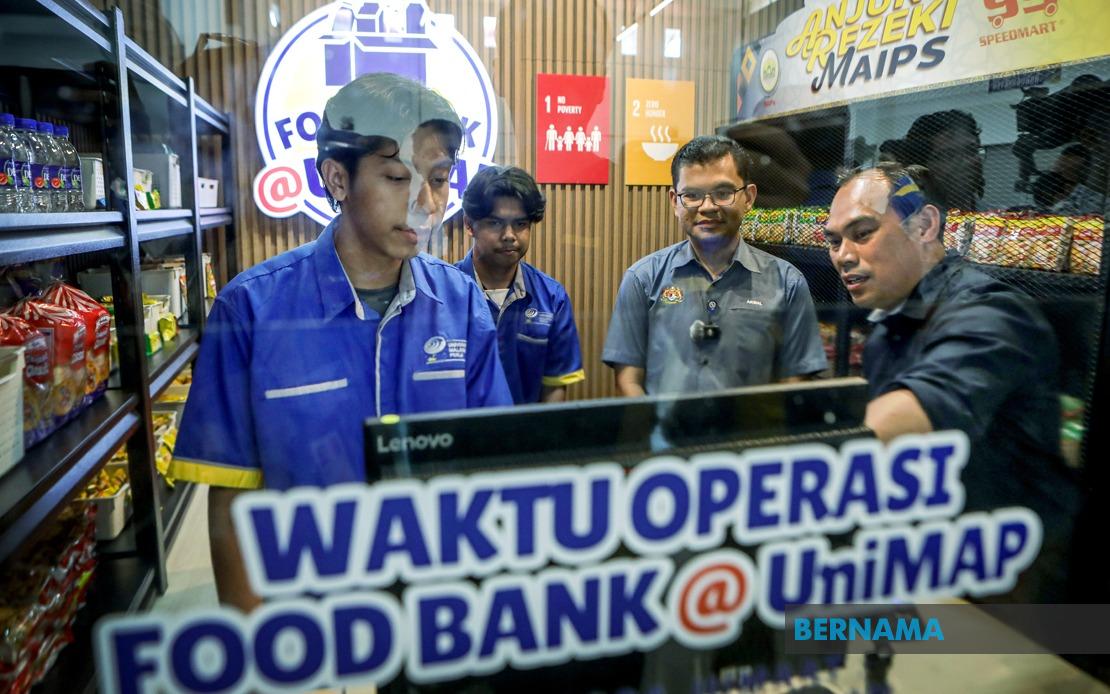
The Malaysian Economy Ministry has moved to secure an extended lifespan for the People's Income Initiative – Food Entrepreneur Initiative (IPR-INSAN), recognising its success in creating income opportunities for lower-income business operators while simultaneously addressing food affordability for university students. Economy Minister Akmal Nasrullah Mohd Nasir announced during a campus visit that the government intends to formally petition the Ministry of Finance for programme continuation, signalling confidence in its model and results.
The initiative represents a targeted approach to addressing dual challenges within Malaysia's economy: sustainable livelihood creation for B40 households and food security for the student demographic. By deploying vending machines as the operational backbone, the programme sidesteps traditional barriers that prevent low-income entrepreneurs from establishing formal retail operations. The technology-enabled business model reduces overhead costs whilst providing consumers with convenient access to freshly prepared meals at competitive prices, creating a win-win ecosystem that appeals to both social policy makers and market participants.
During an inspection at Universiti Malaysia Perlis, Minister Akmal Nasrullah examined the programme's practical implementation across two residential colleges, observing how the vending machines functioned as direct conduits between entrepreneurs and the campus community. This hands-on assessment underscored the government's commitment to evidence-based policy extension, moving beyond theoretical benefits to examine real-world operational outcomes. The minister emphasised that on-the-ground monitoring had validated the programme's comprehensive reach, touching entrepreneurs, consumers, and institutional stakeholders simultaneously.
The financial performance data presented by UniMAP provides compelling justification for programme extension. At Tuanku Abdul Rahman Residential College, entrepreneur Norleyana Nordin achieved average monthly revenues of RM2,178.80 through her vending machine homemade food business, with January 2024 recording peak sales of RM4,905. Across campus at Tuanku Tengku Fauziah Residential College, operator Noor Hasfalela Mohd Noor demonstrated even stronger performance, generating average monthly sales of RM4,595, peaking at RM10,012 in January and maintaining robust revenues of RM5,049 in February and RM4,868 in April 2026. These figures illustrate that the vending machine platform enables entrepreneurs to achieve income levels substantially above subsistence thresholds.
The programme's significance extends beyond individual entrepreneur success to address broader Malaysian policy objectives around income inequality and youth welfare. University campuses represent ideal pilot environments for such initiatives, concentrating populations with reliable purchasing power while establishing sustainable operational frameworks. The presence of student kitchens and food banks alongside the vending machine scheme creates a complementary ecosystem where different poverty alleviation tools work in concert, recognising that no single intervention suffices for complex socioeconomic challenges.
For Malaysian policymakers, the IPR-INSAN model offers a replicable template adaptable across diverse settings beyond higher education institutions. The vending machine technology creates scalability advantages unavailable to traditional street vending or small shop operations, allowing entrepreneurs to maintain consistent product quality and hygiene standards whilst operating with minimal direct overhead. This technological standardisation also simplifies regulatory compliance and health monitoring, reducing bureaucratic friction that often constrains informal sector expansion.
The initiative's appeal to private sector partners strengthens the case for extension. Corporate participation in funding and supporting food bank and student kitchen operations demonstrates willingness from commercial entities to align business objectives with social welfare goals. This public-private collaboration model has gained traction across Southeast Asia as governments increasingly recognise that sustainable poverty reduction requires engagement from multiple stakeholders rather than government action alone.
From a student welfare perspective, the vending machine initiative directly addresses documented concerns about food insecurity within the university population. Malaysian studies have consistently identified affordable nutrition as a barrier to academic performance, with food-insecure students experiencing higher dropout rates and lower academic achievement. By providing reliable access to reasonably priced prepared meals, the programme removes a material constraint on student success and institutional retention.
The geographical focus on Perlis, a state with historically lower income levels compared to Malaysia's more developed regions, also reflects strategic policy targeting. Pilot programmes in less prosperous areas generate greater proportional impact on poverty reduction whilst establishing proof-of-concept models that can subsequently scale to urban areas with greater logistical complexity. Universiti Malaysia Perlis serves as both a testing ground and a community institution deeply embedded in the state's economic fabric, making outcomes particularly relevant for regional poverty alleviation.
Looking forward, extension approval from the Ministry of Finance would signal sustained commitment to innovation in social entrepreneurship support. Rather than relying exclusively on traditional microfinance or skills training programmes, the IPR-INSAN approach combines technology accessibility with structured market access, removing the assumption that low-income entrepreneurs primarily need capital injections or business education. This philosophical shift acknowledges that many B40 individuals possess entrepreneurial capacity but lack institutional channels to monetise their skills efficiently.
The request for programme extension also reflects international policy trends toward outcomes-based programme evaluation. By presenting concrete financial performance metrics rather than anecdotal success stories, the Economy Ministry has adopted evidence-driven advocacy that appeals to fiscal responsibility concerns within the Finance Ministry. This approach strengthens the extension case while establishing precedent for rigorous performance monitoring in future social initiatives.
Sustainability considerations underlying the extension request merit attention from Malaysian observers. Vending machine operations require reliable electricity, maintenance infrastructure, and supply chain logistics—factors that vary significantly across Malaysia's diverse geography. Successful extension would necessitate scaling lessons learned from the UniMAP pilot to environments with different infrastructural realities, particularly in more rural areas where such support systems may not exist. Planning for these operational challenges during the extension phase will prove crucial for programme longevity beyond initial enthusiasm phases.

